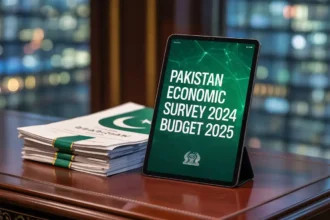

State Bank of Pakistan Governor Jameel Ahmad has told global investors that the country’s foreign exchange reserves have been rebuilt from less than $3 billion to $21.5 billion without fresh borrowing. The claim was made during investor meetings on the sidelines of the IMF-World Bank Annual Meetings in Bangkok, October 12 to 17, according to an SBP statement issued on Saturday. Every outlet carried the headline. What almost nobody explained is how it actually happened, and what $21.5 billion is really worth.
The numbers that matter
Official SBP-held reserves stood at $21.47 billion in the week ended October 9, 2026, according to central bank data released last Thursday and reported by Profit and Express Tribune. Net reserves held by commercial banks were another $5.39 billion, taking Pakistan’s total liquid foreign reserves to $26.86 billion. Alongside that, the SBP’s forward liabilities, money the central bank had effectively promised to pay out in the future, have fallen from more than $5.7 billion to less than $1 billion, and the external debt stock has increased only marginally over three years.
Where did the dollars actually come from?
When a country borrows to build reserves, the headline number can mislead. The SBP instead bought dollars in the interbank market. The statement said these purchases were “facilitated by an almost balanced current account in FY26”, with the deficit projected at 0 to 1 percent of GDP in FY27.
Where did that foreign exchange supply come from? Two streams mattered most. First, remittances moved into formal channels after reforms targeting exchange companies, improving liquidity in the interbank market, as Dawn’s reporting of the Governor’s remarks noted. Second, an almost balanced current account meant Pakistan was not bleeding dollars faster than it earned them, leaving the SBP room to accumulate.
The contrast with February 2023 is stark. Reserves had fallen below $3 billion, close to default-scare territory. The path to $21.5 billion was not one big inflow. It was three years of steady purchases.
What “forward liabilities” means, and why the cut matters
Forward liabilities are commitments the central bank has made to deliver foreign currency later, through instruments like swaps or forward contracts. A high forward book means the headline reserve number overstates what is truly unencumbered. Cutting that book from over $5.7 billion to under $1 billion means today’s $21.5 billion is a far more “real” number than the same figure would have been three years ago. That is the backbone of the “without new debt” claim: reserves were bought, not borrowed, and the claims against them shrank at the same time.
Why “without new debt” is the headline
Pakistan has a history of topping up reserves through IMF tranches, eurobonds and bilateral deposits, money that arrives with repayment dates attached. A reserve stock built from export proceeds, remittances and current account discipline has no repayment schedule, which is the technical backbone of the Governor’s “without new debt” argument.
The Governor tied the buffer to the wider macro story. Inflation has fallen from the elevated levels of FY23 to nearly within the target range in FY26, despite a significant oil price shock. Growth, which contracted in FY23, reached 3.7 percent in FY26 and is projected between 3.5 and 4.5 percent in FY27. The primary fiscal balance posted a third consecutive annual surplus, and the public debt-to-GDP ratio has been declining. The IMF’s recent staff-level agreement, sovereign rating upgrades and restored access to global capital markets all draw on the same credibility ledger.
What $21.5 billion actually buys Pakistan
Reserves are shock insurance. They let the central bank smooth the rupee and calm nerves during geopolitical turbulence. The rupee has held near Rs277 to the dollar in recent interbank sessions, tracked in our today’s USD to PKR exchange rate guide. It is no coincidence that the KSE-100’s recent slide as geopolitics drowned out IMF-deal optimism is playing out against stronger buffers.
But a reality check is in order. Total liquid reserves were reported to cover roughly 3.04 months of imports. Three months is the conventional minimum comfort level, not a fortress, and the winter LNG bill now being debated, running past $1 billion, will draw on the same buffers.
What to watch next
Three things will test the story. Whether the SBP keeps buying dollars if the current account stays near balance through FY27. How the IMF’s October fourth review and Pakistan’s upcoming role chairing the IMF and World Bank boards in 2027 frame the reform trajectory. And whether import cover rises comfortably above three months before the next external payment cycle.
The Governor sold investors a narrative of resilience built on policy rather than borrowing, and the numbers support the broad outline. The rest is execution. For more on the country’s economy, follow our latest business and economy news from Pakistan.