
Pakistan was named the incoming chair of the Boards of Governors of the International Monetary Fund (IMF) and the World Bank Group for 2027, the Ministry of Economic Affairs announced on Friday, October 16, during the plenary session of the 2026 Annual Meetings in Bangkok. Federal Minister for Economic Affairs Ahad Khan Cheema, who is also Pakistan’s governor to the World Bank, will hold the gavel in a year when Pakistan itself remains an IMF borrower: the country is drawing on a $7 billion Extended Fund Facility and a $1.4 billion Resilience and Sustainability Facility, with about $1.21 billion awaiting the IMF Executive Board’s approval. This article explains what the chair actually does, and what it means when the person chairing the lenders is also one of their borrowers.
What happened in Bangkok
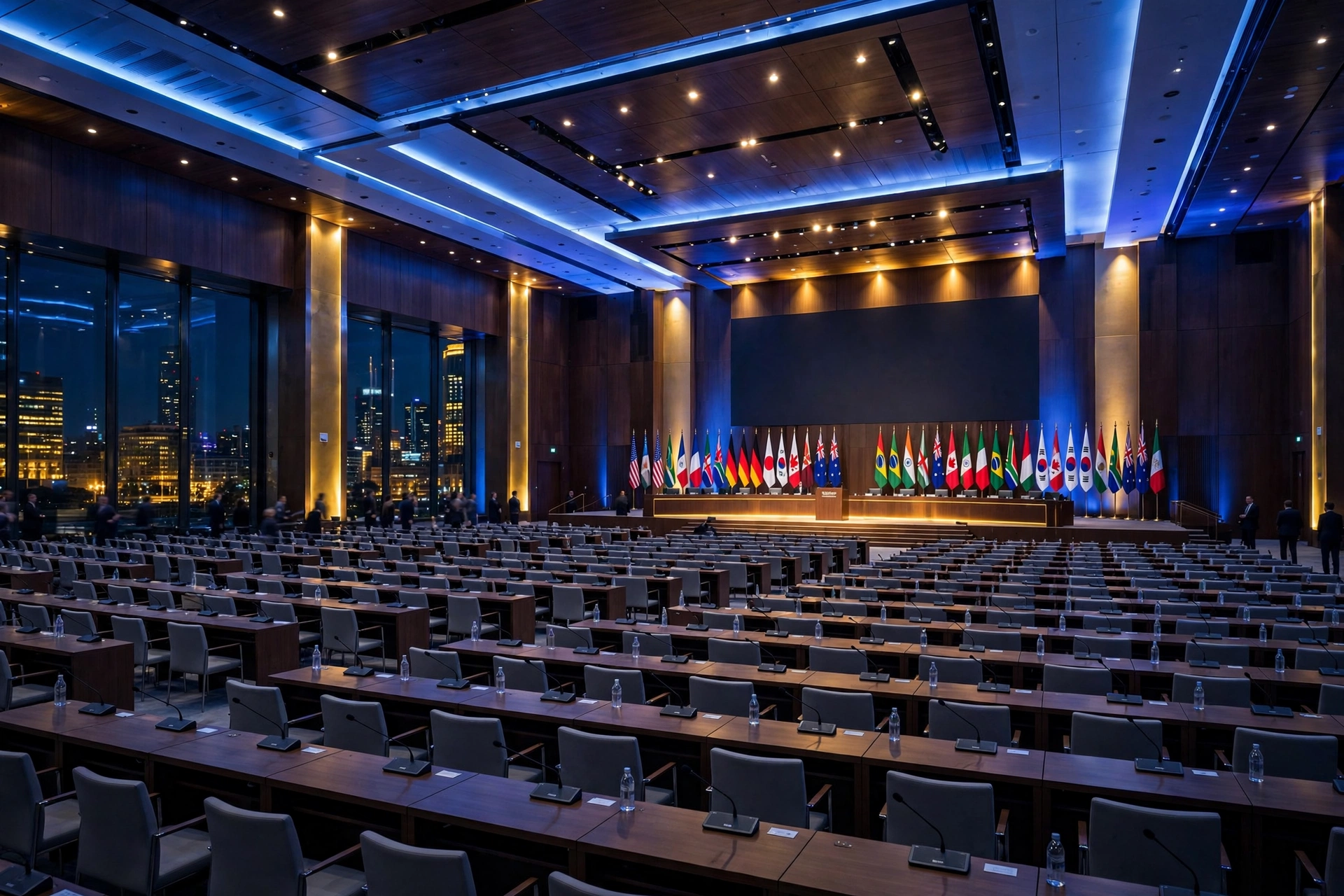
The announcement came during the plenary of the 2026 IMF-World Bank Annual Meetings, held in Bangkok from October 12 to 18, which brought together more than 15,000 participants from 191 member countries. In its statement, the ministry called the appointment a “historic milestone” and said Pakistan was returning to the position for the first time since 1953.
After the plenary, Cheema was briefed by the World Bank Group’s Corporate Secretariat on the responsibilities of the chairmanship. He also met the institution’s Vice President and Corporate Secretary, Aradhana Kumar-Capoor, to discuss coordination during Pakistan’s tenure, and held discussions with the outgoing chair, Carlos Carvallo Spalding, the president of Paraguay’s central bank, on the duties of the position and priorities for the coming year.
What the chair actually does
The Boards of Governors are the highest decision-making bodies of the IMF and the World Bank. Each member country is represented by a governor, usually the finance minister or the central bank chief. At the Annual Meetings, the governors meet in plenary sessions where they consult on the state of the world economy, present their countries’ views and approve resolutions. The chair presides over these proceedings and, in practice, helps set the tone and agenda of the debate.
The chair is not the institution’s chief executive, though. Most operational power sits with the executive directors, who run the institutions between meetings. Under the World Bank’s bylaws, the chair is selected at an annual meeting and serves until the conclusion of the following annual meeting, with the role rotating among the membership each year. The real weight of the position lies in agenda-setting: the chair country gets to steer which issues the world’s finance ministers and central bankers spend their plenary time on.
The borrower in the chair’s seat
Pakistan is borrowing under the $7 billion Extended Fund Facility, approved in September 2024 to address balance-of-payments needs, strengthen the fiscal position, rebuild foreign exchange reserves and support structural reforms, and the $1.4 billion Resilience and Sustainability Facility, approved in May 2025 to finance climate resilience and disaster preparedness. On October 7, IMF staff and the Pakistani authorities reached a staff-level agreement on the fourth review of the EFF and the third review of the RSF, which could unlock about $1.21 billion, roughly $1 billion under the EFF and $210 million under the RSF, once the IMF Executive Board approves it.
That timetable means Pakistan will very likely sit in the chair while still drawing on both programmes: a borrowing member presiding over the institutions it borrows from. The position also arrives as fuel levies are adding to household costs at home and the global ship-fuel market is being redrawn by war, both of which raise the import bill the IMF programmes are meant to cushion.
Cheema’s stated agenda fits the borrower’s seat. According to the ministry, he wants to amplify the voice of developing countries, push for more effective and predictable development finance, improve coordination among multilateral development institutions and mobilise private capital for sustainable and inclusive growth.
What to watch next
The 2027 Annual Meetings are scheduled to take place in Washington, DC, from October 4 to 9, and Pakistan’s term as chair runs until the conclusion of that meeting. Three things are worth watching: how Islamabad uses the gavel on developing-country finance, whether its own review milestones under the EFF and RSF stay on schedule through 2027, and the symbolism of a borrower setting the agenda for the world’s lenders. As freight rail becomes central to Pakistan’s economic plans, the development finance Cheema is championing could matter at home too. PakMirror’s Pakistan business and economy coverage will follow how Pakistan uses the chair.