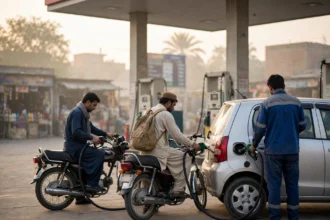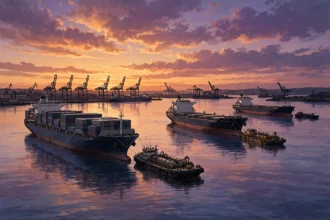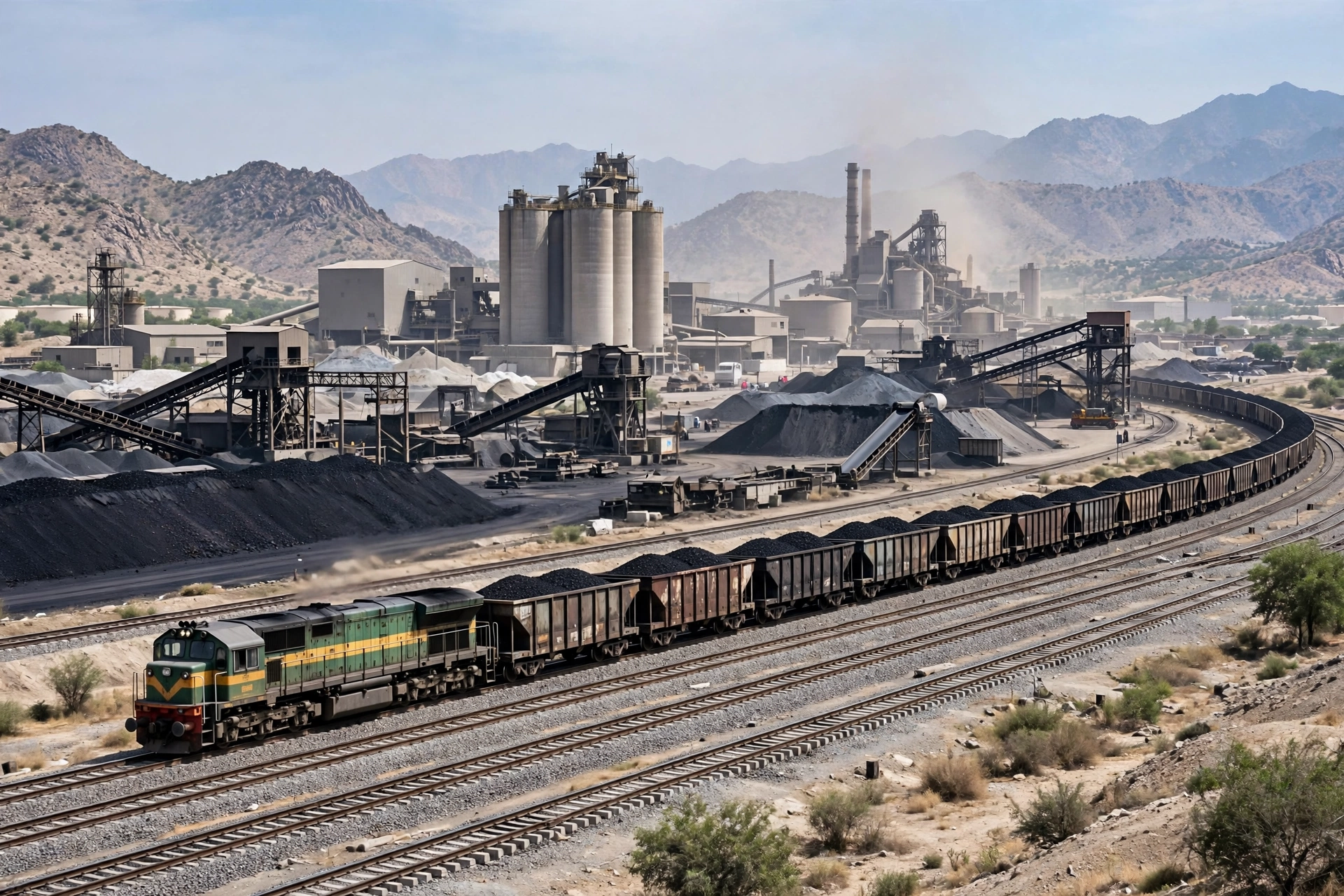

Pakistan Railways is quietly building a coal-centred freight future. This week, Cherat Cement asked to move coal by rail from Karachi Port and distribute its cement by train; last week the Economic Coordination Committee approved Rs10 billion for the Thar Coal Rail Connectivity Project to carry indigenous Thar coal; and the railway has just closed a record freight year at nearly Rs41 billion, beating its Rs38 billion target. No official has linked the three developments, but together they point in one direction: coal logistics as the engine of the railway’s freight strategy.
Cherat Cement eyes rail for coal imports and cement dispatch
Dawn reported on Thursday that a Cherat Cement Factory delegation, comprising retired Major Arshad and Wahid Islam Afridi, met Peshawar Divisional Superintendent of Railways Imran Hayat in his office to discuss rail transport. The delegation expressed interest in moving coal from Karachi Port to the factory by rail, and in a joint rail operation to distribute the factory’s cement to major cities across the country.
The move follows directives from Federal Minister for Railways Muhammad Hanif Abbasi to promote freight transportation through the railway network. Hayat said Pakistan Railways was working to improve its freight services and provide reliable facilities to industrial enterprises, adding that greater cooperation with industry could expand freight operations, increase railway revenue and support economic activity. The proposed arrangement is expected to ease pressure on roads from heavy goods vehicles and improve logistics for the industrial sector, with further discussions planned on operational arrangements.
Rs10bn Thar coal rail link gets ECC approval
The meeting comes a week after the Economic Coordination Committee, chaired by Finance Minister Muhammad Aurangzeb, approved a Rs10 billion Technical Supplementary Grant for the Ministry of Railways for the Thar Coal Rail Connectivity Project. The project is meant to improve the transportation of indigenous Thar coal for power generation and industrial use.
The context matters. Thar Block II’s phase three expansion is raising mine capacity by 47 percent, from 7.6 to 11.2 million tonnes per annum, with the additional 3.6 million tonnes earmarked for the 660-megawatt Lucky Electric plant near Karachi, at a time when fuel security has sharpened as rising fuel costs are already squeezing household budgets and industry alike.
The freight numbers behind the push
The strategy, if it is one, rests on strong numbers. In FY2025-26, Pakistan Railways earned nearly Rs41 billion in freight revenue against a Rs38 billion target, seven percent above target and 32 percent higher than the previous year, according to the Associated Press of Pakistan. Commodity-specific trains, including cargo express, coal, container and phosphate services, are already in operation, with capacity of almost ten freight trains a day from Karachi to up-country stations.
Overall, the railway posted a record Rs115.157 billion in revenue in FY2025-26, up 24.19 percent year on year, with freight earnings of Rs40.783 billion and passenger earnings of Rs50.590 billion, figures presented by Minister Abbasi to the federal cabinet. Those are the kinds of numbers tracked regularly in our Pakistan business and economy news coverage.
What to watch next
Taken together, the pattern is hard to miss: coal arriving through Karachi Port today, indigenous Thar coal on a dedicated rail corridor tomorrow, and a freight business already running commodity-specific trains at record revenue. Whether the government ever announces this as a formal coal-freight strategy matters less than the pipeline being built.
The near-term questions are concrete: does the Cherat Cement discussion turn into a signed operational agreement, when does the Thar rail project move from grant approval to tenders and track-laying, and can freight revenue keep outpacing its target as it did this year? The grant also sits among other large fiscal commitments this month, including Punjab’s Rs10 billion flour subsidy approved on October 10, which shows where the government’s money is going. For now, the railway’s freight future appears to run on coal.