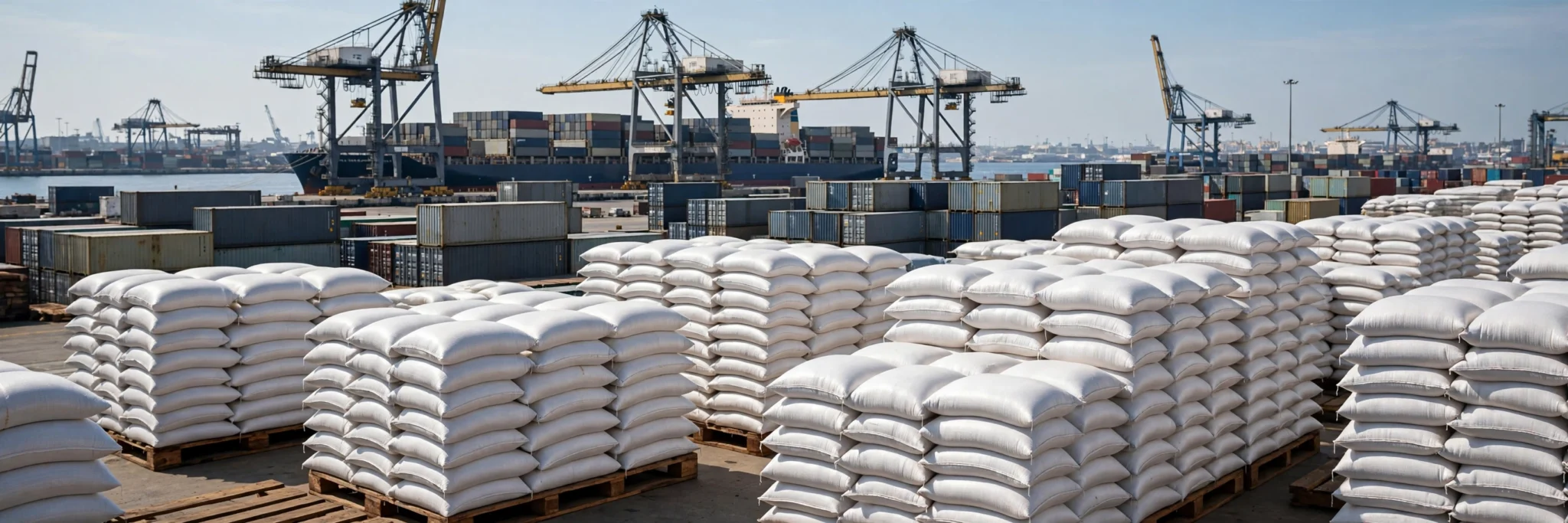

The Economic Coordination Committee approved the export of 416,000 tonnes of sugar on Friday, 20 November, the third such permission in four months. The decision gives the sugar mills what they demanded all season. It gives the growers nothing they asked for: no cane price has been fixed, and the mills have not started crushing.
National Food Security Minister Rana Tanveer Hussain confirmed the decision to The Express Tribune. APP, reporting the same meeting, said the committee considered the sugar recommendations to safeguard farmers through adequate price support. The official account names neither.
Mills got the export, growers got no price
The mills had asked for exactly this: permission to export 400,000 tonnes before crushing began, and the ECC has now granted it. Growers want Rs650 a maund; the Sindh Abadgar Board puts the growing cost at Rs647 a maund. The only mill buying cane offers under Rs350 a maund, The News reported, less than half the growing cost. Growers want a fixed support price now. The ECC announced none.
The numbers do not add up to 600,000
The quantity needs reading carefully. Profit reported the approval as 400,000 tonnes and noted that the Finance Ministry has not disclosed the approved quantity. The Express Tribune puts it at 416,000 tonnes: 400,000 tonnes recommended by the Cabinet Committee on Export of Sugar, plus 16,000 tonnes for Sindh.
It is the third permission in four months, after 108,000 tonnes of imported sugar in August and 200,000 tonnes of local sugar in mid-September. The quantity cleared for shipment this season now stands at 724,000 tonnes.
That total does not match the figure reported this week. The News reported on Wednesday that the Centre had cleared a proposal to export 600,000 tonnes. An industry figure told The Express Tribune the 600,000 tonne decision had been taken months earlier and phased to avoid publicity. The total now stands at 724,000 tonnes, 124,000 tonnes more than the industry was told to expect.
Monthly consumption runs at about 564,000 tonnes, and the surplus stood at about 1.197 million tonnes when the season began. Of that, 616,000 tonnes is now cleared for export, the 200,000 tonnes from September and the 416,000 tonnes from Friday, leaving about 581,000 tonnes, roughly one month of national consumption.
An approval on the eve of the IMF board meeting
The approval came days before the International Monetary Fund’s board is due to consider Pakistan’s request for the fifth $1 billion tranche of its $7 billion programme. The Fund requires Pakistan to deregulate the sugar sector fully. That condition remains unmet: Finance Secretary Imdadullah Bosal told the ECC one province had refused, The Express Tribune reported.
The government’s own draft deregulation policy explains why. Production last year was 5.8 million tonnes, against consumption of about 6.3 million tonnes. Retail prices have risen by an average of about 16 per cent a year over five years. The average household spends about Rs2,302 a year on sugar, about 3.91 per cent of its budget.
The procedure has drawn as much attention as the quota. The sugar summary was not circulated to ministries and was not on the ECC’s regular agenda, The Express Tribune reported. The government has not said how the quota will be allocated, when shipments will begin, or what it will do if local prices rise.
The test now is whether the mills crush
When the season failed to start on 15 November, only one of Punjab’s 47 mills was genuinely crushing cane. A senior official told The News mills would start within a week of the announcement. The mills’ own position is different: their association decided not to begin before December, and its north zone says the 1950 Act allows a start by 30 November.
The cane is ready. Sugar recovery in Punjab has approached 10 per cent this season, the Sugarcane Research Institute in Faisalabad told APP. Every day of delay costs growers twice: unharvested cane loses weight and wheat sowing slips behind. The farmers demanded a wheat support price of Rs5,000 a maund in October, and late sowing threatens that crop too.
Last year showed what happens when the sequence goes wrong. Pakistan exported about 765,734 tonnes in eleven months of FY2024-25, then approved imports of 500,000 tonnes as retail sugar hit Rs200 a kilo. The country sold sugar cheap and bought it back dear, and the State Bank’s annual report for FY27 linked the exports to squeezed availability, price rises and food inflation.
What is new is the price of admission: the mills were told, in the ECC’s own words, that the export is meant to safeguard farmers through adequate price support. The growers are still waiting to see that support as a number, not a sentence. Read more business and economy news from Pakistan.