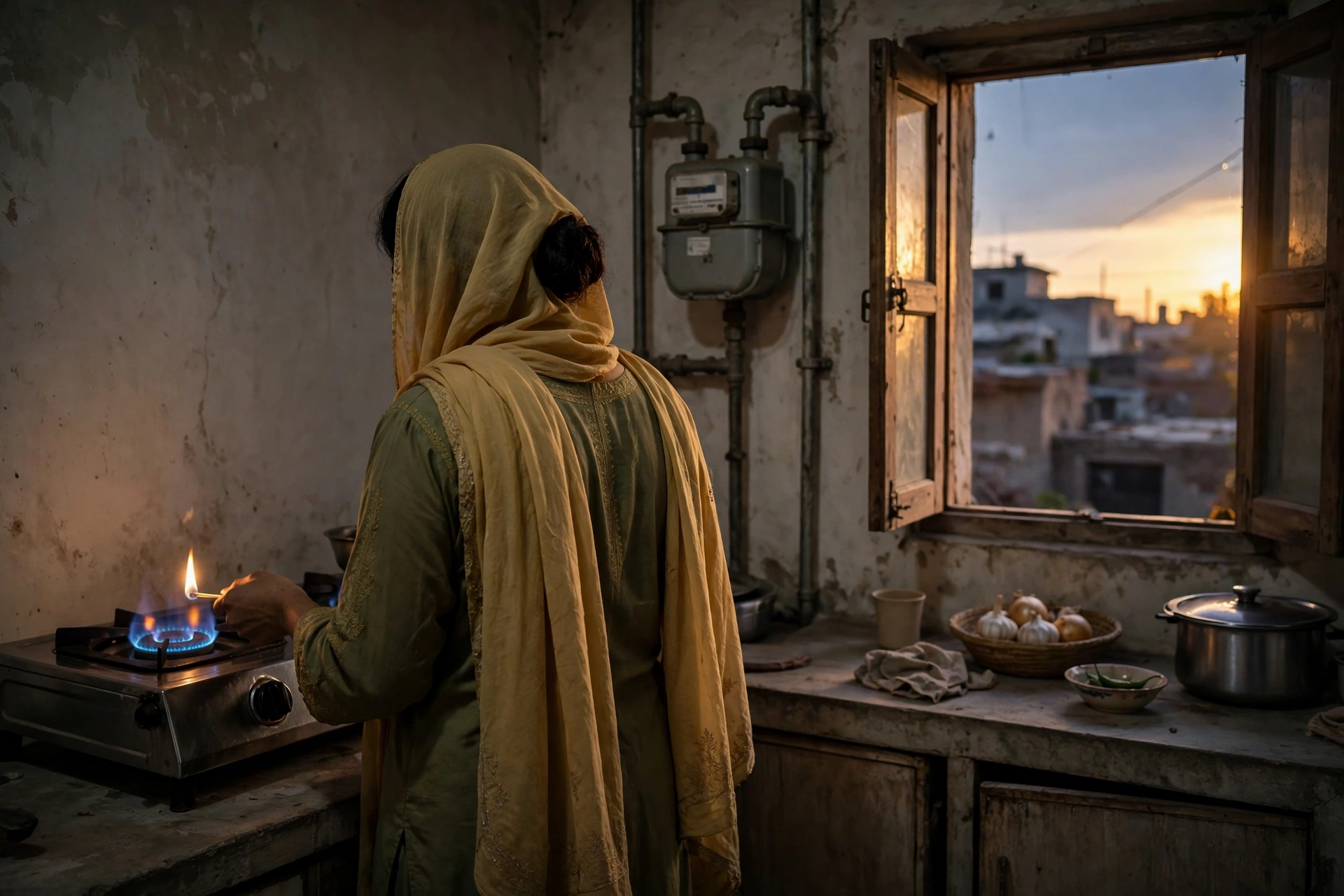

Pakistan will ration piped gas to eight hours a day this winter. From Wednesday, 4 November, the two gas utilities will supply household customers only during three meal windows: 6:30am to 9am, noon to 2:30pm, and 6pm to 9pm. The Sui Southern Gas Company serves Sindh and Balochistan, and Sui Northern Gas Pipelines Limited serves Islamabad, Punjab and Khyber Pakhtunkhwa. Both announced the same timetable on the same day, acting on federal government directives and putting domestic cooking first. Sixteen hours in every twenty four will have no scheduled household supply.
The three windows, in plain numbers
The arithmetic is the whole policy. Breakfast gives two and a half hours, lunch gives two and a half hours, and dinner gives three hours. Added together, that is eight hours. A household that cooks outside those windows, heats water in the afternoon, or runs a gas heater late at night will not be covered. Sui Southern has given its helpline as 1199 for queries and complaints.
From proposal to policy in eight days
The speed of the change is part of the story. On 27 October, reporting described the eight hour plan as a proposal only, with a presentation still to be put to the prime minister and no final decision announced. Eight days later, both utilities issued the same three windows. The morning, lunch and dinner slots in the October proposal are the slots in the November announcement.
The volumes behind the decision were already on record in that October reporting. Sui Northern was supplying about 487 million cubic feet a day to domestic consumers, and Sui Southern about 286 million cubic feet a day. Added together, that is 773 million cubic feet a day going to households, yet the system still cannot keep the pipes open all day.
Who is cut so households can cook
The News reporting on the Sui Northern schedule sets out the rest of the queue. Gas to the compressed natural gas sector has been cut from 50 million cubic feet a day to 35 million cubic feet a day, with a plan to suspend it altogether in the coming days. Cement makers have already switched to coal. Industries on the transmission network are receiving about 200 million cubic feet a day, the power sector about 140 million cubic feet a day, and fertiliser about 53 million cubic feet a day.
Read as a stack, the order is clear. Homes come first at meal times, then power and fertiliser at reduced levels, then industry, then compressed natural gas last. That order links the timetable to the wider winter fuel squeeze. When piped gas is rationed, families turn to cylinders, which already carry three LPG prices in November, from Rs294 to Rs630 a kilo. The government answered that side on 3 November with LPG auctions replacing quotas in the Rs450 winter test, alongside the petrol pricing formula rewritten on November 2.
What a window does not guarantee
A window is a time, not a pressure reading. Reporting on the announcement stresses that the schedule does not guarantee full pressure at every meter throughout each slot, and customers have already raised exactly that complaint. The Karachi Post reported public criticism on the day of the announcement, with consumers demanding uninterrupted supply, better pressure, and relief from billing they describe as excessive despite prolonged load shedding.
Some users proposed longer windows, 6am to 10am for breakfast, noon to 3pm for lunch, and 6pm to 10pm for dinner, which would take the day to eleven hours. Others asked for gas at least an hour before Fajr prayers, for Sehri, fasting and Tahajjud needs in winter. Those demands are not part of the official schedule. They show where the timetable will be tested first.
Three tests before winter bites
First, watch the first full week of pressure, street by street. The test is not whether the timetable exists, but whether gas arrives at usable pressure in Karachi neighbourhoods that reported low pressure on Tuesday. Second, watch the compressed natural gas date. Taking that sector from 35 million cubic feet a day to zero is the next cut in the queue, and its timing will show how tight supply really is.
Third, watch for an end date, because neither utility has published one. The October proposal became November policy without a published expiry, and no formal notification ending the three window schedule has been reported. Until a dated notification, a cargo resumption, or a revised timetable appears, households should plan on eight hours as the winter rule. For more business and economy news from Pakistan, the number to track is not eight alone, but eight with pressure, because a window without pressure is not supply at all.