
The State Bank of Pakistan expects inflation to ease back into its 5 to 7 percent target range this fiscal year, with the economy growing between 3.5 and 4.5 percent. The forecast comes from the central bank’s Annual Report on the State of Pakistan’s Economy for FY26, released on Monday 16 November, after a year of three shocks: United States tariffs, monsoon floods and the Middle East conflict that began in late February 2026. Growth reached 3.7 percent, average inflation was 7.1 percent and the current account deficit was just 0.1 percent of GDP. But the report’s longest chapter warns that growth alone is not creating enough jobs.
The FY27 forecast in four numbers
The report puts four numbers at the centre of the year ahead: real GDP growth of 3.5 to 4.5 percent; inflation easing gradually towards the 5 to 7 percent target range; a current account deficit of zero to 1 percent of GDP, held in check by workers’ remittances; and a fiscal deficit of 3 to 4 percent of GDP. Reserves should keep building towards four months of import cover, helped by the 3 billion dollars raised through a Eurobond issue in September 2026. Kharif output of sugarcane, rice and maize is higher than last year.
What FY26 actually delivered
Real GDP grew 3.7 percent in FY26, up from 3.1 percent the year before, driven mainly by a rebound in large scale manufacturing, which grew 5 percent. Remittances did the heavy lifting: overseas Pakistanis sent home a record 41.6 billion dollars, up 8.6 percent from 38.3 billion dollars in FY25, nearly covering the combined deficit on trade, services and income. The current account deficit ended the year at 0.1 percent of GDP. Exports, by contrast, contracted 4.7 percent on weak global demand, closed western borders and supply chain disruption, although information technology services became the country’s second largest export sector after knitwear.
Average inflation was 7.1 percent, just above the top of the target range, and it averaged 10.2 percent in the March to June quarter after the energy price shock pushed year on year inflation into double digits from April. The policy rate moved twice: cut to 10.5 percent in December 2025, then raised to 11.5 percent in April 2026. The budget improved sharply: the fiscal deficit more than halved to 2.6 percent of GDP from 5.4 percent, and the primary balance posted a surplus of 2.9 percent of GDP. Reserves rose to 18.4 billion dollars by end-June, up from 14.5 billion dollars a year earlier, and have since climbed past 21 billion dollars.
The jobs chapter: growth without enough jobs
The report’s special chapter, titled Structural Challenges to Job Creation in Pakistan, is where the central bank stops celebrating. It identifies weak and volatile growth, slow structural transformation and signs of premature deindustrialisation as the main obstacles to job creation, plus low female participation, high youth unemployment and informal work. The World Bank’s October 2026 Pakistan Development Update adds the scale: roughly one in six new entrants to the labour force has been left without work since 2018. Punjab’s PIVOT programme trained 402,060 people for 162,000 jobs, showing the gap between training and jobs. The prescription: investment, infrastructure, skills and simpler taxes. On tax, raising rates has stopped working, the base must widen, and Pakistan’s corporate income tax rate of 29 percent sits above the 26 percent optimal rate the report cites.
The petrol test of the inflation forecast
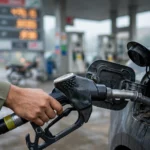
The easing forecast is being tested at fuel stations. The April energy shock was global, but the price households watch most has been falling for weeks: petrol has now fallen to Rs328 in its tenth straight cut, down Rs49.91, or about 13 percent, from Rs377.91 on 2 November. Two cautions. First, about Rs114 of every litre sold at Rs328 is tax, so more than a third of the pump price is government revenue, not oil. Second, the Rs15 billion refinery arrangement behind part of the cut runs for 30 days, expiring in early December. If oil turns up again, or the arrangement ends, the easing path faces its first real test. The USD to PKR exchange rate today matters too: a weaker rupee pushes imported fuel costs back up.
What could still go wrong
The report lists its risks plainly: the Middle East conflict is still running, new trade blocs are reshaping export markets, and climate shocks are becoming more frequent. It also assumes exports recover and remittances keep growing, neither guaranteed in wartime. The honest reading is narrower than the headline numbers: FY26 proved the economy can absorb shocks, but the growth projected for FY27 is the same range the jobs chapter says has not been enough. Whether this year is different depends on whether the reforms the report calls for happen.