
Pakistan’s power regulator has let a new housing city’s electricity company buy power from a cement plant, cutting K-Electric out. But the change does not decide what residents will pay, and the regulator has already criticised the company for leaving the paperwork until the last minute.
NEPRA issued the order on 19 November. It allows DHA Energy Supply Company, known as DESCO, to buy electricity directly from Lucky Cement Limited for DHA City Karachi, with effect from 1 October 2026, for six months.
What changed on 1 October
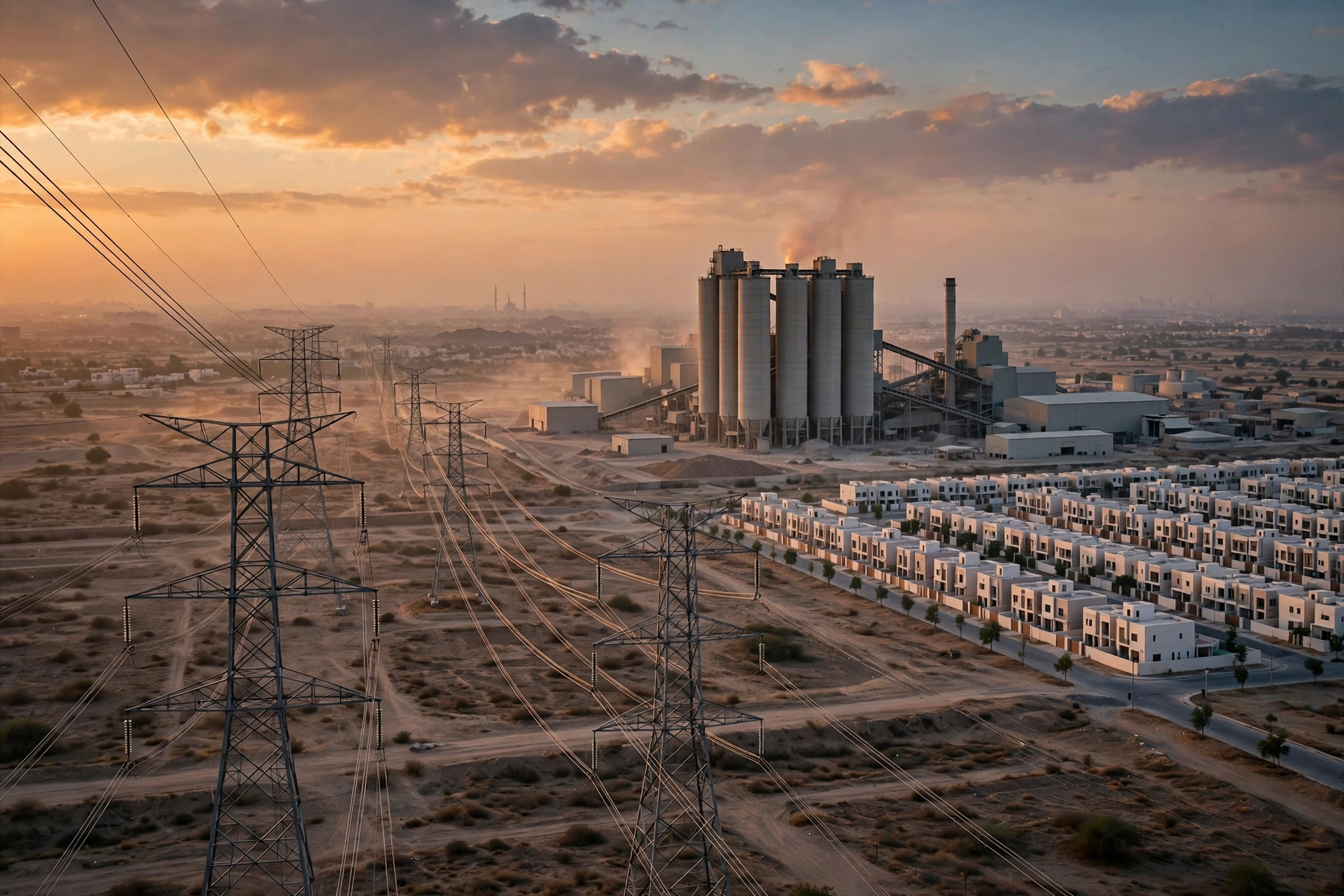
DHA City Karachi sits about 56 kilometres up the M-9 Motorway from Karachi and spreads over about 22,000 acres. It has no connection to the national grid or to K-Electric’s network, so its power comes from next door. Lucky Cement’s plant adjoins the city’s north-east corner, and its 6 megawatts feed straight into DESCO’s grid station.
Until September, K-Electric bought the power from Lucky Cement under a contract approved by NEPRA in 2020 and supplied it to DHA City. That contract expired on 30 September 2026.
DESCO had been preparing for the handover for years. NEPRA granted it two parallel licences on 24 July 2026, a distribution licence and a supplier-of-last-resort licence, both effective from 1 October 2026 and running to 30 September 2046. DESCO is the first privately owned entity in Pakistan to hold both licences at the same time, under the Competitive Trading Bilateral Contract Market framework, and the first company licensed to supply solar power alongside conventional distribution.
K-Electric did not want to leave. Ahead of the expiry it sought a two-year extension of its agreement with Lucky Cement, on 11 September. NEPRA went the other way and let DESCO buy the power on its own for six months.
The bill residents actually pay
For now, nothing changes on the bill. DHA City Karachi residents will keep paying the uniform tariff applicable to K-Electric consumers, although their final bills may be adjusted later. DESCO will buy at the generation tariff under the existing K-Electric and Lucky Cement agreement.
NEPRA made clear that the permission does not amount to final approval of DESCO’s procurement arrangement, or of its tariffs. Those will be determined separately, and once they are, the regulator can adjust the amounts DESCO billed under the K-Electric tariff, either upward or downward. DESCO must keep complete and verifiable records of its purchases, costs, billing and collections.
That matters because power bills are already under pressure elsewhere. December power bills could rise by Rs4.22 a unit. The DESCO change guarantees no saving, and the final rate is still undecided.
The regulator’s rebuke
The order also carries a rebuke. DESCO submitted its request on 28 September, and NEPRA received it on 30 September, one day before the company’s licensed responsibilities were to start. NEPRA called the late request evidence of inadequate advance planning, though it allowed the arrangement as an exceptional, temporary measure to protect consumers from supply disruption.
DESCO now has one month from the date of the order, about 19 December, to submit separate tariff petitions, a Comprehensive Power Acquisition Programme and a Distribution Investment Plan, and to comply with the NEPRA Electric Power Procurement Regulations of 2022. NEPRA warned that failure could result in proceedings under the NEPRA Act.
Six megawatts for a 22,000-acre city
The numbers show how early this project still is. Six megawatts for about 22,000 acres works out at about one megawatt for every 3,667 acres, a starting supply for a city being built. DESCO’s programme puts grid station construction in 2027.
What is filling up is the city itself. DHA City says DESCO has energised the main switch room at Shaukat Khanum Memorial Cancer Hospital, described as the Trust’s third and largest cancer hospital, reported on track to open in December 2026. A hospital of that size cannot run on an uncertain supply, which is why the regulator allowed the interim deal. Solar power now meets 28% of Pakistan’s electricity demand, and DESCO’s solar licence fits that shift. Karachi faced night load shedding in October as K-Electric cited an RLNG shortage, a reminder of how thin the margin is.
What happens next
Two dates will decide whether this lasts or is a stopgap. The first is about 19 December, when DESCO’s tariff petitions and power acquisition programme are due. The second is about 31 March 2027, when the six-month permission runs out. By then DESCO needs a permanent procurement arrangement that NEPRA has approved, and a tariff that settles what residents pay.
Until those filings land, DHA City Karachi has a new supplier, the same bill, and a regulator watching. For the latest business and economy news from Pakistan, the December filing will show whether DESCO has caught up with the timetable it missed in September.