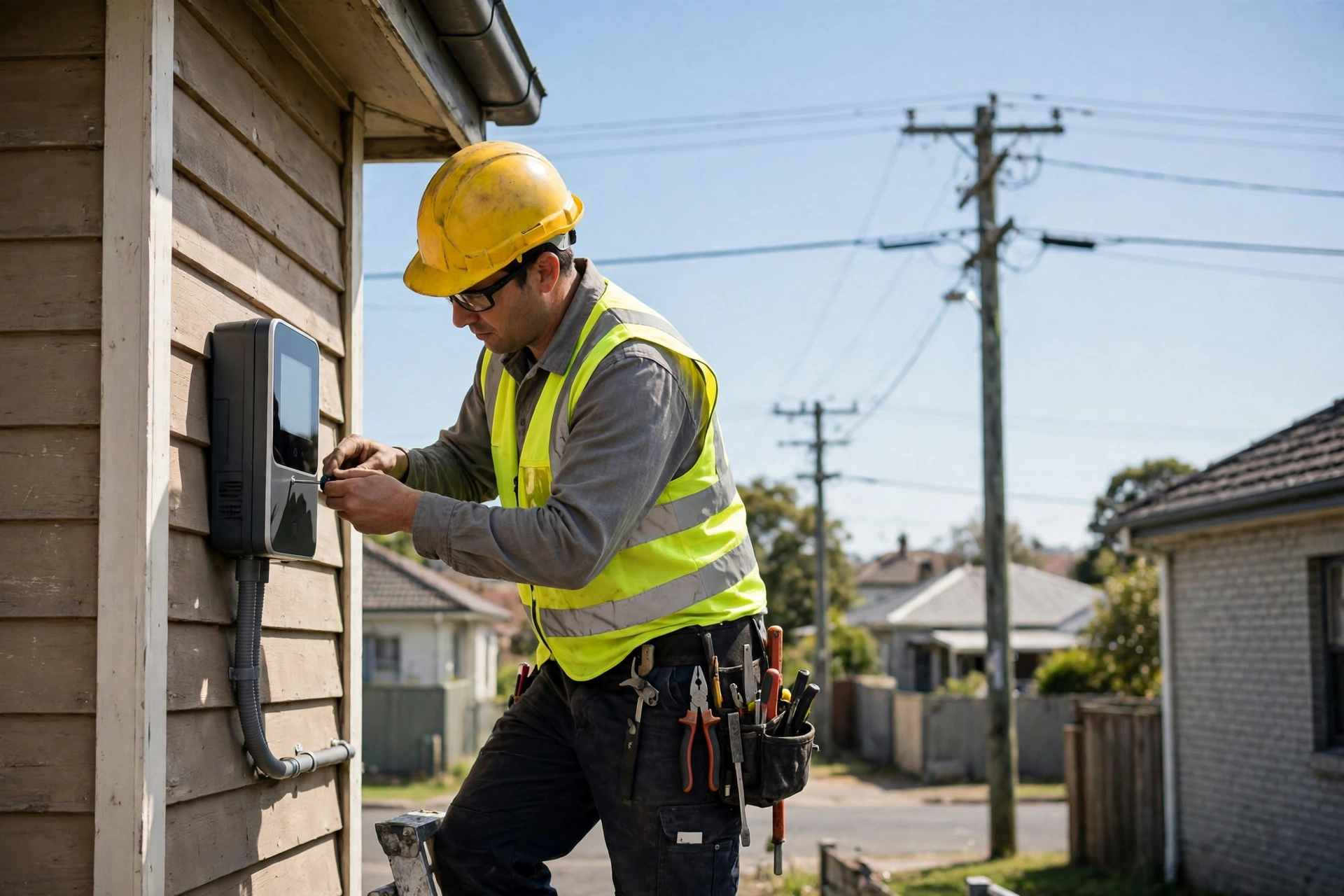

Pakistan plans to replace 16.219 million electricity meters with smart meters across five distribution companies, in a programme that could cost up to $1.3 billion. Households will pay nothing when the new meter is fitted, but the cost will come back through monthly bills. The International Finance Corporation (IFC) will discuss the plan with the Power Division when its regional vice president visits from November 24 to December 2.
What the plan covers
The Advanced Metering Infrastructure programme covers the Lahore Electric Supply Company (LESCO), the Multan Electric Power Company (MEPCO), the Peshawar Electric Supply Company (PESCO), the Hazara Electric Supply Company (HAZECO) and the Quetta Electric Supply Company (QESCO). Private providers will install them in phases under a public-private partnership. The IFC puts the cost at $60 to $80 per meter, or about $973 million to $1.298 billion, to finish within two years. The final figure comes only after the first bidding round. The IFC is already transaction adviser under an agreement signed on April 17, 2026, and its regional vice president, Imad Najib Ayed Fakhoury, has asked to meet the Power Minister on November 30.
Free at the door, not free on the bill
The headline promise is free installation. In practice, investors will recover their money through an agreed payment per meter added to monthly bills, settled in rupees, over 12 years under the PPIB framework agreed in October. The Federation of Pakistan Chambers of Commerce and Industry (FPCCI) has run the numbers and does not like them. On its illustrative assumptions, Rs40,000 per meter for 16.2 million meters means Rs648 billion upfront, financed over 12 years at 15 per cent a year, or about Rs615 per meter per month. Total payments could reach about Rs1.4 trillion. The Federation stresses these are illustrative estimates, and wants an independent cost-benefit analysis published first. Its sharper warning is about the structure: the draft guidelines reportedly do not link payments to how well a company collects its bills, so investors could be paid in full even if theft and losses do not fall, repeating the capacity payment model of power producers. December power bills could rise by Rs4.22 a unit, so the meter charge would land on bills that are already moving up.
Two price tags for the same meters
The two price tags for the same 16.219 million meters differ by about $1 billion. In October, PPIB described the project as a $2.3 billion programme, about $142 per meter. The IFC’s preliminary assessment, reported this week, puts it at $973 million to $1.298 billion, or $60 to $80 per meter. The two are not directly comparable: the PPIB figure was a project figure raised in consultations, while the IFC figure is a preliminary estimate covering supply, installation, head-end and data systems, and licensing, with the final number set by bidding. Even so, the gap is the first question for the November 30 meeting. The government has not yet finalised the technology or procurement.
The test the meters must pass
The case for the meters rests on the losses they should stop. NEPRA found distribution companies added about Rs397 billion to circular debt in FY2024-25, with average losses of 17.55 per cent against an allowed 11.43 per cent: about Rs265 billion from excessive losses and about Rs132 billion from poor bill recovery. Two of the five are the worst in that report: PESCO lost Rs87.48 billion and QESCO Rs52.41 billion, while LESCO lost Rs35.17 billion. The Power Ministry told the Senate that 800,000 smart meters in Islamabad, Rawalpindi and Taxila cut line losses by 2 per cent. The government says losses are already falling: annual losses dropped to Rs325 billion from Rs591 billion in 2024, the Power Minister told the Senate in late October. In September the minister said theft and line losses were affecting 3,500 feeders, and auditors have told a parliamentary subcommittee of an alleged Rs47 billion overbilling scam. On November 10 the government announced smart meters on distribution transformers across all companies, to compare power entering an area with what households are billed. Solar power now meets 28% of Pakistan’s electricity demand, so the grid needs meters that can measure power flowing in both directions.
What happens next
The IFC delegation arrives on November 24, with the Power Minister meeting set for November 30. The FPCCI wants the framework held until a cost-benefit analysis is published and payments are linked to verified performance. DHA City Karachi is already buying power directly from Lucky Cement under a six-month deal that leaves the final tariff undecided. For households in the five companies, the question is simple: the meter is free on the day it is fitted, and the bill will show what it really cost. See our business and economy news from Pakistan.