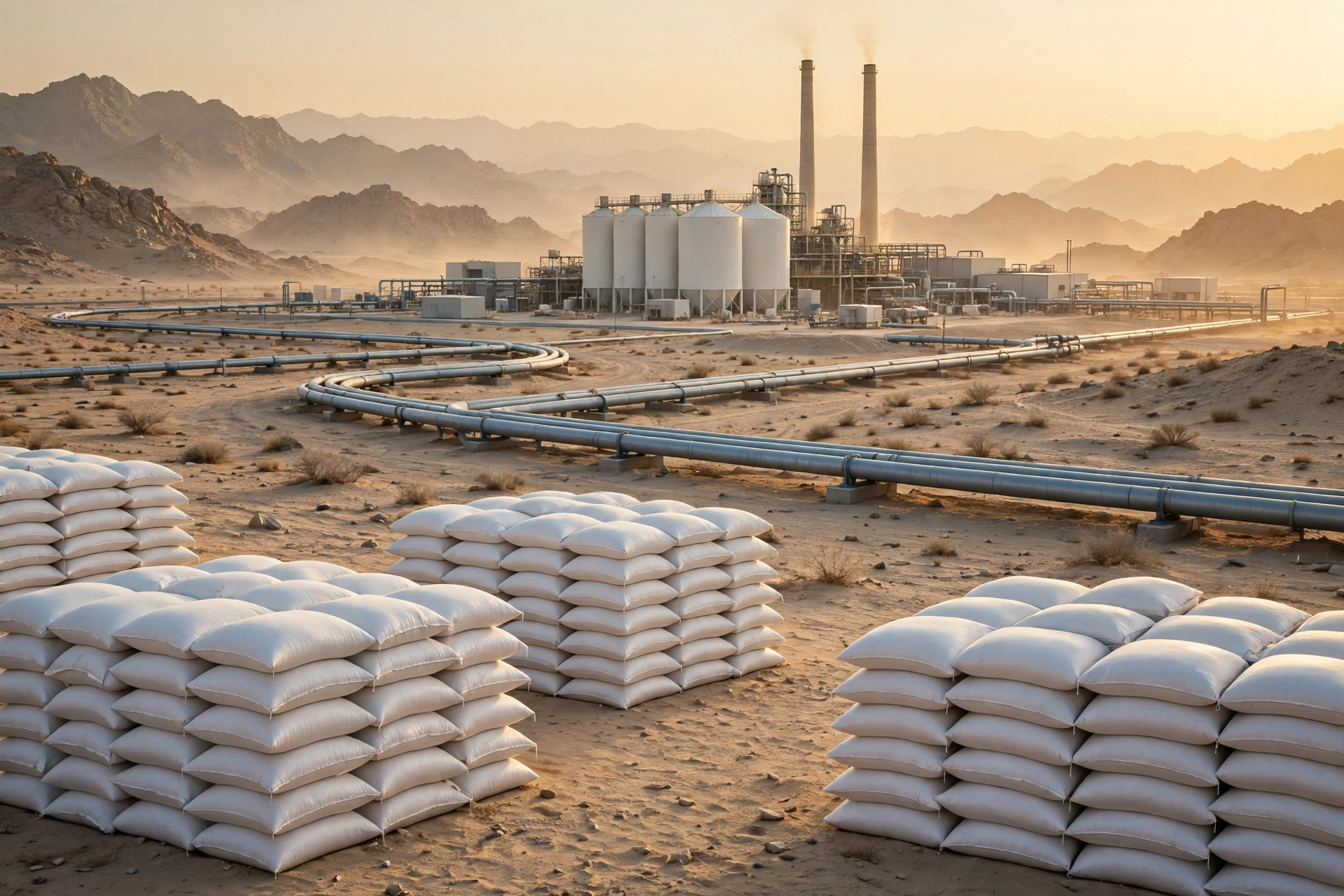

Balochistan has approved a Rs250 billion ($895 million) urea plant at Sui in Dera Bugti, the largest public-private partnership project in the province’s history. The plant will make 580,800 tonnes of urea a year, but farmers will have to wait for it: commercial production is targeted for April 2031, more than four years away. The Balochistan PPP Board approved it at its 10th meeting on 17 November, chaired by Chief Minister Mir Sarfraz Bugti, announced by the authority’s chief executive, Faraz Syed.
What the approval covers
The complex will stand on a 496-acre site and run on gas from the Zin block, operated by OGDCL. It will receive 100 million cubic feet a day of low-BTU gas at $2 per million British thermal units. The Zin block holds an estimated 912 billion cubic feet of recoverable gas, with supply at plateau until 2043. Gas is urea’s feedstock, and it is scarce enough that Pakistan already rations piped gas to eight hours a day this winter. The authority puts the project’s net present value at $301 million, equity return at 25.1 percent and payback at nine years. Those are its own estimates. The opportunity has been shown to Saudi investors, per Topline Research, but talks are early and no agreement is confirmed. The $2 gas price is far below the rates in the two gas price petitions now before OGRA.
Why the timing matters
The approval lands when Pakistan’s urea cushion is thinner than it has been in years. Figures given to the Fertiliser Review Committee on 20 October put Rabi 2026-27 urea availability at 3.95 million tonnes against expected use of 3.596 million, leaving a spare cushion of about 354,000 tonnes. Last Rabi the cushion was about 819,000 tonnes, so the margin has fallen by about 57 percent. The Rabi season is also the one under drought high alert in Sindh and Balochistan. Days earlier, the government told the National Assembly of a fertiliser shortfall of more than 200,000 tonnes, after Middle East-linked gas disruptions shut two urea plants temporarily. Pakistan’s 10 urea plants can make 6.7 million tonnes a year against average use of 6.5 million, so there is almost no slack when one stops.
The arithmetic behind the plant
At full output, 580,800 tonnes a year is about 9 percent of Pakistan’s annual urea use, and about 16 percent of one Rabi season’s expected use. It is also nearly three times the shortfall of more than 200,000 tonnes disclosed in parliament this week. At the average import price of about $786 a tonne recorded in July to September, that output would be worth about $456 million a year at import prices, a PakMirror calculation that is approximate because the price averages all manufactured fertiliser, not urea alone. The catch is the calendar: no bag before April 2031, so it does nothing for the Rabi season now under way or the four after it. Farmers spent Rs531 billion on urea in 2024-25, and every Rs100 rise per 50kg bag adds about Rs13 billion a year to their bill.
Sui’s second act
The location carries a longer story. Gas was discovered at Sui in 1952 by Pakistan Petroleum Limited, and commercial supply began in 1955. At its peak the field supplied close to half of Pakistan’s total gas demand. Today its contribution has fallen to well under 5 percent as the reservoir nears depletion. The plant will not use Sui’s own gas. It will use low-BTU gas from the neighbouring Zin block, found in the same exploration programme, gas long considered too poor to be worth using. A week earlier, the chief minister told the Pakistan Minerals Investment Forum of a planned fertiliser city at Sui to use that low-BTU gas. The approval turns that announcement into a project. There is a sharper local detail. Earlier this month Balochistan conditionally lifted a ban on urea sales in 17 districts, including Dera Bugti, where the plant will stand. The ban, imposed in August because urea is used to make explosives, meant the district could not sell urea freely three months ago. Now it will host the plant that makes it.
What happens next
Approval is the first step. The project still needs financing, a private partner and construction, and no dates have been given. The Saudi interest is real but unconfirmed, and the projections assume the gas keeps flowing at plateau until 2043. If it is built on schedule, Sui will go from the field that powered Pakistan for 70 years to a place that feeds its wheat. Until April 2031, though, the urea gap will still have to be closed the old way: with imports, and with the two shut plants brought back. Read more business and economy news from Pakistan.