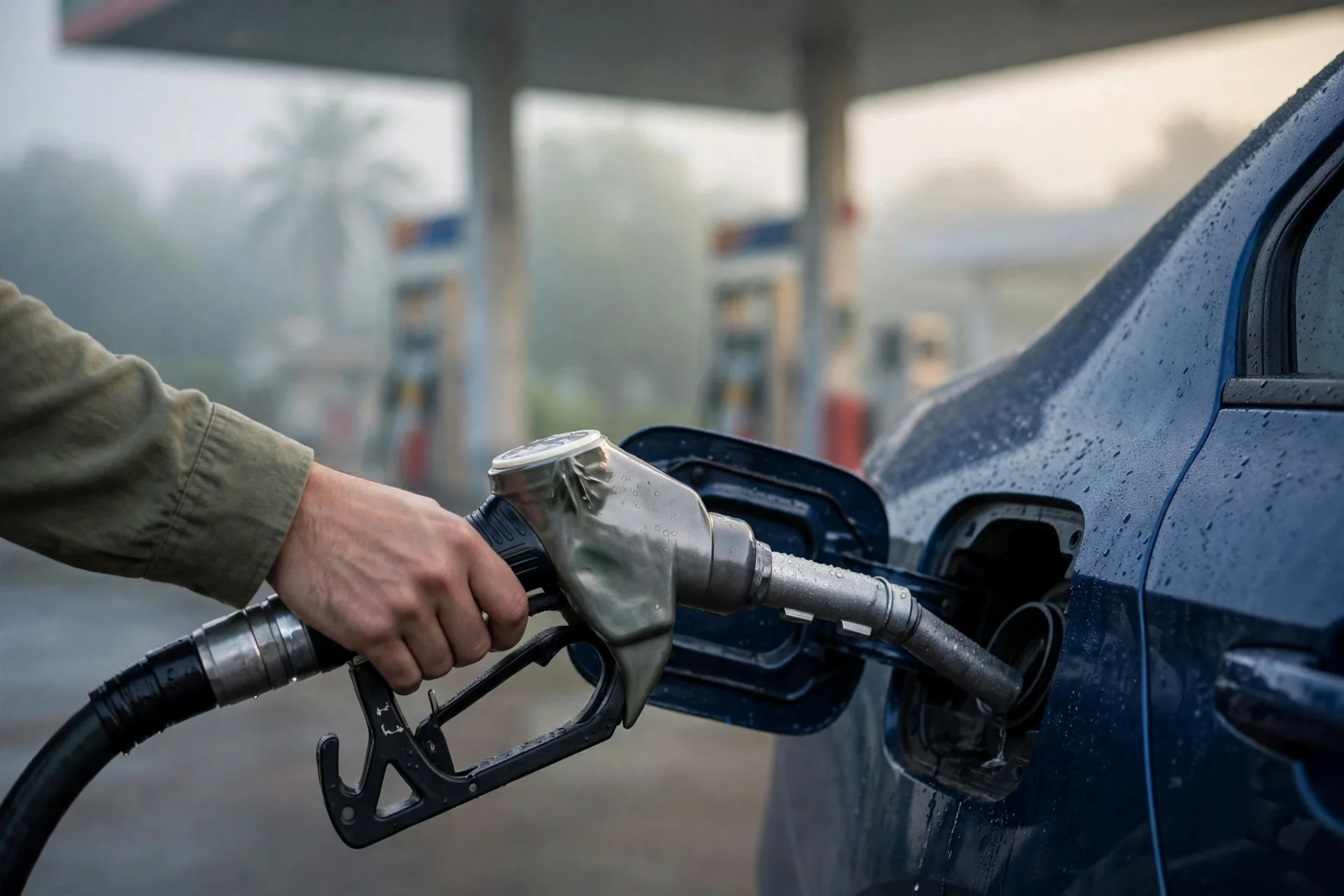

The federal government cut fuel prices for the second day in a row on Wednesday night, taking petrol down Rs3 a litre to Rs335 and high-speed diesel down Rs7 a litre to Rs364. The Oil and Gas Regulatory Authority issued the notification late on Wednesday, and the new rates apply only to Thursday 12 November under the daily price review. It is the seventh cut in ten days.
The ten-day ledger: seven cuts
Petrol stood at Rs377.91 a litre on November 2, when the government rewrote the pricing formula, and diesel stood at Rs402.96. Since then the price has been cut on November 2, 4, 5, 6, 7, 11 and now 12. Petrol is down Rs42.91 a litre in that period, a fall of 11.4 percent, and diesel is down Rs38.96, a fall of 9.7 percent. In the last two days alone, petrol has fallen Rs11 and diesel Rs14, after the sixth cut took petrol to Rs338 on Tuesday.
The cuts track the fall in world oil prices. Bloom Pakistan put the fall in Brent crude at about 21 percent between October 30 and November 10. The rewritten petrol pricing formula ties the pump price to the actual cost of the relevant PSO cargo, so a cheaper cargo now reaches the pump within a day.
What a tankful saves now
Against the November 2 price, a 40-litre car tank now costs Rs1,716.40 less to fill, and a 10-litre motorcycle tank costs Rs429.10 less. A 100-litre diesel tank, the kind fitted to a truck or a bus, costs Rs3,896 less. Those are real savings at the pump, but the same daily review that delivers a cut on Thursday can deliver a rise on Friday if world prices turn.
The tax share keeps growing
What has not moved at all is the tax on each litre. Taxes and duties still take about Rs114 from every litre of petrol sold and about Rs100 from every litre of diesel, including a petroleum levy of Rs80 a litre. Because that rupee figure is fixed, every cut lifts the tax share of the pump price. Tax now makes up just over 34 percent of the Rs335 petrol price, up from about 33 percent when petrol was Rs346 a week ago. On diesel, the tax share is about 27.5 percent of the Rs364 price. In other words, about a third of what a motorist pays for petrol never reaches the oil companies or the refineries at all.
The pricing change works because refineries surrender the gap between the import price and the ex-refinery price into the petroleum levy account, and the benefit is passed on as a lower pump price. The refineries are not short of cash: refineries banked Rs57bn in a quarter, PakMirror reported earlier this month. But the arrangement that fixes refinery charges at March 7 pre-war levels lasts only 30 days from the cabinet approval on October 30, and no replacement has been announced.
The first sign the relief is reaching freight
The test of any fuel cut is whether it reaches beyond the pump, and the first sign has now appeared. The Mini Mazda Association in Faisalabad has cut goods freight charges by up to 5 percent after the diesel cuts. The fare for goods from Faisalabad to Jhang has fallen from Rs14,300 to Rs13,585, to Lahore from Rs21,300 to Rs20,240, to Multan from Rs22,350 to Rs21,230, to Peshawar from Rs68,400 to Rs64,980, and to Karachi from Rs78,000 to Rs74,100, Bloom Pakistan reported. That is one city and one class of vehicle, and passenger fares and shop prices have not yet followed. But it is the first concrete pass-through of this month’s cuts.
What to watch next
Three things decide whether the relief lasts. First, the 30-day freeze on refinery charges runs out around the end of November, and the government has not said what replaces it. Second, the petroleum levy itself is now in negotiation: the government and Jamaat-e-Islami agreed the broad outlines of a draft levy relief agreement on November 10, with an IMF consultation and a meeting between the prime minister and JI chief Hafiz Naeem still ahead, while the party says its levy campaign will continue. Third, Brent crude itself: Wednesday’s market closed with Brent back near 92.95 dollars a barrel after falling to 90.18 dollars on Tuesday, so the world price that drove the cuts down can push them back up just as fast. For now the ledger is clear: seven cuts, Rs42.91 off petrol and Rs38.96 off diesel in ten days. More business and economy news from Pakistan.