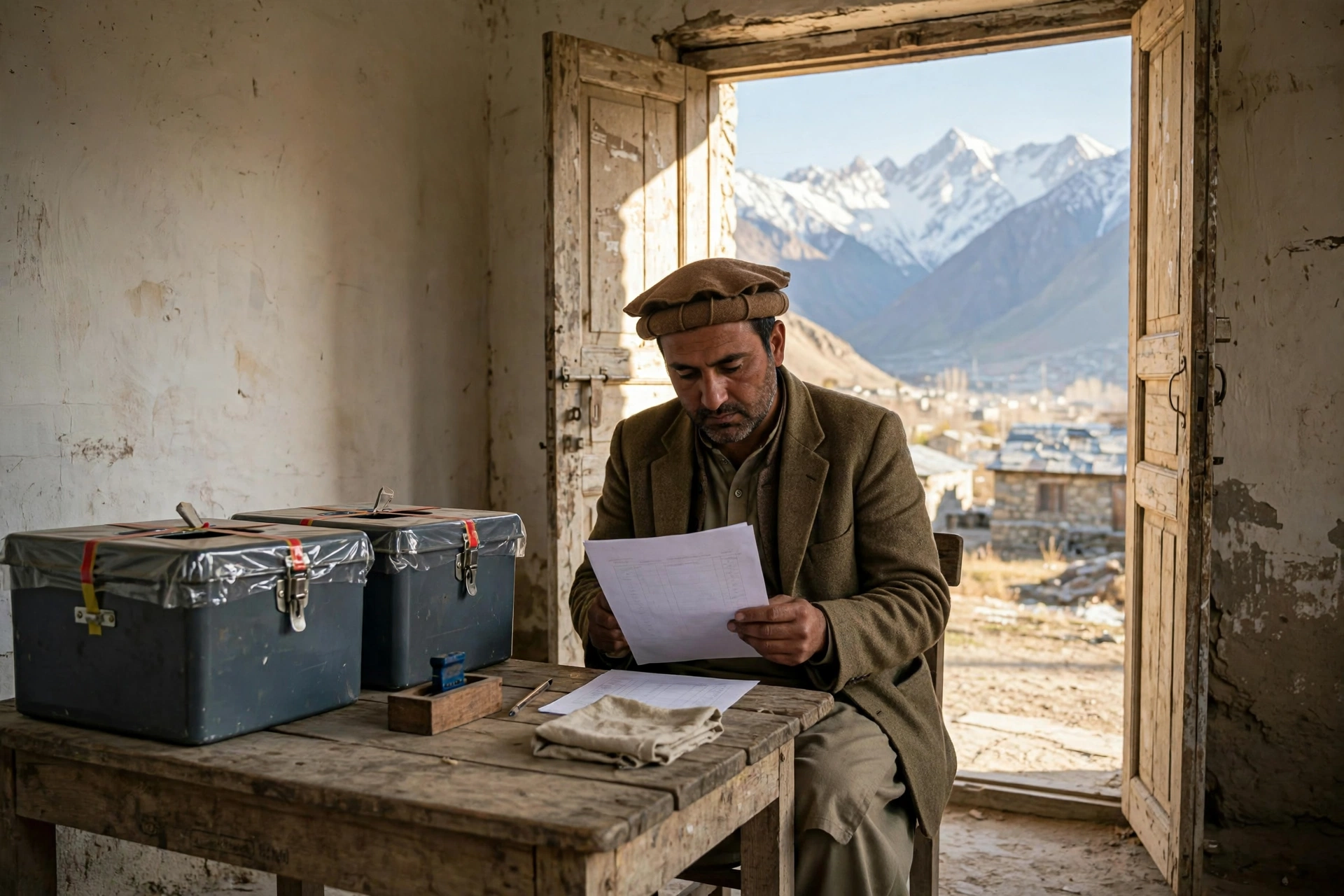

The Gilgit-Baltistan Assembly on Wednesday passed the amended GB Local Government Act 2026, clearing the way for the region’s first local bodies elections in more than two decades. According to a Dawn report published today, the bill was approved by a majority vote in a session chaired by Deputy Speaker Malik Kifayatur Rehman. It creates elected municipal corporations in Gilgit, Skardu and Chilas, union and district councils across every district, and reserves 17 percent of seats for women. The election date will be announced once Governor Syed Mehdi Shah signs the amended bill into law.
What the amended act changes
The headline change is the creation of municipal corporations in the three cities of Gilgit, Skardu and Chilas. Under the new law, the elected members of each corporation will choose their own mayor and deputy mayor, giving the region’s urban centres directly elected local leadership for the first time in over twenty years.
Below the corporations, the act sets up union councils and district councils across all districts of Gilgit-Baltistan. A 17 percent quota has been reserved for women in all local bodies, guaranteeing them a significant share of seats at the grassroots tier. It is part of a broader, if slow, widening of women’s public participation in the country: 8 million Pakistani women gained mobile internet access in 2024.
A wait of more than two decades
Gilgit-Baltistan has not held local government elections since 2004. The road to Wednesday’s vote ran through a months-long standoff between the region’s chief minister and its chief election commissioner. Chief Election Commissioner Raja Shahbaz Khan first scheduled the polls for August 2 and then for September 27, moves that caused friction because the chief minister had not been consulted. The chief minister insisted the elections be held under a new 2026 act, while the election commissioner intended to use the previous 2014 act, and the commission postponed the polls.
In August, the region’s election commission pushed the electoral programme back by seven days to give the GB government time to finalise the amendments to the local government law. The assembly had already passed an earlier version of the act once, but Governor Syed Mehdi Shah returned it for reconsideration after raising objections to several points.
On Wednesday, Minister for Local Bodies Zulfiqar Ali Murad reintroduced the amended draft. Opposition members asked for more time to study it, but the treasury’s majority carried the bill over their dissent. Speaking on the floor of the House, Murad said the act had been reintroduced only after the governor’s objections were removed and the revised draft was approved by the GB Cabinet.
What happens next
The decisive step now belongs to the governor. Official sources say a new election date will be announced once Governor Syed Mehdi Shah signs the amended bill into law, ending a wait that has stretched beyond two decades.
Governors are holding unusual constitutional weight in the provinces right now. In Khyber Pakhtunkhwa, Governor Faisal Karim Kundi is running the province through an 11-member advisory council under the emergency proclamation, while in Gilgit-Baltistan the governor’s signature is the final gate before local polls can be scheduled.
The same assembly session also unanimously approved a separate bill to establish the GB Information Technology Board. The chief minister will chair the board, with a minister or adviser serving as vice chairman. Chief Minister Amjad Hussain Advocate told the assembly the board would address long-standing information technology and telecommunications problems and upgrade internet connectivity across the region, adding that governance, tendering and tax collection were being shifted online. The board plans to invite foreign investors, bring in stakeholders from other provinces and set up IT parks and facilities for young people, and the chief minister said it would be inaugurated by the prime minister.
Follow PakMirror’s latest Pakistan politics coverage for the announcement of the local bodies election date.