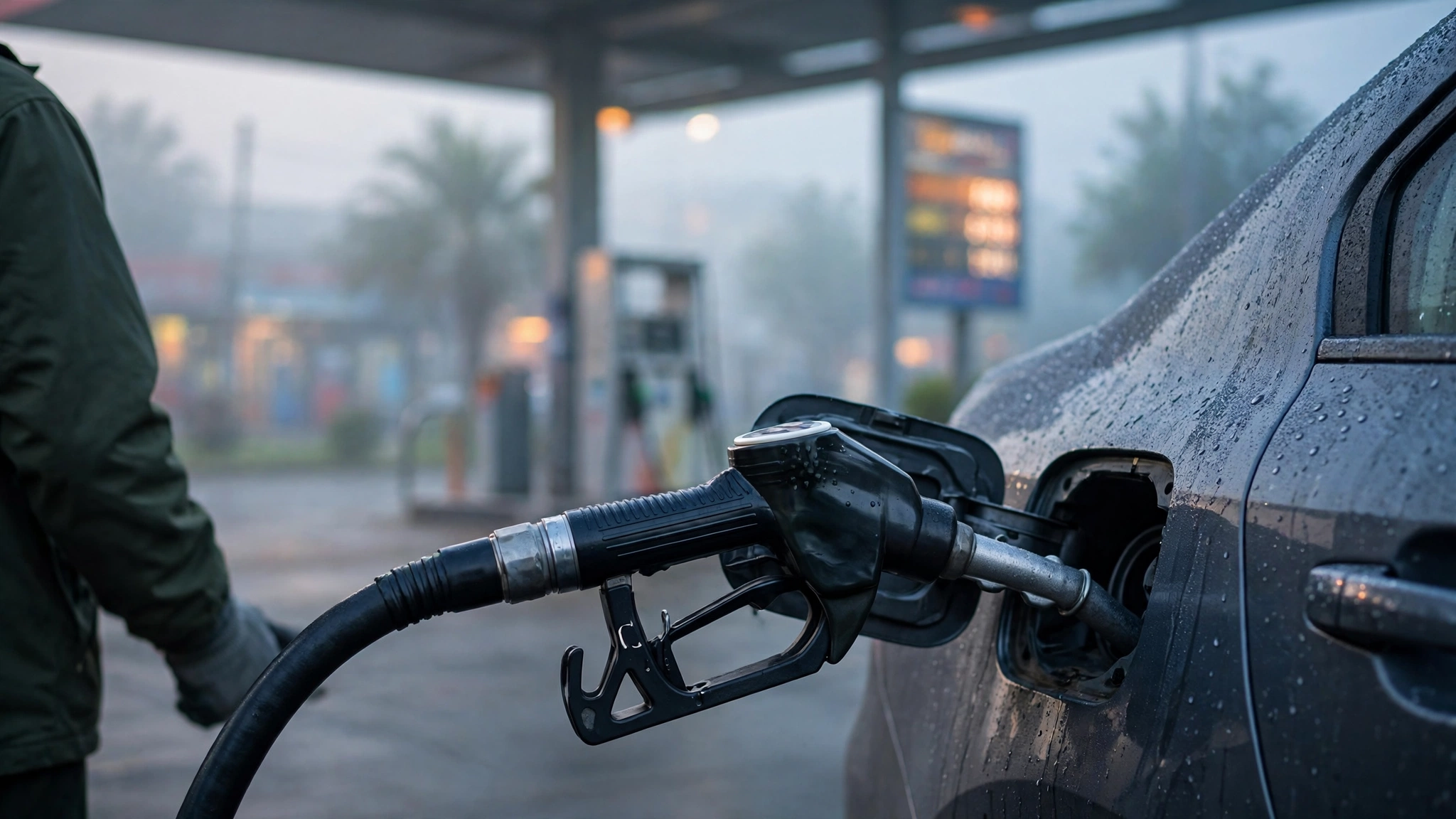

Petrol became cheaper for the eighth time in eleven days on Friday, falling by Rs3 a litre to Rs332, while high-speed diesel dropped by Rs4 to Rs360. The Oil and Gas Regulatory Authority issued the notification late on Thursday night, and the new rates took effect from Friday, 13 November. It is the eighth consecutive cut under the government’s daily fuel price review, and petrol is now Rs45.91 a litre cheaper than it was on 2 November.
The eight-cut ledger
The cuts began when the rewritten petrol pricing formula took effect on 2 November, with petrol at Rs377.91 a litre and diesel at Rs402.96. Petrol fell to Rs374.51 on 3 November, Rs369.06 on 4 November, Rs362 on 5 November, Rs352.59 on 6 November and Rs346 on 7 November. There was no revision on 8, 9 or 10 November, and then the seventh cut took petrol to Rs335 on Thursday, before today’s fall to Rs332. Diesel fell the same way, from Rs402.96 to Rs360 today. In total, petrol is down Rs45.91 a litre, or 12.1 percent, and diesel is down Rs42.96, or 10.7 percent. The biggest single petrol cut was Rs9.41 on 6 November.
What a full tank saves now
A 40-litre car tank now costs Rs1,836.40 less to fill than on 2 November. A motorcycle rider with a 10-litre tank saves Rs459.10 on a full fill, and a transporter filling a 100-litre diesel tank saves Rs4,296. Bus fares and shop prices have not followed fuel down yet, and pump prices can differ slightly by district because the notified rates are ex-depot.
The tax share keeps creeping up
None of the relief has come from lower taxes. Taxes and duties on petrol are unchanged at about Rs114 a litre, including a petroleum levy of Rs80 and a climate support levy of Rs5, and about Rs100 a litre on diesel. As the pump price falls, the fixed tax takes a bigger share of every litre. At Rs332, the Rs114 tax is 34.3 percent of the petrol price, up from 30.2 percent when petrol cost Rs377.91 on 2 November. On diesel, the Rs100 tax is now 27.8 percent of the Rs360 price. The government has not given up a rupee of its own take.
Who is actually paying for the cuts
The money has come from two places. First, international oil prices slid sharply in late October and early November, and the daily mechanism passes changes on through a seven-day rolling average. Brent crude fell about 21 percent between 30 October and 10 November, according to Bloom Pakistan. It rose to about $95.41 a barrel on Friday morning, up from about $92.95 on Wednesday, but the seven-day average still carries the earlier slide. Second, oil refineries are absorbing part of the petroleum levy under a 30-day arrangement the federal cabinet approved on 30 October. Under it, the premium, incidentals and customs duty in the ex-refinery price are fixed at their 7 March levels, and refineries surrender the difference into the petroleum levy account. The government puts the refineries’ burden at about Rs15 billion a month, worth roughly Rs14.71 a litre at the pump. The refineries absorbing the levy are the same ones that banked Rs57bn in a quarter. Refinery executives put their own contribution far higher, at about Rs49 a litre, and warn the formula forces below-cost sales. Petroleum Minister Ali Pervaiz Malik has said the arrangement averted a fresh increase of about Rs15 a litre. The arrangement runs out around 2 December, so the daily cuts have a built-in expiry date unless it is extended.
The other relief running alongside
Alongside the daily cuts, the targeted Sasta Petrol discount of Rs100 a litre continues for motorcycles, three-wheelers and small cars up to 800cc, capped at 20 litres a month for two- and three-wheelers and 30 litres for small cars. Prime Minister Shehbaz Sharif has confirmed the discount will continue through at least 31 December 2026. Government reporting puts the beneficiaries at about 15 million people, with about Rs28 billion spent so far. That discount is separate from the daily cuts and applies only to eligible motorists.
What happens next
The next revision comes tomorrow morning, and the price can move in either direction. If Brent keeps rising, the first increase after eight cuts could come within days. The bigger question is the refinery arrangement, which ends around 2 December. Jamaat-e-Islami, which has campaigned against the levy for months, says its talks with the government continue, and a draft levy relief agreement was discussed on 10 November, though no deal has been signed. Until the arrangement is extended or the levy is cut, the relief rests on refineries and world oil prices, not on any change in what the government collects. More business and economy news from Pakistan.