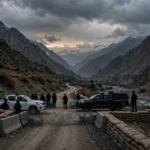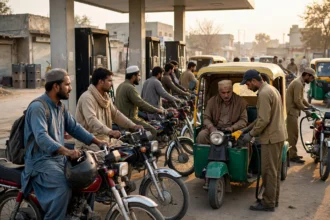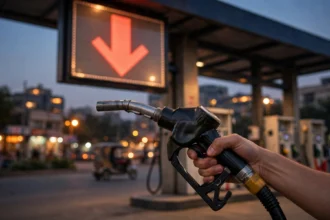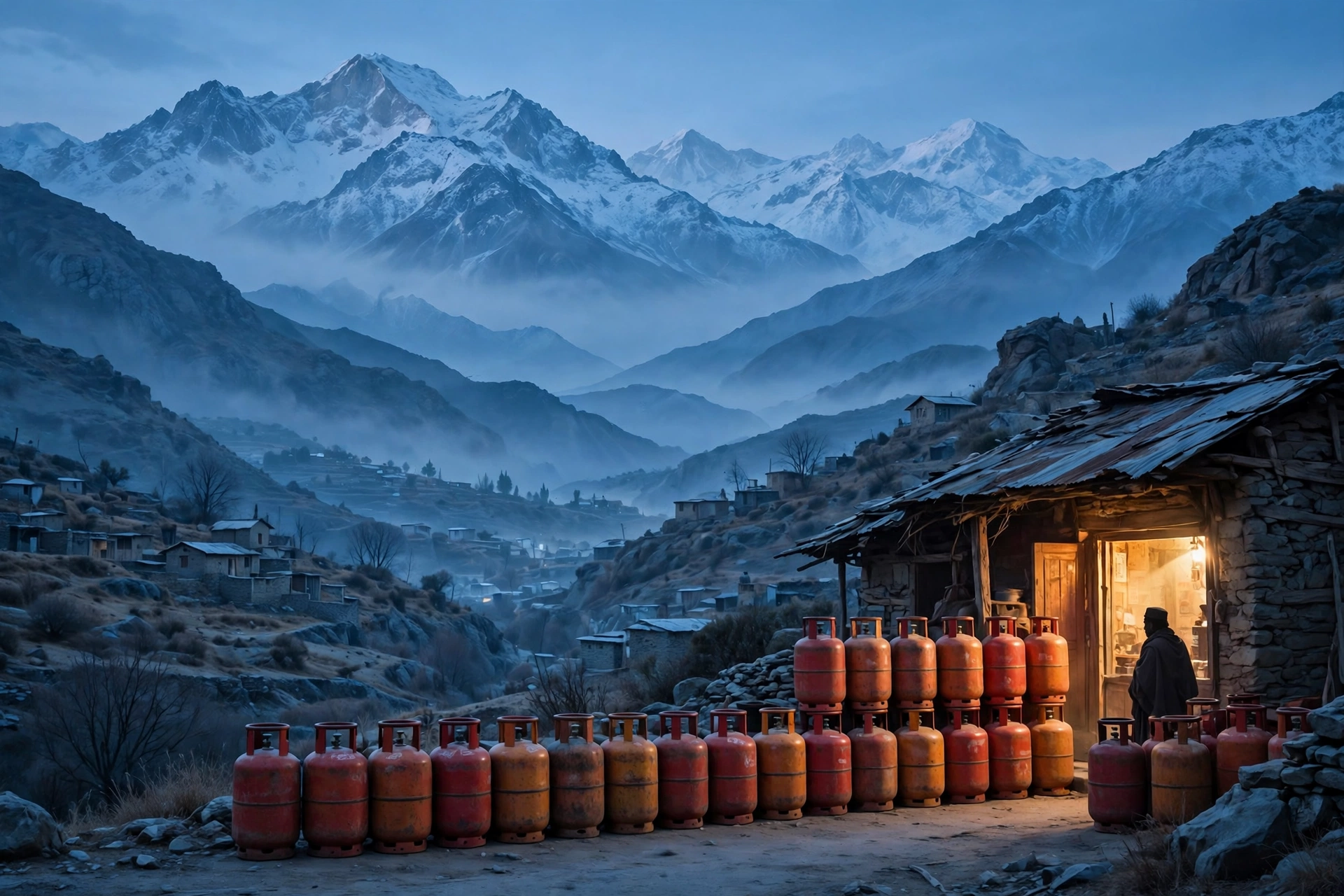

Liquefied petroleum gas is selling at record prices across Pakistan this week, touching Rs600 a kilo in the hilly areas and Rs500 a kilo in Punjab and Khyber Pakhtunkhwa, after the sudden closure of trading points with Iran cut off a supply line the market quietly depended on. The regulator, Ogra, has notified Rs279.34 a kilo for October, which means a domestic cylinder should cost about Rs3,296, yet households are paying between Rs5,900 and Rs7,080 for the same cylinder. The distributors’ association warns prices could climb further, and its own figures hide a warning no one has spelt out: the daily supply shortfall could widen from roughly 2,000 tonnes today to 5,000 tonnes a day at winter’s peak.
What households are paying right now
Market reports put LPG at Rs500 to Rs600 a kilo this week, nearly double Ogra’s notified rate. Dawn reports Rs600 in the colder hilly areas and Rs500 in Punjab and Khyber Pakhtunkhwa, while reporting from Lahore puts the going rate at Rs560 to Rs600. An 11.8kg domestic cylinder is selling for Rs7,200 in the hilly areas and Rs6,000 in Punjab and Khyber Pakhtunkhwa, against Ogra’s notified cylinder price of Rs3,296.23. Ogra had raised its October price by Rs20.69 a kilo from September’s Rs258.65, but the market swallowed that whole.
At open-market rates, a family pays roughly Rs2,600 to Rs3,800 more than the official price per cylinder refill. The pain is sharpest where piped gas does not reach and LPG is the only cooking fuel. It is the second fuel shock in a week, a day after petrol and diesel prices were revised again on October 21.
The supply maths no one has spelt out
Every big outlet reported the same press conference. None ran the arithmetic inside the industry’s own numbers. According to the LPG Distributors Association chairman, speaking to Dawn, Pakistan produces 2,000 to 2,500 tonnes of LPG a day, and roughly the same amount is imported or brought in from Iran. Daily consumption is 4,000 to 4,500 tonnes, climbing to 6,000 to 7,000 tonnes a day in peak winter.
With full supply, 4,000 to 5,000 tonnes a day meets demand of 4,000 to 4,500 tonnes. But with the Iranian trading points closed, effective supply falls to 2,000 to 2,500 tonnes a day: a shortfall of roughly 1,500 to 2,500 tonnes every day, before winter begins. At peak winter demand of 6,000 to 7,000 tonnes, the gap stretches to 3,500 to 5,000 tonnes a day, and even a reopened Iranian route would still leave peak demand 1,000 to 3,000 tonnes short of full supply. The spike is not just a border-closure reaction; it is a preview of a structural winter deficit. Caveat: these figures come from the distributors’ association, not an independent audit.
Why the official price exists only on paper
Ogra’s notified rate applies across the entire supply chain, yet the market charges nearly double. The News reports the regulator could not enforce the notified rate even before this week’s spike. In Lahore, the Punjab Enforcement and Regulatory Authority has been unable to enforce official prices, and shopkeepers say they cannot sell at Rs279.34 without action against the plant owners supplying them.
The distributors’ chairman, Irfan Khokhar, accuses Ogra of being a silent spectator while consumers are overcharged by what he calls billions of rupees, noting that even locally produced LPG, officially Rs279 a kilo, sells at an average of Rs450. His fix: a blended basket price for local and imported LPG, like the petrol and diesel mechanism, plus immediate imports and a government inquiry into the alleged black-market billions, claims still awaiting an official audit. Since imported fuel is priced in dollars, the USD to PKR exchange rate today feeds directly into any blended price.
What happens next
Two forces will decide where this goes. The first is winter: as temperatures fall in the northern areas, demand for heating and cooking rises sharply, and winter gas load-shedding in the SNGPL and SSGC networks pushes more settled-area households toward cylinders. The second is the government’s response: emergency imports, as the distributors demand, and whether Ogra or the provincial authorities finally close the gap between the notified price and the market price.
Khokhar warns prices could rise further, and the arithmetic suggests he may be understating it. Watch for Ogra’s November notification, any emergency import announcement, and whether the Iranian trading points reopen. Until one of those moves, Rs279.34 stays a number on a notification. For households already stretched by how fuel levies keep squeezing household budgets, the LPG cylinder is the next pressure point, and winter has not arrived. More business and economy news from Pakistan as this develops.