
On October 21, Petroleum Minister Ali Pervaiz Malik said LPG prices would start improving within two to three days. Today, October 23, that deadline has passed and the market has moved the other way: LPG is selling for up to Rs750 per kilogram in parts of Khyber Pakhtunkhwa, and the standard 11.8kg domestic cylinder, officially priced at Rs3,296, is changing hands for more than Rs10,000 in some areas. The official price has become a number almost nobody pays. The pricing formula no longer matches what importers actually pay, and three coming events will decide whether households get relief or face a worse squeeze.
The promise and the missed deadline
Speaking to Geo News on October 21, the minister said Pakistan consumes around 6,500 to 7,000 tonnes of LPG a day, of which only 2,000 to 2,500 tonnes is produced locally. He said LPG should be priced between Rs400 and Rs425 a kilogram, and added that the government would import LPG itself and pursue court stay orders that he said a small number of suppliers had used to keep overcharging. By October 23, none of that had reached the market: the Tribune reported Peshawar at around Rs600 a kilogram, northern districts at Rs750, and cylinders above Rs10,000. Fuel costs are a street-level issue, as talks with Jamaat-e-Islami over the petrol levy showed this week.
What a cylinder really costs today
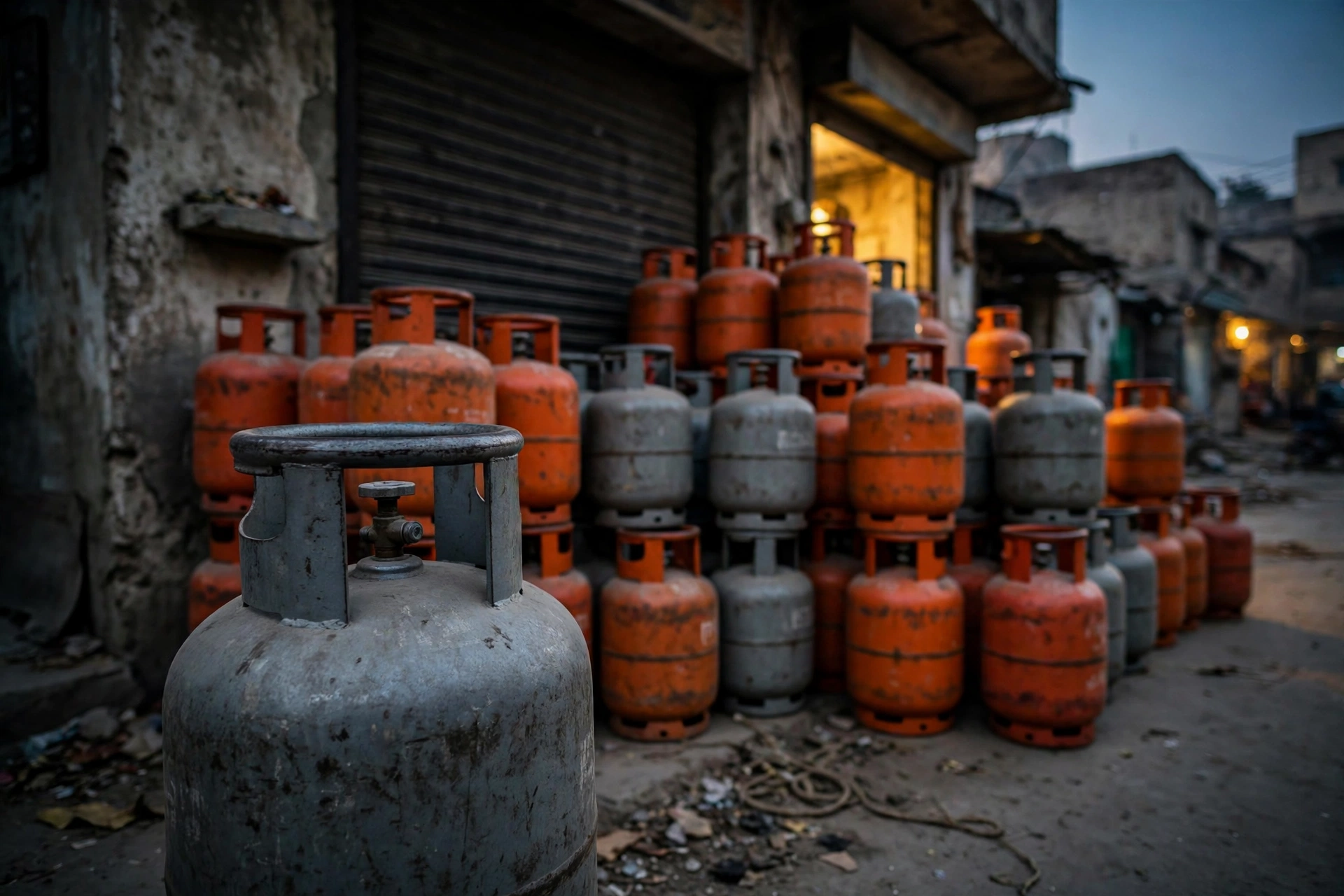
OGRA fixed the official LPG price for October at Rs279.34 per kilogram, putting an 11.8kg domestic cylinder at Rs3,296. The Tribune’s October 23 reporting found consumers paying Rs550 to Rs600 a kilogram in several areas, Rs600 in Peshawar and Rs750 in northern districts. At Rs750 a kilogram, a full 11.8kg cylinder costs Rs8,850; where cylinders sell above Rs10,000, about Rs847 a kilogram, nearly triple the official rate. The LPG Association chairman Irfan Khokhar told Reuters that a 12kg cylinder which sold for Rs4,500 a few days ago now costs about Rs7,000 in Balochistan, Rs7,500 in Lahore and Rs8,200 in Skardu.
Why the official price no longer works
OGRA benchmarks LPG to Saudi Aramco’s Contract Price, yet about half of Pakistan’s imported LPG comes from Iran, according to OGRA sources cited by Geo News. The benchmark and the real market have parted ways: before the war, Iranian LPG reached the border at $100 to $150 a tonne below the Saudi Contract Price, but war-related insurance and freight premiums have pushed its cost to around $300 a tonne above it, the LPG Marketing Association told Dawn on October 19. State companies including Sui Southern Gas Company, Sui Northern Gas Pipelines and Pak-Arab Refinery avoid importing at notified rates, fearing accountability probes if their costs come in above the official benchmark. Imports are settled in dollars, adding pressure through today’s USD to PKR exchange rate.
Why the crackdown has not happened
OGRA knows sellers are overcharging but has not acted on it. The Tribune reported on October 23 that the regulator has yet to launch a planned crackdown on profiteering companies and retailers, because officials fear enforcement could trigger strikes, disrupt supplies and worsen the energy crisis. A senior OGRA official warned prices could climb past Rs700 a kilogram in affected markets. One wrinkle: OGRA sources told The Inquirer on October 21 that enforcement teams were already recovering excess prices from sellers, yet two days later the Tribune said the planned crackdown had still not begun. Until OGRA puts a dated enforcement record on the table, the market reads the regulator as paralysed.
Three things that decide what happens next
First, the border. The Gabd-Rimdan and Taftan crossings were closed on October 17, halting roughly 7,000 tonnes a day of LPG imports from Iran, according to the Pakistan LPG Association. Gabd-Rimdan reopened on Wednesday only for Pakistani exports of perishable goods; LPG imports remain halted, Reuters reported. Pakistan’s army chief raised border issues in Tehran this week; Iran’s foreign ministry said trade-resumption talks were under way. If LPG tankers are not part of the reopening, the shortage persists.
Second, November 1, when OGRA issues its monthly LPG notification. PakMirror reported on October 18 how the Iran border shutdown first threatened LPG supplies and warned the November notification would reflect any sustained disruption. If the crossings are still shut for LPG then, the official price itself is likely to jump, raising the ceiling instead of lowering the street price.
Third, enforcement: OGRA must choose between defending its notified price and avoiding a clash with distributors that could freeze supplies, while the minister’s promised state imports and court action remain announcements without results. Winter demand is near, when northern areas lean hardest on cylinders. Follow PakMirror’s Pakistan business and economy coverage for whether the border reopens for LPG, what the November 1 notification says, and whether OGRA finally enforces the price it publishes.