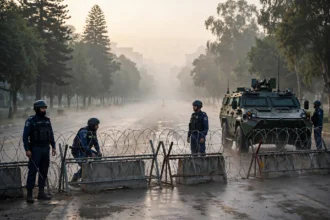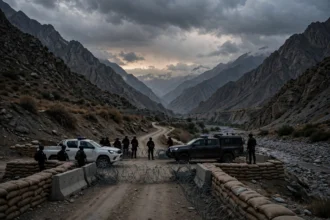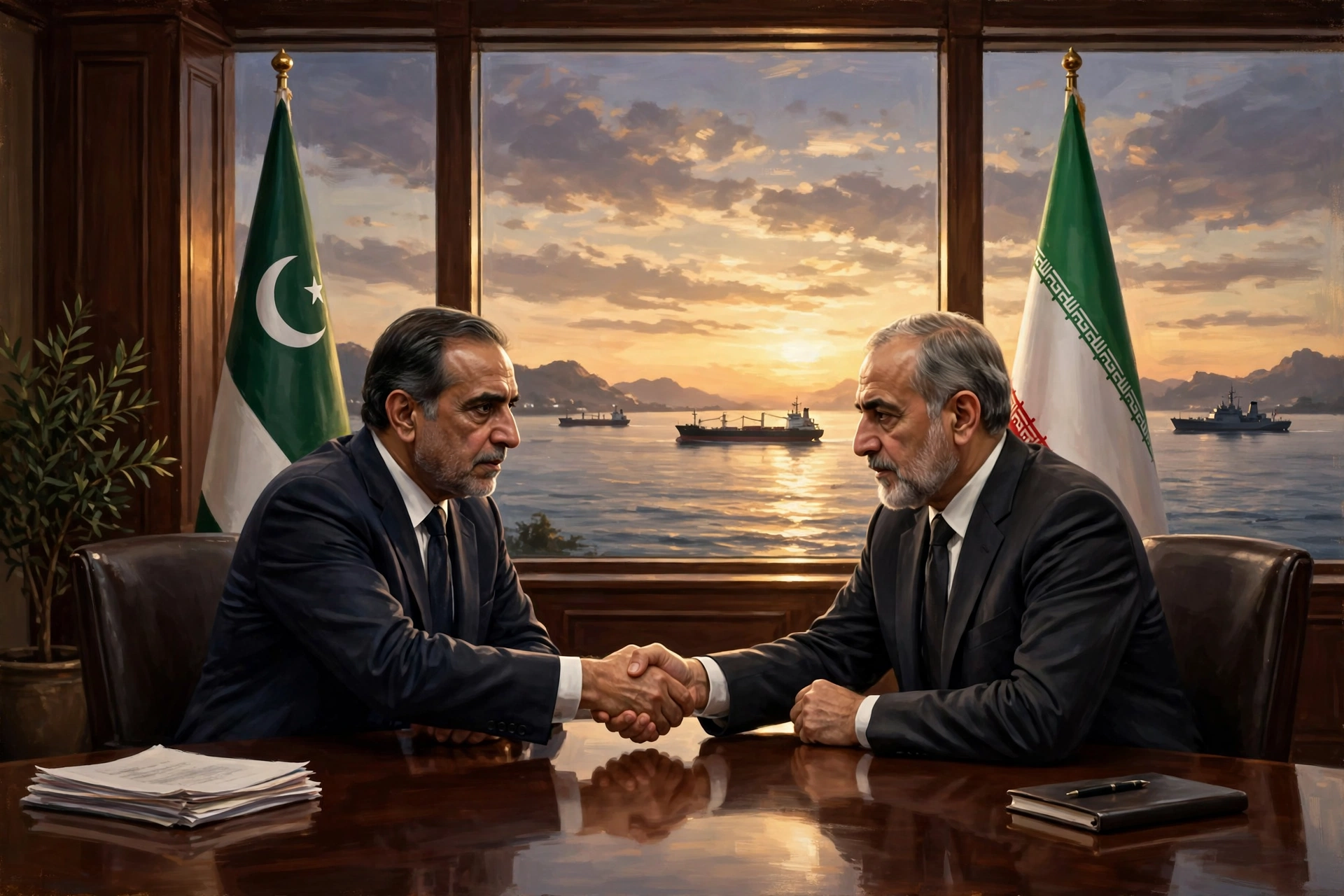

Pakistan worked three tracks at once on Monday and Tuesday to keep the US-Iran war from spreading, as a fourth tanker in three days caught fire in the Strait of Hormuz and Iran said it had seized another American drone.
The military track ran through Rawalpindi. Iranian Foreign Minister Abbas Araghchi met Chief of Defence Forces Field Marshal Syed Asim Munir at General Headquarters on Monday evening. The military’s media wing, ISPR, announced the meeting on Tuesday and said the two sides discussed bilateral relations and regional security.
Field Marshal Munir stressed sustained engagement, mutual trust and close coordination for regional peace and stability. Araghchi appreciated Pakistan’s constructive role and said Tehran wants stronger ties. In a television interview, Araghchi called Pakistan a trusted friend, said Tehran is satisfied with its efforts, and summed it up in four words: “Pakistan is doing its job.”
The Hormuz proposal waiting on Washington
The diplomatic track ran through Deputy Prime Minister and Foreign Minister Ishaq Dar. Speaking on Monday after the ECO meeting, Dar said he had held “very candid, very frank, very brotherly, very comprehensive discussions” with Araghchi on the sidelines.
Dar said Iran had fast-tracked its proposal to reopen the Strait of Hormuz from a seven-day plan to a two-day plan. Under it, Iran would reopen the strait within two days of the United States meeting seven of Tehran’s demands. The response from Washington is still pending. “We have not given up hope or efforts. We are still doing our best [so] that the situation gets sorted out,” Dar said. The ECO Council of Ministers backed the effort, supporting the mediation of Pakistan and Qatar.
The sea war keeps escalating
The urgency was visible in the strait itself. Iran’s Army navy said on Monday that another oil tanker caught fire after striking naval mines east of the Strait of Hormuz, the fourth tanker reported hit in three days. Three tankers were reported hit over the weekend. The vessels have not been named, and the claims are unconfirmed.
Iran’s Revolutionary Guards navy also said on Monday it had brought a US Army MQM-170 drone down intact south of Qeshm Island, using electronic warfare. It said it was the fourth drone of that type landed safely.
The strait carries about a fifth of the world’s seaborne oil, which is why every incident there reaches Pakistan’s fuel bill. Petrol and diesel prices were cut by Rs2 a litre from today, but a wider war in the strait would push prices the other way.
The parliamentary track
The third track ran through Parliament House. National Assembly Speaker Sardar Ayaz Sadiq met Fada Hossein Maleki, head of the Iran-Pakistan Parliamentary Friendship Group, in Islamabad on Tuesday. Sadiq said Pakistan’s parliament was the first parliament in the world to condemn the attack on Iran and had unanimously passed a resolution condemning it.
Sadiq said Pakistan had always desired peace in the region, and pointed to Gwadar Port as an opportunity for Iran and other regional countries to expand trade. Maleki said Iran would never forget Pakistan’s solidarity and praised the mediation efforts of Prime Minister Shehbaz Sharif and Field Marshal Munir.
Why the mediation keeps stalling
Pakistan’s role as mediator is not new. It brokered a two-week ceasefire on 8 April, then hosted direct talks in Islamabad on 11 and 12 April between American and Iranian teams led by Vice President JD Vance and parliamentary speaker Mohammad Bagher Ghalibaf. The talks ended without an agreement, with the strait and Iran’s nuclear programme as the sticking points.
The breakthrough came on 12 June, when the two sides agreed on a final text, and on 17 June Trump and Pezeshkian signed the Islamabad Memorandum remotely, a 14-point framework covering the reopening of the strait toll-free for 60 days, an end to the American naval blockade and a 60-day ceasefire extension, plus a $300 billion reconstruction fund. The framework was never a settlement: the nuclear programme, the missile arsenal and Iran’s regional network were deferred to the 60-day window, which passed without a deal. The strait is still the dispute, with Iran insisting it will manage it alongside Oman and charge fees once the toll-free period ends.
What happens next
Araghchi is due in Oman on Tuesday for talks, and has invited ECO foreign ministers to the organisation’s 18th summit in Tehran.
For Pakistan, the stakes are direct. The ECO Council of Ministers adopted Vision 2035 on Monday, a ten-year roadmap for regional trade and connectivity. The proposed $30bn Delta Energy gas deal would bring gas from Pakistan’s western border to Gwadar, the same port Sadiq held out to Iran. Every tanker that burns in Hormuz is a reminder that the mediation Pakistan is running is not charity. It is self-defence.