
The government and Jamaat-e-Islami have finished their talks on the petroleum levy, and agree it will come down in phases before the next federal budget. JI Naib Ameer Liaquat Baloch told reporters in Islamabad on Thursday that the final package will be announced when Prime Minister Shehbaz Sharif meets JI Ameer Hafiz Naeemur Rehman on 24 or 25 November. The numbers behind the headline tell a more careful story: relief so far is Rs16.36 a litre, the party claims Rs146 a litre, and the levy still stands at Rs80 a litre.
Two figures that do not match
Baloch put the campaign’s relief at Rs146 per litre on petrol and more than Rs200 on diesel, yet said relief of Rs16.36 per litre had so far come through a levy reduction. The Rs146 counts every petrol price cut since the campaign began, including falls in world oil prices. The Rs16.36 is the levy cut alone, delivered by shifting part of the levy onto local refineries.
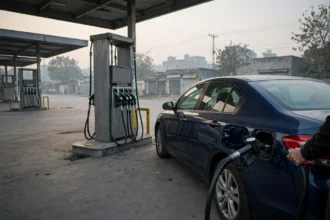
The levy cut is about 11 percent of the claimed relief, or roughly one rupee in nine. The notified levy remains Rs80 a litre, and after the Rs16.36 refinery contribution, the levy effectively paid by motorists is Rs63.64 a litre. About one fifth of the levy has been cut so far, and about four fifths remain. Petrol fell from Rs377.91 a litre on 31 October to Rs330 on 14 November, and petrol has fallen in twelve straight cuts, but most of that fall came from world prices, not from a levy cut.
Why the levy cannot vanish overnight
The levy is one of the largest single sources of federal revenue. The government collected Rs220 billion through it in July and August, against an annual target of Rs1.676 trillion. At about Rs110 billion a month, collections run roughly Rs30 billion a month short of the pace the target needs. Every rupee cut from the levy has to be found elsewhere, or agreed with the International Monetary Fund, which the government says it will consult on the phased reduction.
That is the constraint behind the compromise. JI has demanded abolition for more than two months, through ten rounds of talks led by Deputy Prime Minister Ishaq Dar. The government accepts abolition as the destination, but has agreed only to a phased reduction before the next budget. Parliament has empowered the government to change the levy rate itself. The State Bank expects inflation to ease into its 5 to 7 percent target range, and cheaper fuel would help, but the revenue arithmetic sets the speed.
Who gets relief, and who waits
The draft package names its beneficiaries. Cars with engines up to 1,000cc will be included in the Prime Minister’s Relief Programme, an expansion from the 800cc limit discussed earlier. Farmers owning up to 12.5 acres will receive relief on diesel for their tractors. Separate rates will apply to local and imported products; local refineries supply only about 30 percent of Pakistan’s petrol. The party will not allow the levy to be replaced with a Key Sales Tax, Baloch said.
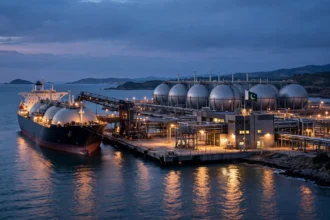
The refineries are the quiet third party in this deal. Under the 2 November arrangement, they absorb about Rs15 billion over 30 days, roughly Rs49 to Rs50 a litre on the petrol they supply, so a rise in import costs did not reach motorists. Petroleum Minister Ali Pervaiz Malik said their three-month profits beat their previous year’s annual profits, but the refineries say the mechanism forces them to sell below cost. Because the current dollar to rupee exchange rate shapes every litre of imported fuel, the import premium behind the arrangement, up from 19.88 to 25.52 dollars a barrel, is a moving target.
What happens next
Four dates now matter. The first is 24 or 25 November, when the prime minister meets the JI chief to announce the final package. The second is the next federal budget, before which the phased reduction is supposed to happen, with no figure or timetable published yet. The third is early December, when the 30-day refinery arrangement runs out, with no replacement published. The fourth is the street calendar: JI rallies in Quetta on 22 November, at Minar-e-Pakistan in Lahore on 29 November, in Peshawar on 5 December and in Karachi on 20 December.
Until the package is announced, the honest summary is this. Two months and ten rounds have produced a phased-cut commitment, a Rs16.36 a litre cut through the refineries, and a wider relief net for small cars and small farmers. The levy is still Rs80 a litre on paper, the final figure is unpublished, and the IMF consultation is still to come. For more business and economy news from Pakistan, the test will be the first phase of the cut, and whether it survives the revenue arithmetic.