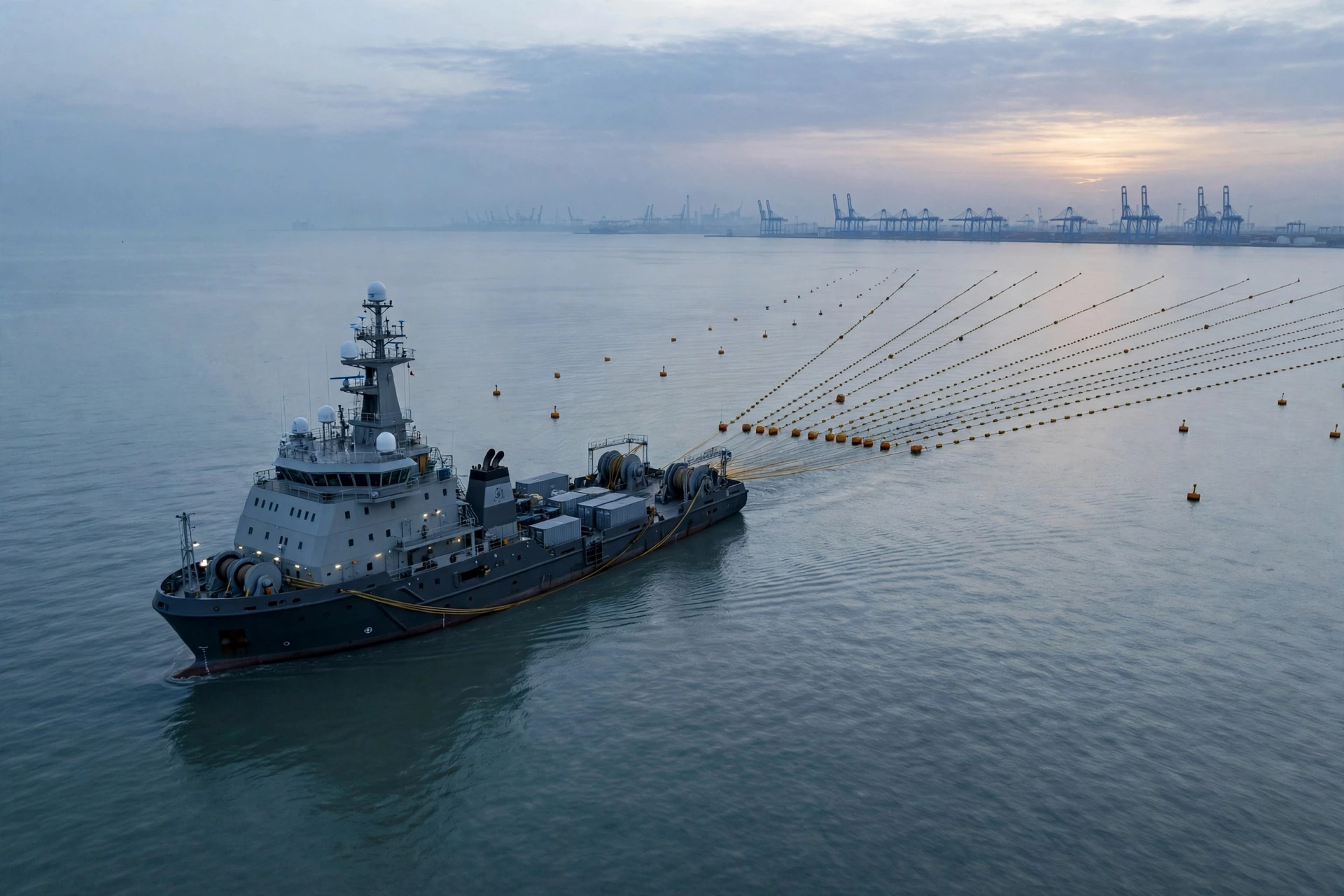

Türkiye’s seismic research vessel Oruc Reis docked at Karachi Port and was welcomed at a ceremony on Friday, 20 November, as Pakistan restarted its offshore search for oil and gas after a gap of nearly two decades. The vessel will map 670 square kilometres of the Indus offshore basin in three dimensions and run 2,353 kilometres of survey lines across the Makran blocks, a five to six month programme. Drilling in any field the survey identifies is targeted for 2027. Three memorandums of understanding were also signed, and Deputy Prime Minister Ishaq Dar put Pakistan’s untapped natural resources at 8 trillion to 10 trillion dollars.
What arrived in Karachi
The Oruc Reis is an 87 metre long seismic research vessel operated by Turkish Petroleum Corporation, and it reached Karachi after a 19 day voyage. It tows six streamers, each up to eight kilometres long. Dar and Turkish Energy Minister Alparslan Bayraktar spoke at the ceremony. Bayraktar said Türkiye aimed to start operations in surveyed fields in 2027. The mission sits inside the Offshore Bid Round 2025, launched in January 2025 after an 18 year gap, which offered 40 offshore blocks. Türkiye’s national oil company took a 25 percent stake and operatorship in Offshore Block C in December 2025. Licensing is complete for five blocks, three offshore and two onshore.
How small the first survey really is
The headline figure is 670 square kilometres of three dimensional survey, but that is a small patch of a very large sea. Licences have been awarded for 23 of the 40 blocks offered, covering about 53,500 square kilometres, so the survey covers only about 1.25 percent of the awarded area. Against Pakistan’s offshore territory of about 300,000 square kilometres, it is about 0.2 percent. The Makran work is 2,353 kilometres of survey lines. Without seismic data, no company can decide where to drill. But this is a first probe of one block, not a survey of the whole offshore area.
The money: 80 million dollars now, up to 1 billion later
Companies have committed about 80 million dollars in the first phase, according to the Petroleum Division. That is about 3.5 million dollars per block over three years. If the early findings are encouraging and the programme moves to exploratory drilling, the Petroleum Division says total investment could rise to between 750 million and 1 billion dollars, roughly 9 to 13 times the first phase. For comparison, Kekra-1 in 2019 cost about 100 million dollars on its own, more than this whole programme. At about 276.52 rupees to the dollar, that is about 22 billion rupees. For the latest currency picture, see the current dollar to rupee exchange rate.
Eighteen dry wells: the record the survey must beat
Pakistan has drilled offshore before, and every attempt so far has come up empty. Seventeen offshore wells were drilled before Kekra-1, and all 17 were dry. Kekra-1, drilled in the Indus G Block off Karachi in early 2019, became the 18th. A consortium led by Italy’s Eni, with ExxonMobil, OGDCL and PPL, drilled it to 5,470 metres, and its pre-drill estimate was about 1.5 billion barrels of oil equivalent. It found nothing. Brokerage Topline Securities put the chance of a commercial find in such deep water at 10 to 20 percent. The new survey does not change those odds; it only shows where the next attempt has the best chance.
The 10 trillion dollar claim, and what it is not
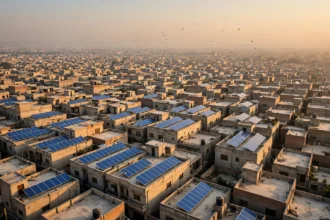
At the ceremony, Dar estimated Pakistan’s untapped natural resources at between 8 trillion and 10 trillion dollars, against federal debt of about 100 billion dollars and total liabilities of about 130 billion dollars. On those figures, the claimed resources are about 60 to 100 times the debt. But no part of that value has been confirmed offshore. A seismic survey cannot prove that oil or gas exists, and Dar himself said seismic work could not guarantee a commercial discovery. Türkiye’s own Black Sea discovery in 2020 produces about 10 million cubic metres a day six years later, for about four million households. Nearer home, rooftop solar now supplies 28 percent of Pakistan’s electricity, and gas prices are contested before the regulator. The survey runs about five to six months, then the data must be processed before any drilling decision. Seventeen of the 40 blocks are still unawarded, so the pace of awards matters as much as the survey results. The test is not the 10 trillion dollar figure, which no survey can confirm, but whether the picture justifies a well, and whether that well finds what 18 before it did not. See more business and economy news from Pakistan.