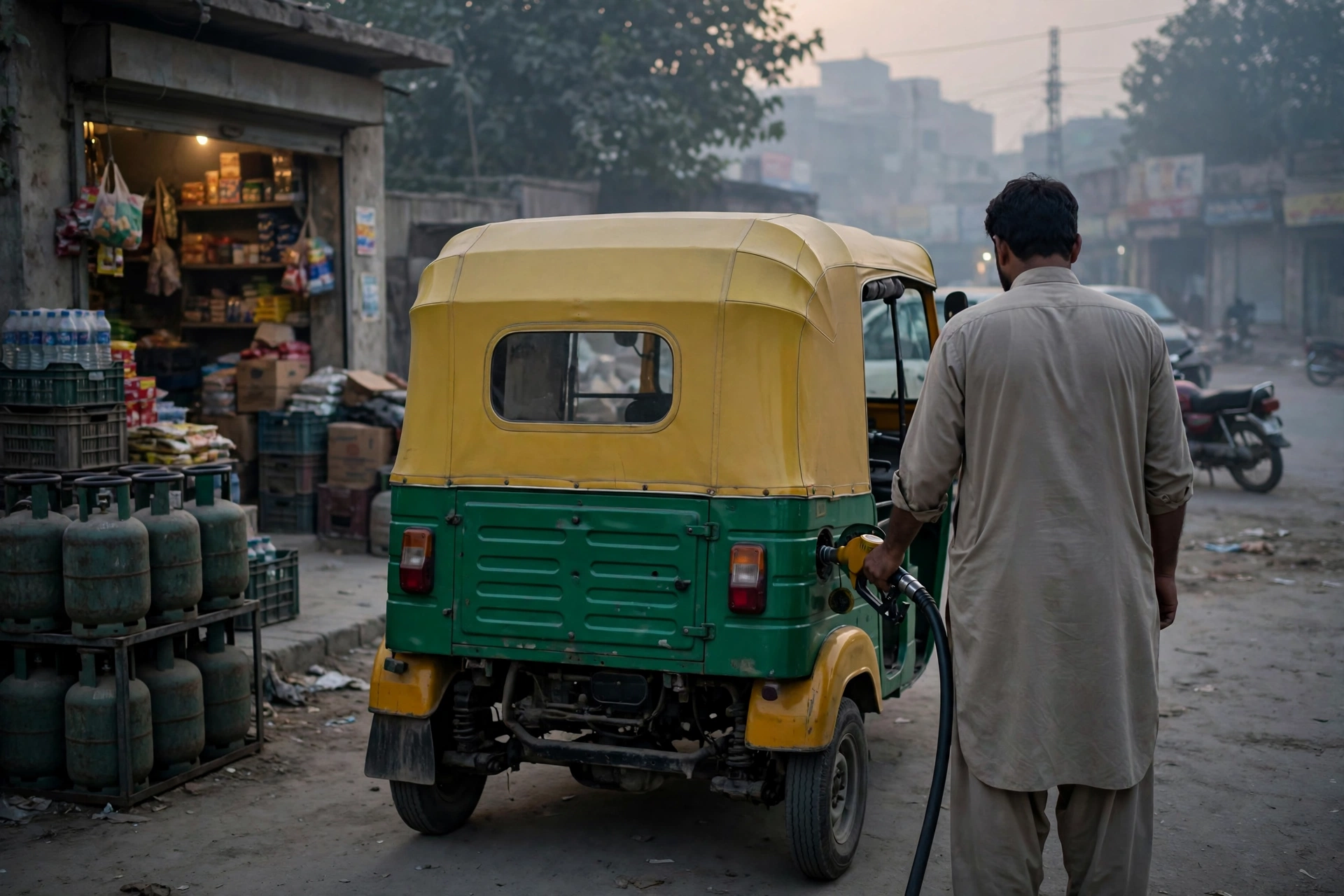

For thirteen years Rashid Ali has driven a three wheeled rickshaw around Lahore, working from 6 in the morning to past midnight. He used to make 6.50 dollars a day, enough for his family’s bare essentials. Now he is lucky to make 3 dollars, and his family eats twice a day instead of three times. The cause is the gas in his tank, and a 17 day old border closure nobody in authority can agree how to explain.
A day that no longer adds up
Ali is 33, pays 600 rupees a day to rent his rickshaw, and fills it with gas four or five times a day at 300 to 400 rupees a time. On the cheapest arithmetic, 600 rupees of rent plus four 300 rupee fills is 1,800 rupees before food, his 11,000 rupees monthly home rent, or anything for his two young children. He says it is not possible to get by on seven or eight hundred rupees a day.
His day has stretched to fill the gap rather than close it. He goes home at midday, then out again until late at night.
Three prices for one gas
Pakistan does not have one LPG price this month, it has three. The official price notified by the Oil and Gas Regulatory Authority for November is 294 rupees a kilo, putting an 11.8 kilo domestic cylinder at 3,470 rupees. Company franchises charge up to 400 rupees a kilo. The open market reaches up to 630 rupees a kilo.
The jump was sudden. Traders say the 12 kilo cylinder rose 56 percent within days of the border closure, to 7,000 rupees, putting its pre closure price near 4,490 rupees. The official notification moved only 14.73 rupees a kilo from October, driven by a 6.47 percent rise in the Saudi Aramco contract price. Readers can compare three LPG prices in November, from Rs294 to Rs630 a kilo, and the separate squeeze from NEPRA holding its Rs2.56 fuel decision for November bills.
Three explanations for one closed border
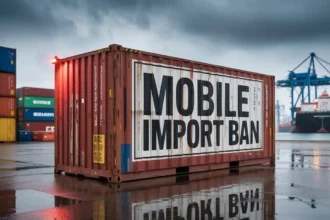
LPG prices have surged since October 17, when two Iranian border crossings closed and imports halted, traders say. Before the closure, Pakistan imported about 7,000 metric tons of LPG a day from Iran, according to the Pakistan LPG Association. The LPG Distributors Association puts Iran’s share at 70 percent of supply against 30 percent domestic production, and industry figures put domestic output at only 2,000 to 2,500 tonnes a day. On those numbers, the closed import line is roughly three times daily domestic output.
The three sides cannot agree why the crossings closed. Balochistan cited security and smuggling. Iran’s foreign ministry said technical issues were to blame. Iran’s ambassador later said Iran had imposed no restrictions, including on LPG exports, and blamed changes in Pakistan’s import paperwork. Each explanation implies a different reopening timetable. Until one wins, drivers are pricing in the worst of all three.
The fare standoff on the street
Drivers cannot pass the cost on, because passengers are squeezed by the same inflation. Ali says passengers will not pay higher fares: for a trip that should cost 200 or 250 rupees, they might offer 80, 100 or 150 rupees. One passenger, Mohammad Ramzan, told Reuters that when a driver asked 500 rupees for a ride, he offered half, and when the driver declined, he walked away. The driver keeps an empty seat and the passenger keeps walking.
The union scale shows how many sit inside this standoff. Majeed Ghauri, chairman of the Awami Rickshaw Union, calls LPG the fuel of the poor, and says about 70 percent of its members’ 43,000 auto rickshaws and nearly 8,000 Qingqis, motorcycle based three wheelers on set routes, run on LPG. The wider squeeze runs in parallel: the petrol pricing formula rewritten on November 2 left diesel out, while petrol remains about 40 percent above its pre war price.
Three tests before winter
First, watch the crossings. Does one explanation turn into a dated reopening, with 7,000 tonnes a day actually moving, or does the closure drift past its third week with no named date? Second, watch the fares. Do drivers agree a higher fare passengers will still pay, do passengers keep walking away, or do drivers start leaving LPG rickshaws idle?
Third, watch winter demand split one cylinder two ways. LPG is mainly used for cooking and heating, so as cold weather arrives, kitchens will compete with rickshaws for the same scarce gas. Inflation hit 9.6 percent in October, and interest rates rose to 12 percent. Judge this story not by the next official notification, but by whether a driver like Ali can again earn enough in a day to feed his family three times. For the latest business and economy news from Pakistan, watch that daily total.