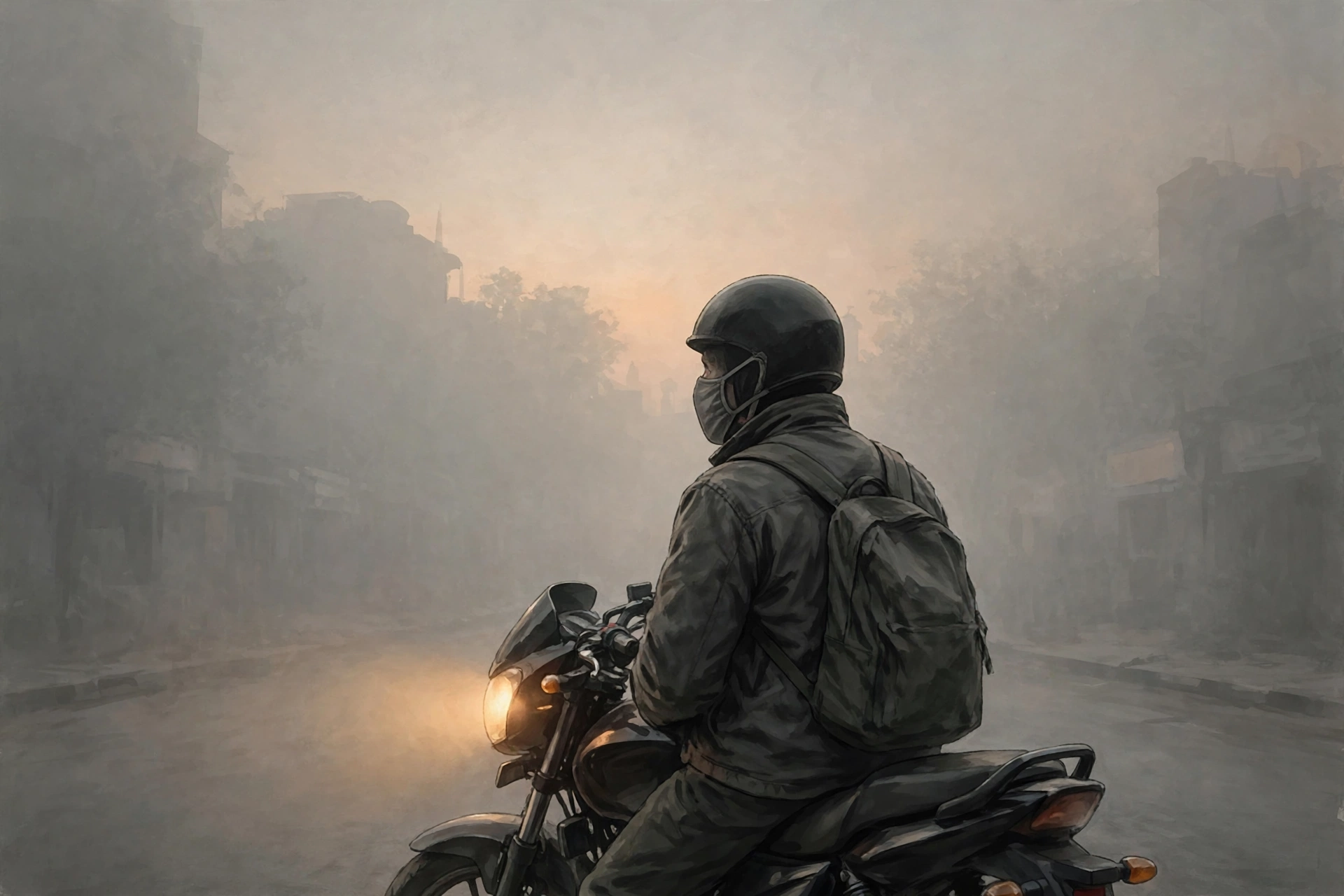

On Monday morning, Lahore topped a global pollution ranking and then showed why one ranking cannot explain a smog season. The city recorded an air quality index of 535 at 8am, with fine particle pollution at 343 micrograms per cubic metre, and stood at 530 in the 9am to 10am snapshot, ahead of Cairo at 226. Gujranwala was worse than Lahore. The deeper story is October, which looked cleaner even though weather did most of the work, while crop fires surged late in the month.
A morning in two numbers, and one wide gap
Read the morning as a range, not a fixed score. Lahore moved between 509 and 535 in different hourly updates, while Gujranwala moved between 606 and 675. Faisalabad stood at 435, Multan at 280 and Sialkot at 241. Five Punjab cities were among the six most polluted urban centres in the country, ahead of Peshawar at 216.
Inside Lahore, neighbourhoods differed sharply. Associated Press of Pakistan reporting put Iqbal Town at 902 and Askari X at 298, with Paragon City at 698 and Model Town at 471 in between. Residents were advised to avoid outdoor activity, with wind at only 3 kilometres per hour and no rain expected. Children, older people, outdoor workers and people with breathing or heart conditions face the greatest exposure, and the polio drive vaccinating about 24 million children this week is sending teams door to door in the same week.
The October improvement, honestly measured
Punjab Senior Minister Marriyum Aurangzeb shared data showing Lahore’s average air quality index at 180.5 in October 2026, against 204.6 in 2025 and 213 in 2024. It was also the only October in five years without a reading above 300, with the highest at 262 on October 31.
The Pakistan Air Quality Initiative, comparing 26 Lahore sites on matching days, found average fine particle pollution fell from 136.3 to 100.1 micrograms per cubic metre, about 27 per cent. But every one of October’s 31 days still exceeded Pakistan’s daily fine particle limit, and the monthly average was roughly 6.7 times the World Health Organization daily guideline of 15. After adjusting for weather, the improvement fell to about 4 per cent. October was cleaner, but much of the gain arrived with the weather, not only with enforcement.
Why November arrived early
The fire count explains the timing. Satellite analysis by HamariHawa, using NASA fire data, counted 13,241 fire detections in Pakistani Punjab between October 1 and 29, against 3,158 in Indian Punjab. About 92 per cent were on farmland, likely crop residue burning. More than half the total, 6,655 detections, came in the last seven days, with October 29 alone recording 1,327. Okara recorded 2,144, Gujranwala 1,011 and Nankana Sahib 1,003.
Burning also began about a week later than in 2025, so part of the seasonal activity shifted toward November. The initiative’s forecast issued on November 1 projected fine particle pollution rising to 149 micrograms per cubic metre by November 4, about 49 per cent above October’s average. Households also face three LPG prices in November, from Rs294 to Rs630 a kilo.
What enforcement did, and did not prove
Punjab’s Environmental Protection Agency reported an inspection effort between September 28 and October 27. It inspected 11,580 brick kilns, demolished 197, sealed 163, registered 162 cases and imposed fines totalling Rs40.7 million. It inspected 6,650 industrial units, demolished 22, sealed 191 and imposed Rs28 million in fines.
Those figures describe activity, not measured emission cuts, and that distinction is the heart of the November test. The initiative’s national report puts Lahore’s annual average fine particle level above 110 micrograms per cubic metre, more than 22 times the World Health Organization annual guideline of five. Transport is Lahore’s largest source of primary fine particle emissions, followed by industry at 28 per cent and brick kilns at 17 per cent. The report estimates air pollution cuts life expectancy in Pakistan by 3.9 years, causes around 128,000 premature deaths a year, and could cut life expectancy in Lahore by up to seven years. That is why transport policy matters, including the petrol pricing formula rewritten on November 2.
Three tests before November can be judged
First, watch November 4. Does fine particle pollution reach the forecast level of 149, fall below it, or pass it? Second, watch November 15. Does the brick kiln closure run across Punjab, beyond Lahore, and is it enforced where fire detections were highest, in Okara, Gujranwala and Nankana Sahib? A closure that only covers the capital will not clear a regional airshed.
Third, watch the November monthly average against October’s 100.1 micrograms per cubic metre and 180.5 average index. A month that only improves when the wind helps is not a policy result. For continuing coverage, see more national news from Pakistan on PakMirror.