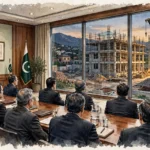

Pakistan took over the chairmanship of the Intergovernmental Group of Twenty-Four, known as the G-24, on Sunday, November 1, 2026. Finance Minister Muhammad Aurangzeb set out three priorities: development-led growth, a stronger voice for developing economies, and reform of the international financial architecture. Prime Minister Shehbaz Sharif called the handover a significant diplomatic milestone. The timing is what makes it unusual. Pakistan takes the chair of the developing world’s negotiating bloc while its own next IMF payment, about $1.21 billion, still awaits Executive Board approval, and a year before it also chairs the boards of governors of the IMF and the World Bank.
What changed on November 1
The finance ministry announced the handover on November 1, with the Associated Press of Pakistan, Geo News and Radio Pakistan carrying the statement. Aurangzeb called the chairmanship a profound responsibility and pledged to move from collective voice to collective influence. He acknowledged Nigeria’s leadership as outgoing chair. Under reform, the ministry listed affordable financing, debt solutions, stronger safety nets and climate resilience. The handover was settled weeks earlier. At the bloc’s 116th ministerial meeting in Bangkok on October 13, Nigeria’s Taiwo Oyedele chaired, Aurangzeb sat as first vice-chair and Ecuador’s Bernardo Acosta sat as second vice-chair. One check on November 1 found the group’s published Bureau listing still naming the outgoing chair, and Pakistan’s vice-chairs had not been published.
What the chair can and cannot do
The G-24 was established in 1971 to coordinate developing countries’ positions at the IMF and the World Bank. It has 24 member nations, represented through finance ministries and central banks. Its Bureau comprises the chair, a first and a second vice-chair and two previous chairs, and decisions are taken by consensus. The Bureau meets twice a year, ahead of the spring and autumn meetings of the IMF and World Bank committees, while the secretariat in Washington runs the research programme. The chair country prepares meetings and runs the group’s press conference alongside the two vice-chairs. That is an agenda-setting role, not a policy lever. A chair cannot approve a loan, change programme conditions or move a disbursement date.
The borrower in the chair
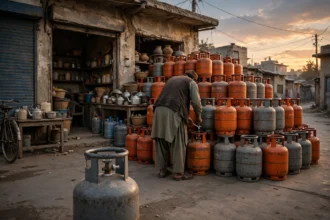
The country is drawing on a $7 billion Extended Fund Facility running for 37 months and a $1.4 billion Resilience and Sustainability Facility for 28 months, a combined $8.4 billion. An IMF team led by Iva Petrova reached a staff-level agreement on October 7, 2026, on the fourth review of the first facility and the third review of the second. If the Executive Board approves, Pakistan would receive about $1 billion and about $210 million, taking total disbursements to $5.7 billion. No funds have been released under this agreement yet. Reports say state-owned enterprise law amendments are a prior action, with around nine to 10 institutions inconsistent with the central law. The chairmanship changes none of this. The Board vote, not the G-24 title, releases the money. Household stakes are visible in the same week’s costs: the Qatar gas halt runs to December 29 and the three prices for one LPG cylinder in November.
The second chair in 2027
The G-24 chair is only the first of two chairs Pakistan will hold in the same cycle. Economic Affairs Minister Ahad Khan Cheema was announced as incoming chair of the IMF and World Bank Boards of Governors for 2027 at the Bangkok annual meetings on October 16. It is Pakistan’s first turn since 1953, when Mohammad Ali chaired the eighth annual meetings. The 2027 meetings are scheduled for Washington from October 4 to 9. The Boards of Governors are the highest governing bodies of the two institutions, but the chairmanship is rotational and procedural. It gives no authority over lending decisions and changes no programme terms or disbursement schedule. Holding both chairs concentrates procedural influence, not money, and domestic delivery still has to be proved, as the Punjab PIVOT plan trains 402,060 people for 162,000 jobs shows.
Three tests to judge the year
First, late November: does parliament pass the state-owned enterprise alignment, and does the Board then approve the $1.21 billion? Second, April: the spring meetings bring the first communique carrying Pakistan’s name at the top, after the smaller checks of an updated roster and named vice-chairs. Third, the substance fixed in the October communique under Nigeria: 16th quota review implementation, 17th review quota realignment, an IMF charges review, orderly debt treatment, and the $300 billion a year by 2035 agreed at COP29 for climate finance. None of the three priorities announced on November 1 carries a figure, a quota position or a date. For the latest more business and economy news from Pakistan, the number to track is not the count of chairs. It is $1.21 billion in November, one communique in April, and a quota negotiation after that.