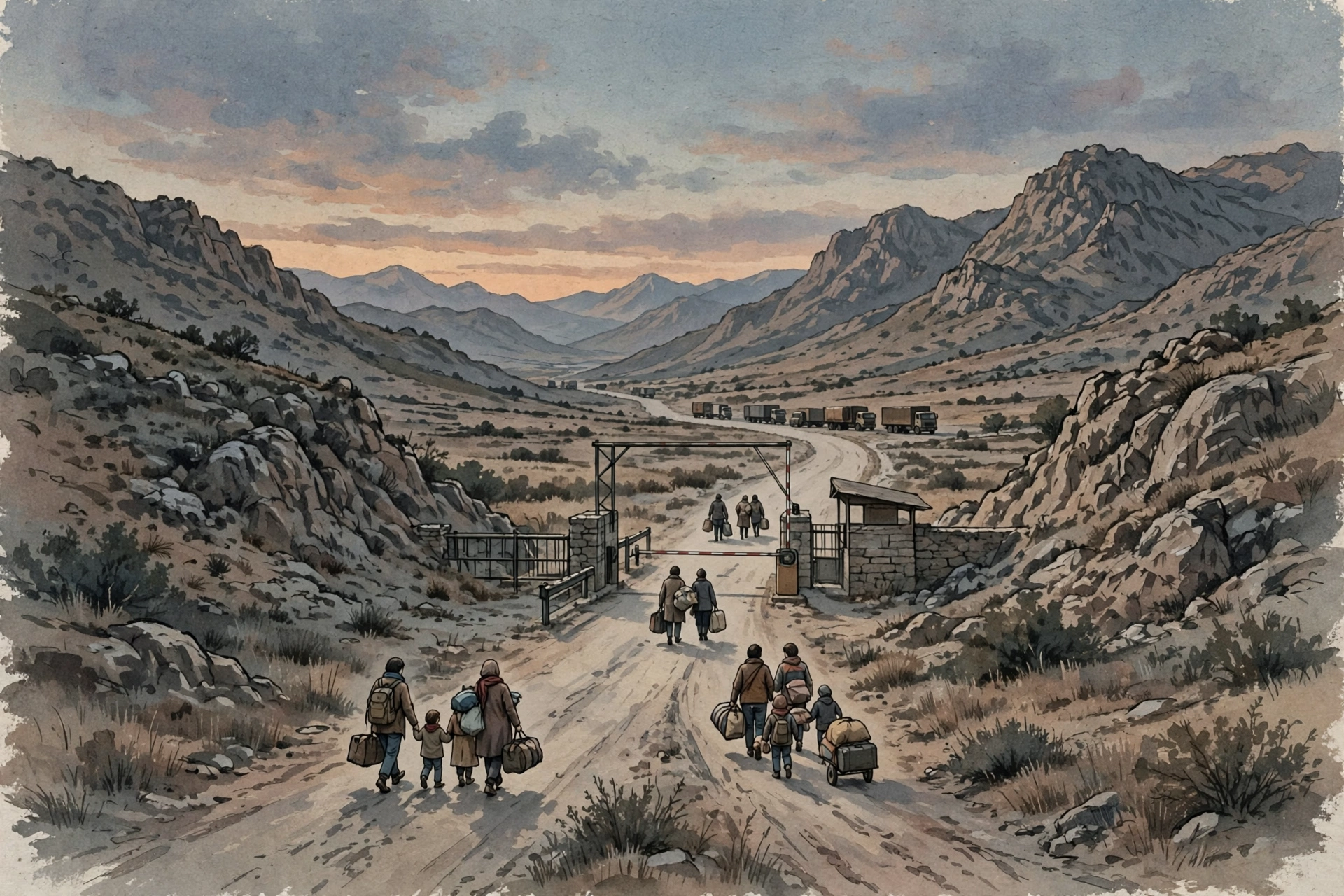

Pakistan arrested 796 Afghan nationals in the first week of November, while 4,662 people returned to Afghanistan in the same week, new United Nations figures show. Both counts fell against the previous week, and crossings at Torkham have slowed to a trickle, the clearest sign yet that the drive that has sent 2.75 million people back since September 2023 is losing pace.
The week’s numbers in one place
A joint update from UNHCR and the International Organization for Migration puts arrests between 1 and 7 November at 796, made in Balochistan, Khyber Pakhtunkhwa, Punjab and Islamabad. Balochistan recorded the largest share, followed by Khyber Pakhtunkhwa, Punjab and the capital. Almost all were Afghan Citizen Card holders or undocumented Afghans, at 99 per cent, while Proof of Registration cardholders accounted for only 1 per cent.
Returns in the same week totalled 4,662, including 809 deportations. Returns fell 16 per cent and deportations 19 per cent against the previous week of October. Of those who returned, 78 per cent were undocumented, 12 per cent held Proof of Registration cards and 10 per cent held Afghan Citizen Cards. Deportations were more concentrated still: 98 per cent undocumented, 1 per cent Proof of Registration holders. Chaghi, Peshawar and Karachi were the top three districts for arrests and detentions this year.
The border has been shaping life and prices on both sides for weeks. Pomegranate prices doubled in Quetta after the border with Afghanistan closed, while growers across the border in Kandahar watched theirs crash.
Arrests fell too, not just returns
The slowdown is not only in returns. The previous week, 25 to 31 October, saw 983 arrests, so 796 is about 19 per cent fewer, on PakMirror’s arithmetic. The UN counted 88,575 arrests and detentions between 1 January and 31 October this year, putting the 2026 total at 89,371 with the first week of November added. Peshawar alone recorded 11,765, the second-highest district total after Chaghi.
The UN counted 822,359 returns between January and October, 87,673 of them deportations, so the 2026 total now stands at 827,021. That is about three in ten of the 2,758,958 people who have returned since 15 September 2023.
The arrests come against a restless security backdrop. 16 more were killed in North Waziristan as the fight shifted to Ali Khel, and police in Khyber Pakhtunkhwa recently arrested an Afghan national in the Tirah valley over an alleged terror plot. The UN update itself does not link the 796 arrests to any single operation.
Fear of arrest is still the main reason people leave
The clearest explanation comes from the people leaving. In the week of 25 to 31 October, fear of arrest was the main reason given by 95 per cent of undocumented Afghans and Afghan Citizen Card holders who returned, and 68 per cent of Proof of Registration holders.
At Torkham, the main crossing in Khyber Pakhtunkhwa, the slowdown is visible. Officials in Landi Kotal told Dawn that 10 to 15 families a day are now going back, against hundreds a day in August and September. An official at the Hamza Baba registration centre put the current figure at about 100 people a day, mostly children, against more than 1,000 a day until last week. Officials blamed poor living conditions and the coming harsh winter in Afghanistan. Dawn’s figures cover returns through Khyber district only.
Diplomacy is running on a parallel track to enforcement. Dar told ECO ministers that Afghanistan must act on terror before trade flows, tying any reopening of trade to action against militant groups.
Three categories, three different treatments
The figures turn on three legal categories, and they decide how a person is treated. Proof of Registration cardholders are registered Afghan refugees whose status is documented with UNHCR. Afghan Citizen Card holders were given cards under a separate government scheme but do not hold refugee status. Undocumented Afghans hold neither card and have no valid visa.
Registered refugees are barely touched by enforcement. Only 1 per cent of arrests and 1 per cent of deportations in the week involved Proof of Registration holders, and most PoR returns went through UNHCR’s Voluntary Repatriation Centres. Undocumented Afghans, by contrast, make up almost all deportations.
What happens next
The weekly updates will show whether the slowdown continues or reverses. The 16 per cent fall in returns and the 19 per cent fall in deportations followed higher levels in the last week of October, so a single week does not establish a trend. What is clear is the shape of enforcement: almost every arrest and deportation involves an undocumented Afghan or an Afghan Citizen Card holder. That pattern is likely to continue while the measures against Afghans without valid visas remain in place. More national news from Pakistan is updated through the day.