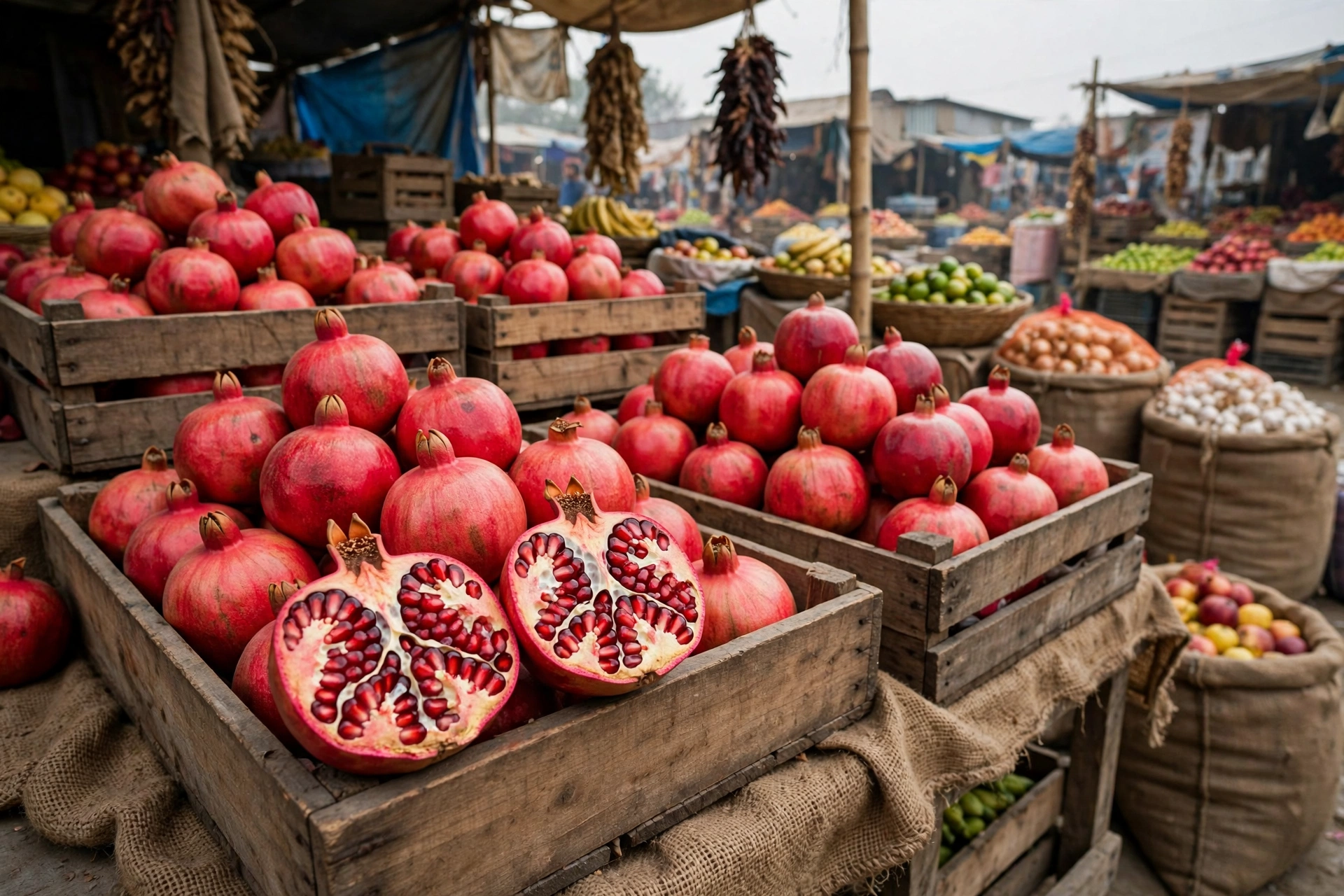

The same closed border that has pushed pomegranate prices to about Rs900 a kilo in Quetta has cut prices by half or more for the growers across the frontier in Kandahar. In Quetta, high quality pomegranates now sell for around Rs900 a kilogram, against Rs400 at the same time last year. In Kandahar, grape and pomegranate prices have fallen by 50 to 70 percent since the trade routes shut. The fruit season runs from mid-October to mid-December, and it is now at its midpoint with the trucks still stopped.
On the Pakistani side, shoppers pay more for less fruit. On the Afghan side, growers earn less for more fruit.
What shoppers in Quetta are paying
A 10 kilogram crate of large pomegranates, which cost around Rs4,000 in 2025, now sells for as much as Rs10,000, traders told Arab News. Pakistan imported more than $18 million worth of pomegranates from Afghanistan in 2024, according to the Pakistan Bureau of Statistics, and that supply has now thinned to a trickle. Hajji Jalat Khan Achakzai, a former president of the Chaman Chamber of Commerce and an Afghan pomegranate importer, said around 250 trucks carrying Afghan pomegranates used to enter Pakistan through Chaman regularly during the season. He said local production in Balochistan was not enough to meet demand across Pakistan, and he called on Kabul and Islamabad to settle their differences and resume bilateral trade.
The pattern was already visible in late October, when fruit and vegetable prices surged across Punjab after the crossings shut, with Afghan grapes and pomegranates among the items rising fastest, according to Khaama Press. Shoppers there said the increases had outpaced the official rate lists.
What growers in Kandahar are getting
On the Afghan side of the same border, the problem is the opposite. Grape and pomegranate prices in Kandahar province have fallen by 50 to 70 percent after the trade routes closed, trade publication FreshPlaza reported. Grape grower Mohammad Rahim said prices had fallen threefold from previous years. One man, a traditional unit of weight, which sold for 150 Afghanis now sells for 50 Afghanis. Only about 250 tons of grapes have been exported so far this year, against roughly 15,000 tons in the same period in September 2023.
Kandahar has 15,000 hectares of pomegranate orchards producing about 274,000 tons a year, and in previous years up to 300 truckloads of pomegranates were exported annually from Kandahar to Pakistan and other countries. Now only limited volumes move by air, at twice the transport cost, to Qatar and markets in Asia and Europe. The Kandahar Department of Agriculture and Livestock puts this year’s grape harvest at 225,000 tons.
The wider bill is growing on both sides
The fruit trade is only the visible edge of a much larger loss. Pakistan’s Commerce Ministry recently told a parliamentary committee that the country’s exports to Afghanistan had fallen by about $1 billion since trade was suspended in 2025. It also estimated trade losses of $387 million between July and October this year from regional conflicts, trade disruption and rising transport costs. Afghanistan’s exports to third countries through Pakistan have fallen from $454 million in 2025 to $7 million in 2026, according to customs data cited by FreshPlaza. PakMirror reported that the wider Afghanistan trade halt has already cost Pakistan billions, and the fruit shelves show how that loss reaches shoppers.
Waheed Ahmed, head of the Pakistan Fruit and Vegetable Association and a member of the prime minister’s export board, said the suspension had opened an opportunity for local growers in Balochistan. But he warned that the disruption was damaging broader trade, because Pakistani agricultural products were also exported to Afghanistan and carried onward to Central Asian markets. The same closure that helps a Balochistan farmer this season takes away the route his country’s produce used to reach Central Asia.
What happens next
The season still has about a month to run, and neither side has a quick fix. Pakistani officials have said the crossings will stay shut until security concerns are resolved. Dar told ECO ministers on Monday that Afghanistan must act against terrorism before trade can flow, which sets a political condition on top of a trade problem.
Achakzai has urged both capitals to resolve their differences and reopen trade. Until they do, the ledger stays split. Quetta pays more for less fruit, Kandahar earns less for more fruit, and the trucks that once carried around 250 loads a season through Chaman stay parked. Watch for whether the crossings reopen before the season ends in mid-December, whether Balochistan growers expand into the gap, and whether the fruit and vegetable prices across Pakistan ease or climb further. More business and economy news from Pakistan