
Pakistan closed its biggest minerals showcase of the year with 13 signed agreements and two data portals. What it did not close with is a price tag. Officials disclosed no combined value for the 13 deals signed at the Pakistan Minerals Investment Forum 2026 in Islamabad, and the only firm money was $100 million. The forum’s president said to judge it by partnerships advanced, not signatures. On that test, the two days were a beginning, not a result.
The 13 deals, and the money behind them
The forum, known as PMIF26, drew more than 10,000 participants from over 60 countries. Ahmed Hayat Lak, the forum’s president, confirmed that 13 memorandums of understanding and agreements were signed, covering investment and exploration. Lak said some could eventually lead to contracts.
The named deals: the Frontier Works Organization signed with Ivanhoe Mines for joint exploration. Mari Energies signed with Ivanhoe Atlantic. Mari Minerals signed joint ventures with Turkiye’s MTA International and Lidiya Mining for Chagai, and the Pakistan Mineral Development Corporation joined MTA International to explore critical minerals in Pishin. Britain’s MSALABS and Mari MSA Labs agreed to build an assay laboratory.
Against that list, the money is thin. National Resources Limited announced a $100 million investment commitment, the only hard figure announced, and its local value moves with the USD to PKR exchange rate today. Officials disclosed no combined value for the 13 agreements. At home, sovereign Sukuk issuance crossed Rs10 trillion this year, but the forum produced paper first.
The discoveries are estimates, not reserves
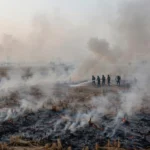
Three announcements from Chagai gave the forum its headlines, and all three need the same qualifier: early-stage company estimates, not established reserves. The Frontier Works Organization announced an estimated 350 million tonnes of copper in the Dasht-e-Kain area, on about half its drilling data analysed so far. Mari Minerals announced its first gold and copper discovery in Chagai, citing potential resources of around one billion tonnes. National Resources Limited reported copper and gold across at least eight porphyry discoveries in Chagai after drilling nearly 25,000 metres.
None came with a published grade, a feasibility study or a production date. That matters, because big mineral numbers have a habit of arriving before the mining does. Punjab’s rivers hold gold, but the number behind the claim was two years old, a reminder that a headline figure is only as good as its data. The forum also launched the National Minerals Data Centre and the Geological Survey of Pakistan’s GeoPortal.
Mine here, process here, then export
The clearest message from the forum’s leaders was not about digging but about what happens after. Prime Minister Shehbaz Sharif told investors to process and manufacture in Pakistan, not export raw minerals, saying: “Mine in Pakistan, process in Pakistan, manufacture in Pakistan, and then export to the rest of the world.” He said mineral development must protect the environment. Field Marshal Asim Munir said Pakistan should build the full mineral value chain at home and assured investors of maximum security.
Petroleum Minister Ali Pervaiz Malik named copper, gold, lithium and antimony as the focus, and pointed to the proposed Rohri-Nokundi railway link to mineral areas. The Institute of Cost and Management Accountants estimates mineral exports could rise from $3 billion a year to $8 billion if more value is added at home. That rise needs refineries, smelters, power, water and transport that do not yet exist at that scale.
The Reko Diq warning
One project hung over the forum as a reminder of what can go wrong after a signature. Barrick Mining said in April it was slowing development of the multibillion-dollar Reko Diq copper and gold project over security concerns in Balochistan. Barrick’s chairman John Thornton attended and reaffirmed the company’s long-term commitment, and Lak said both sides were fully committed.
Reko Diq’s financing is already partly in place. The United States Export-Import Bank approved $1.25 billion in financing for the project in December 2025, with up to $2 billion in American mining equipment to follow, and first production targeted for 2028. But the April slowdown is why the safety pledges were the forum’s most repeated lines.
What has to happen next
Three tests will show whether PMIF26 was more than a showcase. First, contracts: none was announced, so the next edition in November 2027 is the natural checkpoint. Second, the regulatory fix: Lak said the sector needs a consistent legal framework, and the government began harmonising mining regulations about two years ago. Mining is a provincial subject, so federal-provincial coordination is essential. Third, infrastructure: the Rohri-Nokundi railway, power and water for Chagai, and the processing plants. Until those move, the 13 agreements are what Lak said they should not be judged by: a count of signatures. More business and economy news from Pakistan.