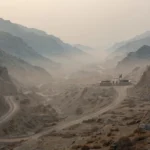

Punjab’s new smog squad has its first ledger. In one 24-hour period this week, the force received 679 reports of field fires and says it extinguished 650 of them. The unit, 750 officers in 67 rapid-response teams, is the first of its kind in Pakistan. But the week’s own air data tells a harder story: Lahore’s average PM2.5 stood at eight times the World Health Organization’s safe limit, and satellites counted 16,714 crop fires in Punjab since 1 October.
A 10-minute response, and 29 fires left burning
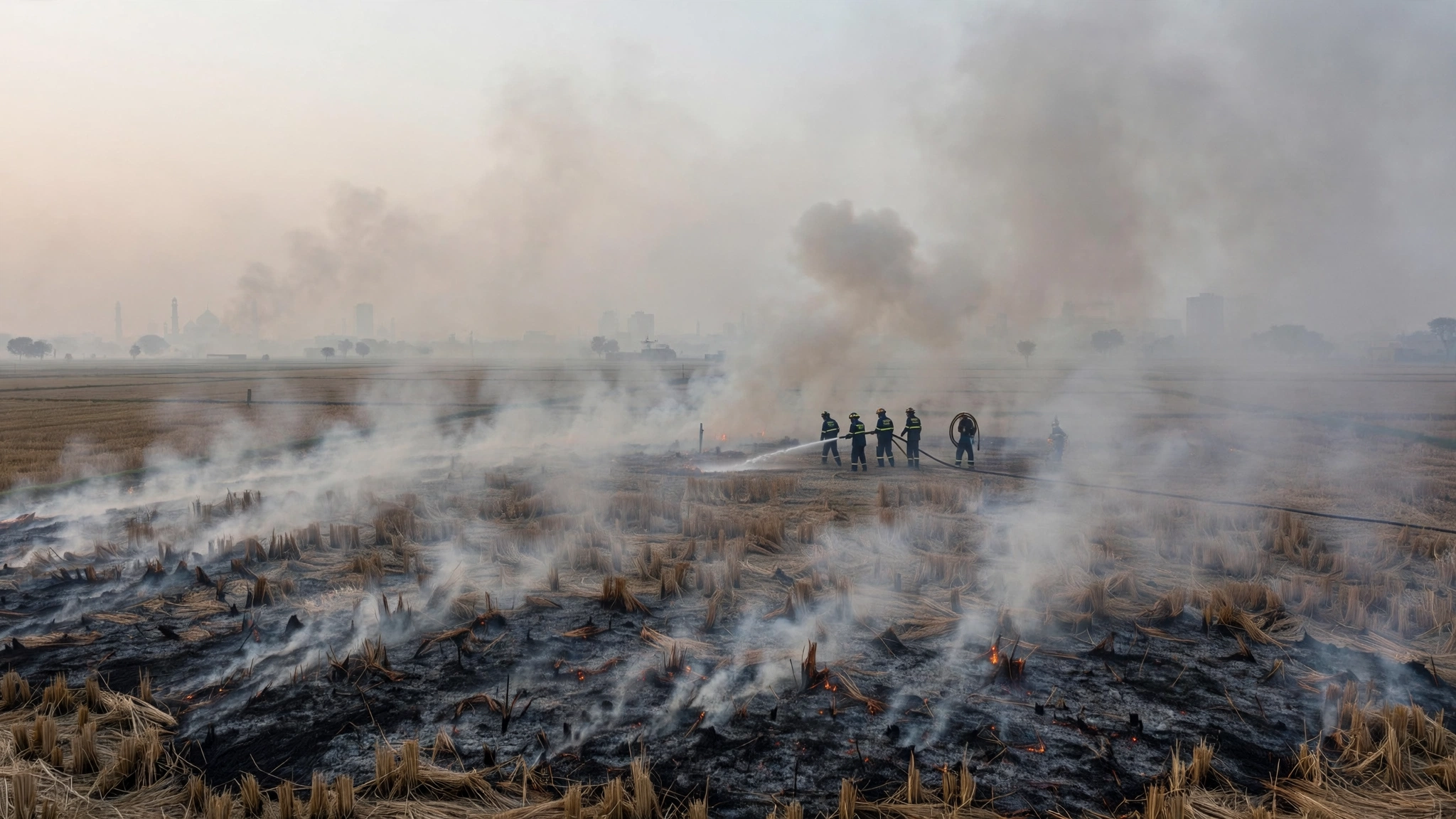
On Thursday, Reuters watched officers of the new quick-response unit bring a stubble fire under control within minutes at a paddy field outside Lahore, a city IQAir had rated “very unhealthy” that week.
Silwat Saeed, chief of Punjab’s Environment Protection and Climate Change Department, told Reuters the government formed the 750-member force this year, in 67 rapid-response units across the main rice-growing districts. Teams aim to reach reported field fires within 10 to 15 minutes.
In one 24-hour period this week, the department counted 679 field fire reports and says it extinguished 650 of them, about 96 percent. What the count does not say is what happened to the other 29 fires, or how many fines were collected.
The stick: Rs15,000 an acre. The carrot: a subsidised seeder
Farmers caught burning stubble face fines of Rs15,000, about $54, per acre, said Muhammad Farooq of the Punjab Agriculture Department. Non-payment can bring prosecution and up to six months in jail.
The government has also handed out more than 10,000 subsidised super seeders, machines that sow wheat without burning the stubble. The government pays 60 percent of the cost and the farmer pays the rest. Muhammad Ismail, who farms 50 acres, told Reuters a subsidised super seeder had boosted his wheat yield per acre.
But adoption is far from universal. Saleem Abbas, another farmer who has stopped burning, said many still favour the practice because it is widely regarded as the cheapest and fastest way to clear fields for the next crop.
The air disagrees with the official story
Its director general, Abdullah Nayyar, said smog-related throat hospitalisations last month were 69 percent of the October 2025 level, a fall of about 31 percent, which the department calls proof the campaign is working.
Earlier this month, schools stayed open as Punjab said smog was easing, while the week’s readings told a harder story.
The Pakistan Air Quality Initiative put Lahore’s average PM2.5 at 126 micrograms per cubic metre, eight times the WHO guideline. The city exceeded the national 24-hour air quality standard on all 40 days with valid readings.
On Monday 9 November, IQAir ranked Lahore the world’s most polluted major city, with an AQI of 590. On days when the air had passed over fire-affected areas, Lahore averaged 175 micrograms per cubic metre, against 93 on other days.
In Lahore’s hospitals, benches and corridors are crowded. Ahmed Abubakar, a heart patient with a bypass who is diabetic, told Reuters the smog had brought on breathing problems and eye infections. Mohammad Niaz Butt, whose nose and throat had blocked up, put it bluntly: “They are burning it, and nothing is done about it.”
Whose fires are they, anyway?
Satellites detected 16,714 likely crop-residue fires in Punjab between 1 October and 9 November, with 1,102 fires on 1 November alone. Five districts accounted for 54 percent of them: Sheikhupura 2,559, Jhang 2,192, Okara 2,062, Hafizabad 1,893 and Gujranwala 1,417.
The cross-border ledger cuts against the usual blame. NASA satellite data found 13,241 fire detections in Pakistani Punjab between 1 October and 29 October, against 3,158 in Indian Punjab, more than four times as many. Diwali fireworks took the blame for the worst days, but the PAQI report found Lahore’s PM2.5 rose only 10 percent after Diwali, against 40 percent in Faisalabad and Multan.
Diwali took the blame, but Punjab’s own numbers told another story. One number favours the government: satellites have detected less burned area than the historical average at this point in the year.
What to watch next
The Provincial Disaster Management Authority has forecast rain over two days in Lahore and nearby districts, which is expected to reduce smog but bring colder weather. Rain helps. It does not fix enforcement.
Three things will show whether the squad is more than a good day’s ledger: how many fines were actually collected, whether the seeders reach the five districts where most fires are detected, and whether the next smog peak reads any differently.
Smog has already forced one change no press release could: the second Test was moved from Lahore to Rawalpindi because of smog. The squad can reach a fire in minutes. The test now is whether it can change a season. More national news from Pakistan.