
Pakistan’s ambassador to the United Nations called on the Security Council on Friday for an immediate end to military provocations and unlawful attacks in the Gulf. Hours later, Iran reported that three oil tankers had struck mines and caught fire in the Strait of Hormuz. The numbers behind the statement are about Pakistan itself: the Gulf carries more than half of the money Pakistanis abroad send home, nearly all of the gas Pakistan imports, and a defence pact that ties Pakistan’s security to Saudi Arabia’s.
What Pakistan told the Council
Ambassador Syed Haider Shah, Pakistan’s Permanent Representative to the UN, spoke at the Council’s 10271st meeting, called at Bahrain’s request to discuss maritime security. He set out five principles: sovereignty, protection of civilian infrastructure, safeguarding maritime trade, addressing root causes, and dialogue as the only way forward. He strongly condemned Houthi attacks and threats against Saudi Arabia, including strikes on civilian infrastructure and lawful trade. He called for safe passage, protection of shipping and crews, and delivery of humanitarian supplies, and urged a regional framework based on common security and mutual prosperity. The session ended with no adopted measure. A day earlier, the Council had unanimously renewed the Yemen sanctions regime, with Pakistan voting in favour.
Three tankers, one morning
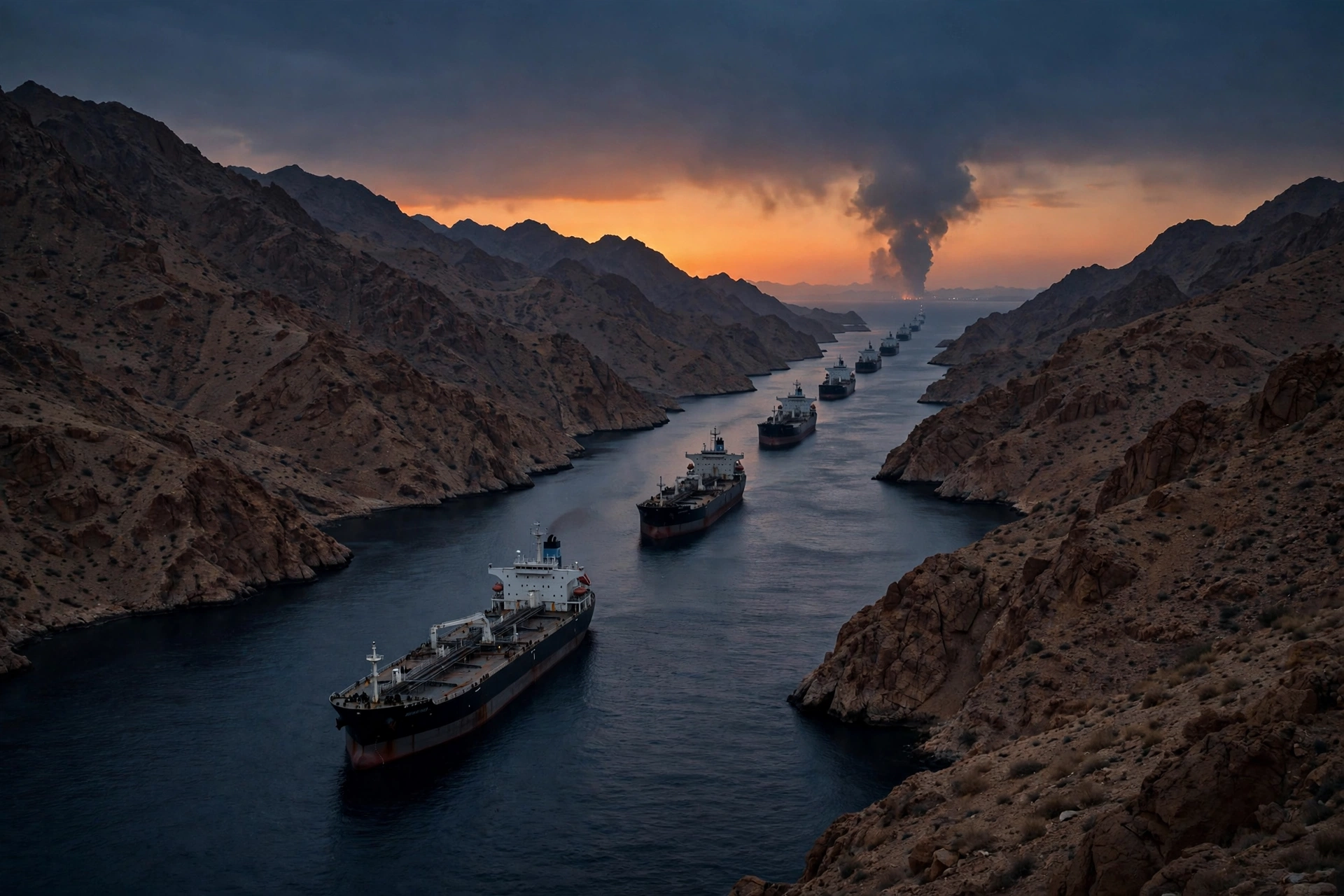
On Saturday morning, Iran’s Revolutionary Guards said two oil tankers had exploded and caught fire after striking naval mines in the south of the Strait of Hormuz. The Guards said the vessels had switched off their tracking systems and were crossing through an unauthorised route. In a separate statement, Iran’s conventional navy said a third tanker, sailing east of the strait with its tracking off, had caught fire and stopped after striking a mine. Neither statement named the vessels or their flags, and the claims could not be independently verified. The United States military says it has cleared the main shipping routes of mines. Iran’s navy warned that any offending tanker in the restricted area east of the strait would be set on fire by a mine.
The ledger the Council heard
Assistant Secretary-General Khaled Khiari told the Council the International Maritime Organization had confirmed more than 130 security incidents in the Strait of Hormuz and the wider Middle East between 1 March and 11 November. October alone brought 35 incidents, the highest monthly count, and 10 more were recorded by 11 November. At least 25 seafarers have been killed in and around the strait since the war with Iran began in February. Khiari told members the situation cannot become the new normal. Shipping through the strait is about 65 percent below pre-war levels, according to United Kingdom Maritime Trade Operations. The strait carries about a quarter of global seaborne oil trade.
Why Islamabad cannot stay neutral
First, the money Pakistanis abroad send home. Workers’ remittances reached $14.77 billion in the first four months of this fiscal year, up 14 percent on a year earlier, the State Bank said. Gulf states sent $8.09 billion of that, or 54.8 percent, including $3.67 billion from Saudi Arabia and $3.05 billion from the United Arab Emirates. In October, remittances of $3.89 billion covered the whole trade gap. Second, energy. Qatar and the United Arab Emirates supply nearly 99 percent of Pakistan’s LNG imports, and LNG makes up about 30 percent of the country’s total gas supply. About 93 percent of Qatar’s LNG exports and 96 percent of the Emirates’ pass through Hormuz. The petroleum import bill for the last fiscal year was $16.86 billion. When the strait was disrupted early this year, crude stocks fell to about 11 days, and emergency supply came through Saudi Arabia’s Yanbu port. Winter gas may cost $34 after Pakistan rejected $27 LNG bids, and every dollar on the import bill is paid at the dollar to rupee rate today. Third, the defence pact. Pakistan and Saudi Arabia signed a bilateral defence agreement in September 2025. In August 2026, Pakistan, Saudi Arabia and Turkiye signed the Makkah Joint Defence Agreement, treating an attack on any one of the three as an attack on all three.
What happens next
Foreign Minister Ishaq Dar chairs the 30th Council of Foreign Ministers of the Economic Cooperation Organization in Islamabad on 15 and 16 November, where connectivity and regional integration are the stated themes. The meeting gives Pakistan a second stage to press the same case directly. Three tests will show whether the warning is heard. First, verification: whether independent evidence confirms what happened to the three tankers. Second, shipping: whether transit volumes recover from 65 percent below pre-war levels. Third, the market: bids for two winter LNG cargoes open on 18 November, and any Hormuz premium will show up in the price. More national news from Pakistan will follow as each test is answered.