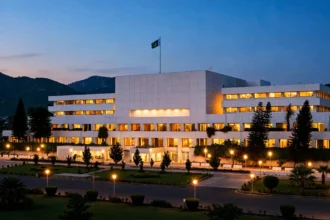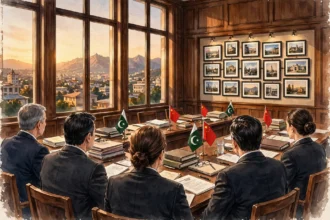

Pakistan has declared its rapidly growing population a national emergency, after the growth rate rose instead of falling. Planning Minister Ahsan Iqbal made the declaration on Thursday, 12 November, at the first meeting of the Executive Committee of the National Population Council in Islamabad.
The reversal in numbers
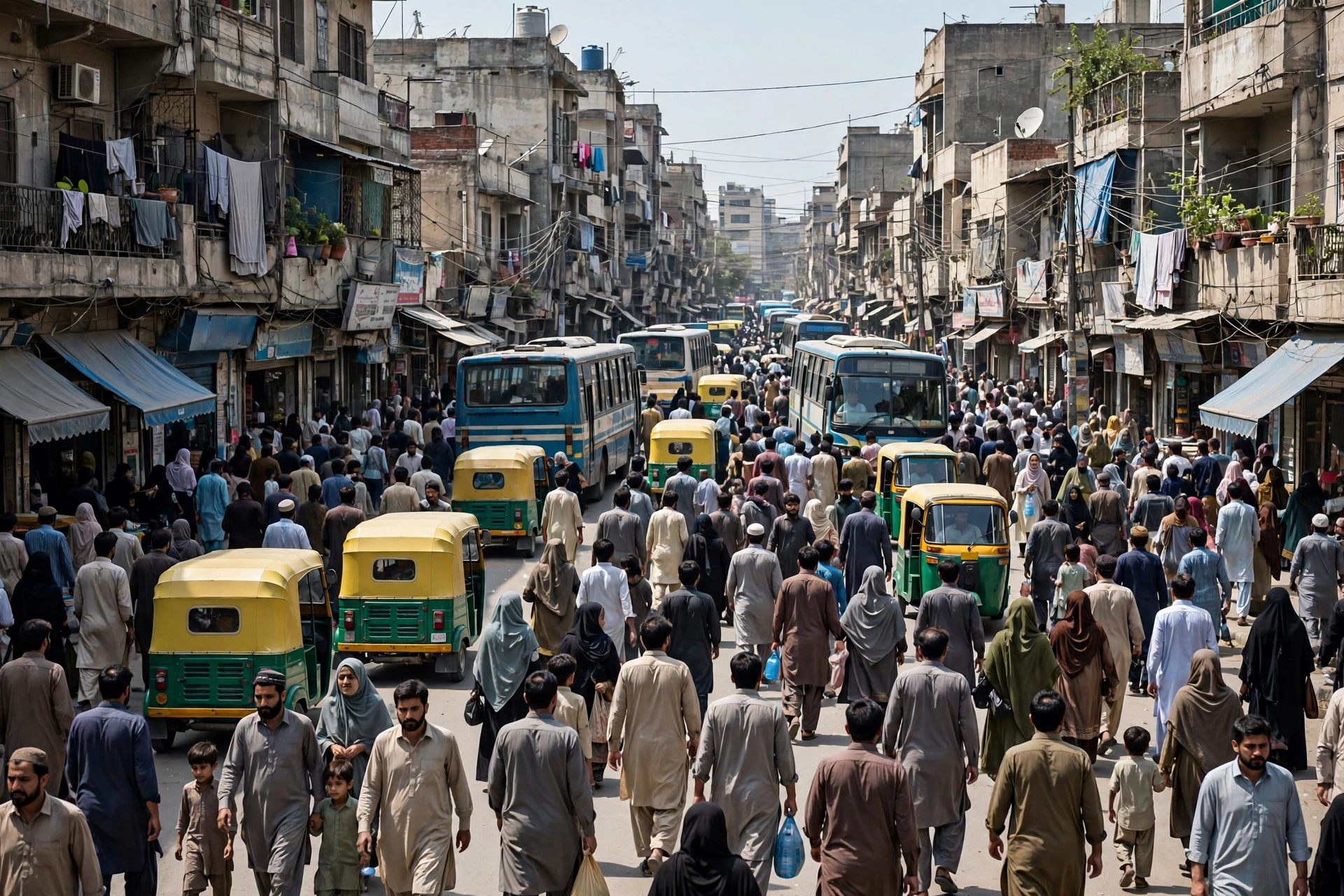
The rate had been falling gradually since 1980, reaching 2.4 per cent in the 1998 to 2017 census interval. The 2023 digital census recorded 2.55 per cent, the first increase in decades. Iqbal’s own description was blunt: “we have taken our foot off the brake and put it on the accelerator.” The census counted 241.49 million people, up 33.82 million on 2017, about 5.6 million more a year. On the 2023 census base, a 2.55 per cent rate adds about 6.2 million people a year. If the rate holds, the population passes 386 million by 2050, against a government range of 370 to 400 million.
Why the rate rose while families shrank
This is where the numbers surprise. The average number of children per woman fell from 4.1 in 2006-07 to 3.6 in 2017-18, and the latest Household Integrated Economic Survey for 2024-25 still reports 3.6. Families are having fewer children, yet the population is growing faster. The reason is momentum: 80 per cent of Pakistanis are under 40 and 66 per cent are below 30, so there are far more women of childbearing age than a generation ago, and even at a lower birth rate the sheer number of young families pushes the total up. The under-18 population alone rises from 117 million to 140 million by 2050, so schools, clinics and jobs must expand even before the rate falls.
What fast growth costs
Iqbal put the cost in simple arithmetic. If the economy grows by 5 per cent while the population grows by 2.5 per cent, per-capita growth is only 2.5 per cent. Half the growth is absorbed by the extra people, and the pressure lands on education, health care, jobs and basic facilities. For households, the squeeze shows up in prices and in the rupee, so the USD to PKR exchange rate today matters more every year. Nearly 40 per cent of children suffer from stunting, a sign many families already cannot provide the care their children need.
The money contradiction
There is a second problem, and the minister named it himself: under the National Finance Commission Award, 82 per cent of the money shared between the federation and the provinces is distributed by population. A province that slows its growth risks a smaller share of national resources, while one that grows faster is paid more. The minister has called this a perverse disincentive, and wants the award linked to development and sustainability indicators instead, so provinces are rewarded for balanced growth. The snag is that population is a provincial subject since the 18th Amendment, so the federal government can set targets but the provinces deliver the services. That is why the council seats the prime minister, the four chief ministers, the AJK and Gilgit-Baltistan leadership, federal ministers and military leaders at one table.
What the committee told the provinces to do
The Executive Committee was set up by the prime minister to turn the council’s policies into targets for the provinces. At its first meeting it reviewed the draft National Health and Population Policy and the Population Stabilisation Programme, and directed the provinces and regions to move quickly on implementation. Provinces have been asked to report on setting up their own population councils and executive committees, prepare costed plans, and connect missing data to the contraceptive logistics management system. Iqbal stressed the challenge was not limited to health care or family planning, but was closely linked to girls’ education, women’s economic empowerment and social awareness. The wider plan being prepared, the National Stabilization Plan 2026 to 2035, aims to cut the rate from 2.55 per cent to 1.25 per cent by 2035, with priority to health care, education, youth development, female labour force participation, vocational training and safety nets. With two thirds of the population below 30, the demand is not only for schools and clinics but for jobs for millions of young Pakistanis entering work every year.
What to watch next
The declaration is the easy part. What matters now is whether the provinces produce costed plans, whether the National Finance Commission formula changes so slowing growth is rewarded rather than punished, and whether the 1.25 per cent target for 2035 survives the next budget. The same week, Pakistan pressed its $188bn climate finance ask at COP31, a case resting on the same strain on resources. The emergency will be judged not by the words used in Islamabad, but by whether the growth rate starts falling again.