
Pakistan will vaccinate about 24 million children under five in 97 selected districts from November 2 to 8, in the third sub-national polio campaign of 2026. Health Minister Mustafa Kamal has set June 2027 as the target for a polio-free Pakistan, and Focal Person Ayesha Raza Farooq told parents on November 1 that every child in the selected districts must receive the drops. The test is narrow: this is a targeted drive, not a nationwide one.
The campaign in one week
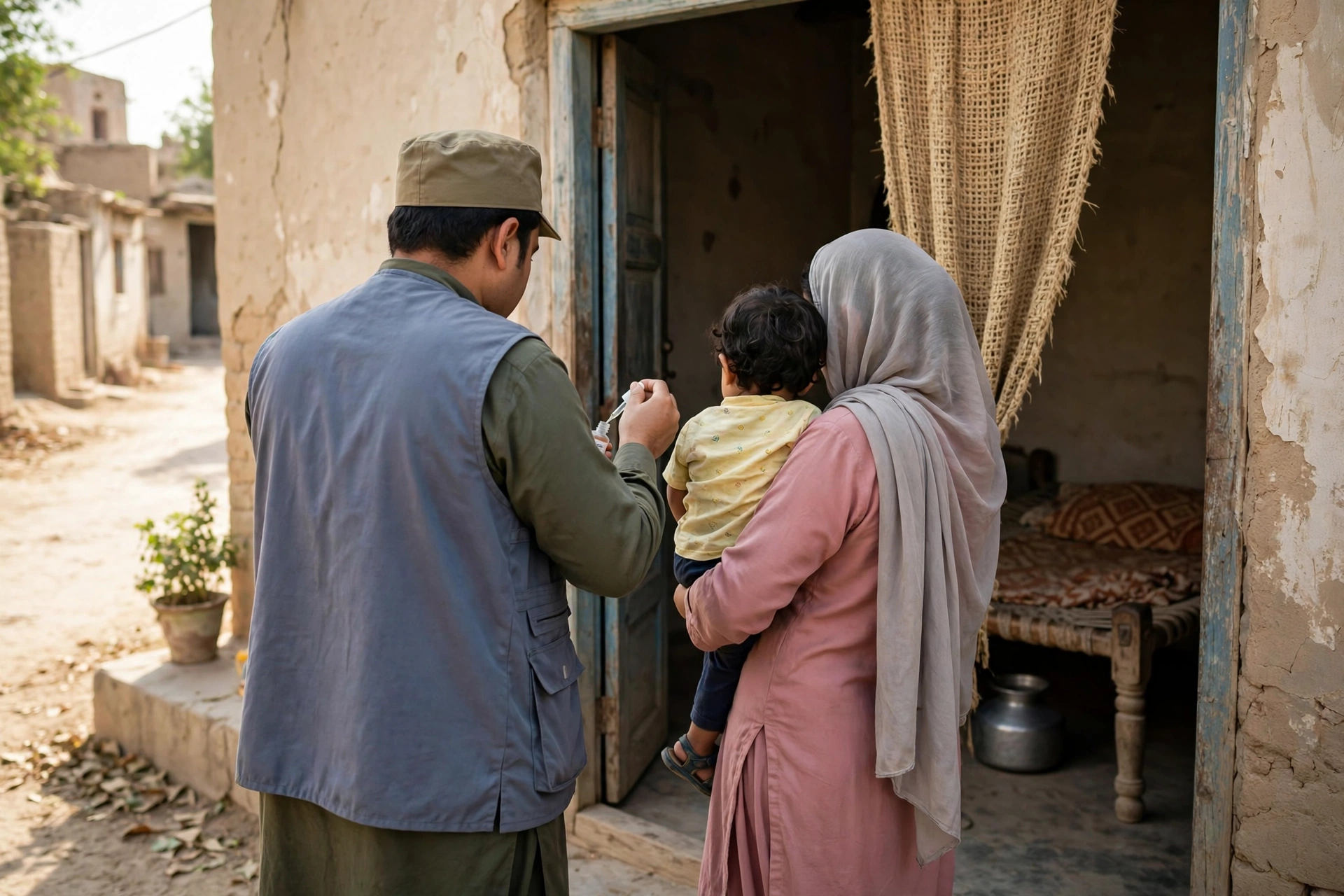
The national drive runs for seven days, from November 2 to 8. More than 200,000 frontline workers will go door to door to give two drops of oral polio vaccine to each child under five, and teams will also visit schools, hospitals and public places. Polio has no cure and can cause lifelong paralysis, so the programme asks parents to vaccinate a child in every campaign, even if the child was vaccinated before.
Islamabad runs on a shorter clock. The capital launched its drive at Golra Railway Station, where the Deputy Commissioner gave drops to children travelling by train, and its teams will work from November 2 to 5. Its target is 447,614 children.
Where the 24 million live
The district plan adds up, and the addition tells the story. Punjab covers 13 districts and 9.278 million children, and Sindh covers 20 districts and 6.883 million children. Together they account for 16.161 million children, about two thirds of the target, in only 33 of the 97 districts. Khyber Pakhtunkhwa covers 27 districts and 4.808 million children, and Balochistan covers 31 districts and 2.217 million children. Add Islamabad, Gilgit-Baltistan and Azad Jammu and Kashmir, and the total reaches 23.969 million, close to about 24 million.
District count and child count point in opposite directions. Khyber Pakhtunkhwa and Balochistan together hold 58 of the 97 districts, about 60 percent of the map, but only 7.025 million children, about 29 percent of the target. The campaign is dense in Punjab and Sindh, where the children are, and wide in Khyber Pakhtunkhwa and Balochistan, where districts are many and populations are scattered.
Why June 2027 is a harder test than it sounds
Minister Kamal announced the June 2027 target at the launch ceremony at the National Emergency Operations Centre on October 30, pointing to falling case numbers. Pakistan reported 31 polio cases in 2025 and seven so far in 2026, down from an estimated 20,000 cases when the national programme began in 1994. That is a fall of about 99.8 percent since 1994.
But a deadline is not a result, and the remaining cases are the hardest ones. Seven cases mean the virus is cornered, not gone, and it survives where routine immunisation is weak, populations are mobile, or teams face refusals and security problems. June 2027 will be decided by whether later rounds find the children this round misses.
The KP concentration and the cross-border piece
Farooq said on November 1 that the majority of the seven cases this year came from Khyber Pakhtunkhwa, and the plan reflects that, with 27 districts in the province and southern Khyber Pakhtunkhwa singled out for targeted work. Schools are one of the fixed sites teams will use, and in Khyber Pakhtunkhwa the school estate itself is under strain, as shown by the Bannu schools repair bill of Rs4.509 billion, most of it for primary schools.
The other half of the problem sits across the border. The campaign will run at the same time in Pakistan and Afghanistan, with cross-border coordination, because the virus does not respect a border that families cross regularly. That coordination is where politics are thinnest: Pakistan’s red line warning to the Taliban on October 31 named no verifier both sides accept.
Three tests before June
Three checks will settle whether this drive moves June 2027 closer or merely repeats it. First, the November 2 start: the campaign opens on the second day of the two-day doctors strike that has closed outpatient departments, with emergencies staying open. Polio teams are separate frontline workers, so the strike does not cancel the drive, but parents who hear clinics are closed may wrongly assume vaccination teams are closed too.
Second, the missed children count: the programme should publish, district by district, how many targeted children were not reached and why. A round that reports only a total vaccinated figure cannot be checked. Third, the next surveillance report: if no new case appears through the winter rounds, June 2027 becomes a planning date. If cases appear outside the 97 districts, the target will need a new plan. For more national news from Pakistan, follow the results after November 8.