
The KSE-100 index closed above 168,000 on Tuesday, November 3, gaining 1,454.80 points, or 0.87 percent, to settle at 168,018.87, according to APP. Monday’s close was 166,564.07, so the two day gain from the October close of 166,409.25 stands at 1,609.62 points. Business Recorder linked the buying to optimism over talks between the United States and Iran. That link is the story, and its limit: no ceasefire deal has been announced.
A two day reversal, not a one day spike
On Monday, the index fell to 165,776.85 during the day, down 632.40 points from the October close, before clawing back to a gain of 154.81 points. Tuesday opened stronger at 167,869.45, up 1,305.39 points, reached an intraday high of 168,469.78, and closed at 168,018.87. Tuesday’s gain was about nine times Monday’s.
October keeps the rally in proportion. Arif Habib Limited figures carried by Shafaqna put October’s fall at 3,560 points, or 2.1 percent, to a close of 166,409. Tuesday’s close sits 1,609.62 points above that, but still about 21,148 points below the January 23 record of 189,167. the two day October rout that shed 3,341 points ahead of the rate call showed how fast an oil headline can take points away again.
Five stocks supplied nearly half the gain
The rally had a narrow base. Bloom Pakistan reported that Fauji Fertilizer Company, Engro Holdings, Pakistan Services Limited, Meezan Bank and Engro Fertilizers together added around 701 points, about 48 percent of the 1,454.80 point gain, from five names. That leaves the index exposed if any of those five turns.
The volume chart tells a different story. APP reported that Cnergyico PK led Tuesday trading with 114.827 million shares, followed by Pervez Ahmed Co and Pak Refinery. None of the five biggest point contributors topped the volume list. The most traded shares were not the shares lifting the index most.
What the hope is actually made of
The hope has a visible trigger. The Express Tribune, via Khabr, reported that global oil prices fell by more than 4 percent on Monday on renewed hopes of diplomatic progress. For Pakistan, which imports most of its fuel, cheaper oil eases worry about the import bill, one reason October ended lower.
But the diplomatic facts are thinner than the market move. Iranian Foreign Minister Abbas Araqchi said on Monday, in comments carried by IRNA, that consultations through mediators were intensive and that Iran had presented its conditions. Spokesman Esmaeil Baghaei said the September seven step proposal remained the basis, condensed for implementation within two days. Its reported conditions include ending the port blockade, reopening Hormuz, an oil sales waiver and cancelling new sanctions. No United States acceptance has been reported, and no signed deal exists.
Pakistan’s part is real but limited. Army spokesman Lieutenant General Ahmed Sharif Chaudhry told Reuters on October 30 that Pakistan was cautiously optimistic about mediation, while warning of powerful spoilers. Army chief Field Marshal Asim Munir visited Tehran twice in October, most recently on Monday alongside Saudi and Turkish officials, and the four states agreed to continue talks. The market priced that process, not an outcome.
The pump price twist underneath the rally
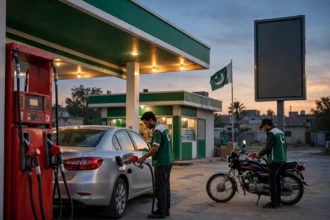
Households got a concrete number on Tuesday. The government cut petrol by Rs3.40 a litre to Rs374.51 and diesel by Rs7.76 to Rs395.20, effective November 3, The Standard reported, citing Petroleum Minister Ali Pervaiz Malik. The arithmetic ties to Monday: the petrol pricing formula rewritten on November 2 pushed the ex-refinery price up by Rs15.13 to Rs282.26, while a levy cut of Rs14.71 and a freight cut of Rs0.42 left the ex-depot price unchanged at Rs377.91. Subtract Rs3.40 and the result is exactly Rs374.51.
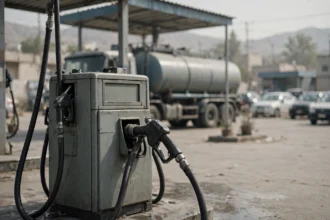
The refinery side is where Tuesday’s rally and Monday’s pain meet. The Express Tribune reported that all refineries hit their lower limits on Monday after the government shifted higher import costs onto local refineries, and a Business Recorder summary put the refinery share at Rs15 billion. Households face the same squeeze elsewhere, with three LPG prices in November, from Rs294 to Rs630 a kilo, inflation at 9.6 percent in October and the policy rate at 12 percent.
Three tests before calling it a recovery
First, does the index hold above 168,000 on Wednesday, with volume near Tuesday’s 517 million shares? Second, do refinery shares recover from Monday’s lower limits, or does the Rs15 billion burden bring fresh selling? Third, does diplomacy produce a concrete United States answer to the Hormuz conditions, or does a headline reverse oil’s fall?
Until then, Tuesday is best read as a relief rally with a narrow base: five stocks, one diplomatic hope, and a pump cut. This is a market report, not investment advice. For more business and economy news from Pakistan, watch the Wednesday close, refinery counters and the next oil headline.