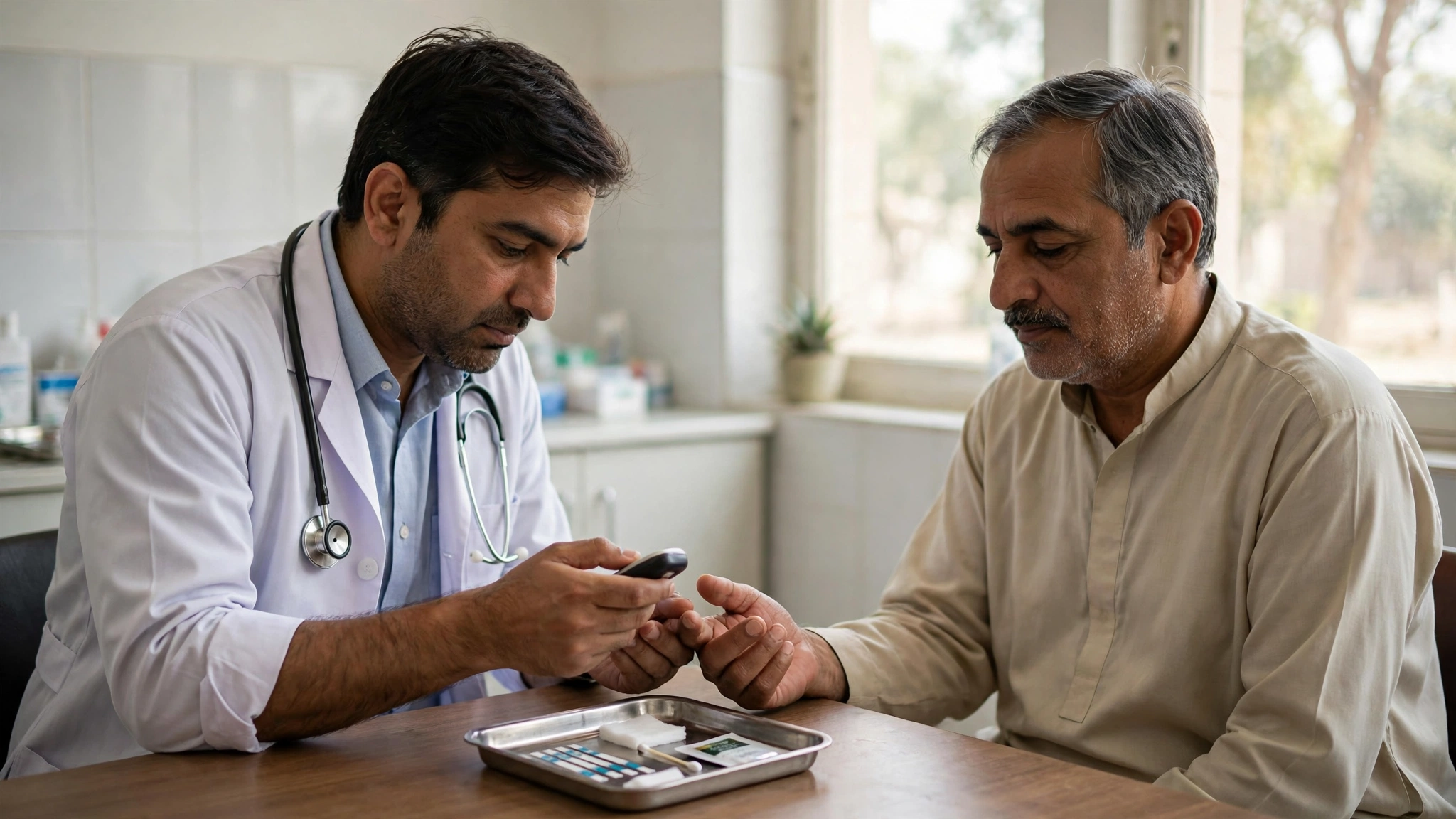

Nearly one adult in three in Pakistan is living with diabetes, and more than a quarter of them do not know it. That is the warning behind this year’s World Diabetes Day, observed on Saturday 14 November under the theme Early Action on Diabetes, as the President and the Prime Minister urged Pakistanis to get screened before the disease does its damage. The Prime Minister confirmed Rs6.8 billion for a national prevention and control programme, and the numbers behind the announcement explain why the government is acting now.
9.3 million people do not know they have it
President Asif Ali Zardari, citing International Diabetes Federation estimates, said 34.5 million Pakistani adults were living with diabetes in 2024, and more than one quarter of them remained undiagnosed. The Federation’s own Diabetes Atlas puts the undiagnosed number at about 9.3 million people, roughly 27 per cent of everyone with the disease in the country. These are people whose blood sugar is already high, often for years, while they feel no symptoms and take no treatment. The World Health Organization’s message for the day made the same point from the other side: prevention and early detection allow prompt treatment and help avoid serious complications, including the kidney failure, blindness and amputations that diabetes causes when it is found late.
First in the world, and still climbing
Pakistan holds the world’s highest age-standardised diabetes prevalence among adults aged 20 to 79, at 31.4 per cent, according to the IDF Diabetes Atlas. In plain terms, almost one adult in three has the disease. The Atlas estimates roughly 230,000 deaths a year in Pakistan from complications related to diabetes. The direction of travel is worse: the Atlas projects 70.2 million people with diabetes in Pakistan by 2050, more than double today’s figure, with age-standardised prevalence rising to 34.2 per cent. Globally, 589 million adults live with diabetes, a figure projected to reach 853 million by 2050. A national survey published in BMJ Open, which tested 18,856 adults across 16 districts in 2017, found a measured prevalence of 16.98 per cent, showing how fast the burden has grown even allowing for different methods.
A 30-second test at the centre of the plan
At the centre of the government’s answer is a test that takes about 30 seconds and needs no blood sample. The RAPID score asks three things: a person’s age, waist circumference, and whether diabetes runs in the family. Anyone flagged by the score is then sent for proper blood testing. Professor Abdul Basit, director of the Indus Diabetes and Endocrinology Centre and secretary general of the Diabetic Association of Pakistan, has described the tool as part of the Prime Minister’s programme. Basit has also warned that diabetes is no longer limited to older people and is now appearing in children. Punjab Chief Minister Maryam Nawaz Sharif joined the President and the Prime Minister in urging early screening and timely medical care.
What the Rs6.8 billion programme will do
Prime Minister Shehbaz Sharif said the federal government has allocated Rs6.8 billion for the Prime Minister’s Programme for Prevention and Control of Diabetes Mellitus. The programme will expand screening for early detection, strengthen primary healthcare services, and improve access to diagnosis and treatment, the Prime Minister said. The plan is to begin with a model project in Islamabad and then expand to the provinces, a design first announced by Health Minister Mustafa Kamal in September. Pakistan’s nationwide polio vaccination drives show the state can reach households at scale when a campaign is properly funded. The open question is timing: no launch date and no timetable for expansion to the provinces has been announced.
What to watch next
Three things will show whether the announcement becomes a working programme. First, a launch date for the Islamabad model project and a published schedule for the provinces. Second, screening numbers: how many people the RAPID score actually reaches, and how many of the 9.3 million undiagnosed it finds. Third, whether treatment follows diagnosis, because a screening result without affordable medicine changes little. The health pressures do not stop with diabetes: Lahore’s air is still eight times the safe limit, adding a second chronic burden on the same clinics. For now, the advice from the day itself is simple and free: anyone with a family history of diabetes, a large waistline, or age over 40 should ask for a blood sugar test. The test costs little. Finding out late costs far more.
More health news from Pakistan and more national news from Pakistan.