
On Monday, the banned Baloch Liberation Army said its drone unit killed six soldiers in four strikes in ten days. The military has confirmed two deaths, a major and a havildar killed when armed quadcopters hit a patrol in Mastung on 14 November. The claim, the confirmation and the gap between them mark a new phase in the province’s war.
The four strikes, day by day
The statement came from spokesman Jeeyand Baloch, via IANS Tuesday. It credits all four attacks to the group’s drone warfare unit, QAHR, also written as Kahar.
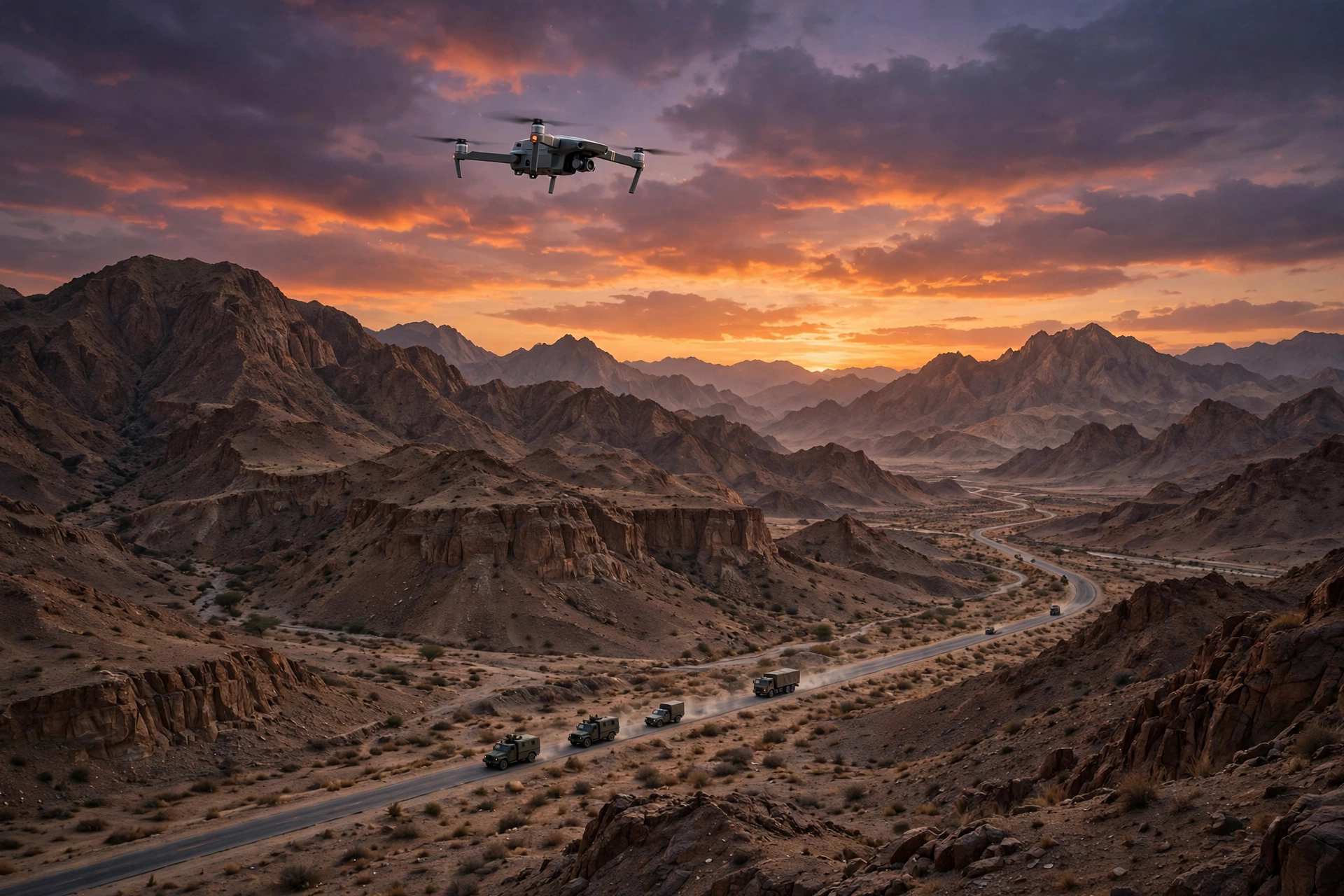
The latest strike came on Saturday 14 November, in the Kurdgap area of Mastung district, where a drone hit a vehicle in an army convoy, killing two men including a senior officer. The group released a 1 minute 25 second video of the strike, showing the drone locking on to the moving vehicle.
On 11 November, the unit struck the main army camp at Khadkocha, also in Mastung, killing two soldiers. On 9 November it hit the same camp again, aiming at armoured vehicles, and one soldier was killed on the spot. The earliest came on 5 November, in the Manguchar area of Kalat, where three drone runs hit an army installation, killing one soldier, wounding three and severely damaging a vehicle.
Two plus two plus one plus one makes the six claimed. One version counts the 14 November strike as three dead, which would make seven. The official record names two men killed that day.
What the military confirms, and what it does not
The military’s media wing, ISPR, said on Saturday that armed quadcopters had targeted military vehicles on patrol on 14 November. It named them as Major Omer Minhas Nasir, from Chakwal, and Havildar Muhammad Adnan Khan, from Kotli Sattian. It called the attackers Fitna al-Hindustan, the official term for Baloch separatist groups, and said they were actively trying to use drones and other technical means against security forces and civilians.
The statement gave no location. Deputy Prime Minister Ishaq Dar named a convoy in Kirdgap, Mastung.
The same statement covered a wider sweep, with operations under way since 13 November around Kolpur, Kardagap and Nushki. It said eight fighters, including a suicide bomber, were killed at Kolpur on the night of 13-14 November. Across both provinces it put the toll at 24 fighters killed and four troops martyred. Sixteen more were killed in North Waziristan the same weekend.
It was not the only disputed toll in Mastung that week. Two days earlier, a suicide bomber rammed an explosives-laden vehicle into the Kandawa security post on the N-25 highway, killing two civilians and wounding 13. The BLA claimed 18 soldiers dead in the Kandawa suicide blast, while police put the toll far lower.
A second drone unit, and a longer runway
The four strikes are not the start of the story. The Balochistan Post’s archive shows drone attacks on camps as far back as 29 October, and a convoy hit on 2 November. Nor is the BLA the only group flying them: on 30 October, the Baloch Republican Guards announced their own drone unit, the Aamir Aero Guardians, and claimed an attack in Kachhi.
Treat the numbers with care. An earlier BLA statement on 5 November put its drone toll at more than seven soldiers, higher than the six claimed on Monday for four named operations. The two claims cover different periods and cannot be added together. What is certain is that two soldiers were killed by a drone strike on 14 November, because the military itself has said so and named them.
Why a drone changes the fight
A drone is a standoff weapon: no gunman has to get close to a camp wall or a moving convoy. The four strikes hit both kinds of target, a fixed camp twice and a moving convoy once, plus an installation in Kalat. The weapon suits a group that wants to strike and film the result: the 14 November video turns one burning vehicle into a message for every patrol on the road.
The troops hit on 14 November were patrolling around Kolpur, Kardagap and Nushki, where the military says it is keeping the Quetta-Taftan highway open for traffic. The patrols are there because the road matters, and the drone is there because the patrols are.
Three things are worth watching: whether the next ISPR statement names quadcopters again; whether convoy drills change, since a moving vehicle is now a target from the air too; and whether the gap between claimed and confirmed deaths narrows, because a claim only matters if it can be checked.
For now the ledger stands at six claimed, two confirmed, four strikes in ten days, and a second group with its own drone unit.