
Security forces killed eight militants, including a suicide bomber, in an overnight operation in Kolpur in Balochistan, and two soldiers, among them a major, were martyred hours later when militants attacked a patrol with armed quadcopter drones, the military said on Saturday. The operation is part of a wider sweep under way since 13 November around Kolpur, Kardagap and Nushki, and the military says the patrols are there to keep the Quetta-Taftan National Highway, the N-40, safe for traffic.
The highway at the centre of the operation
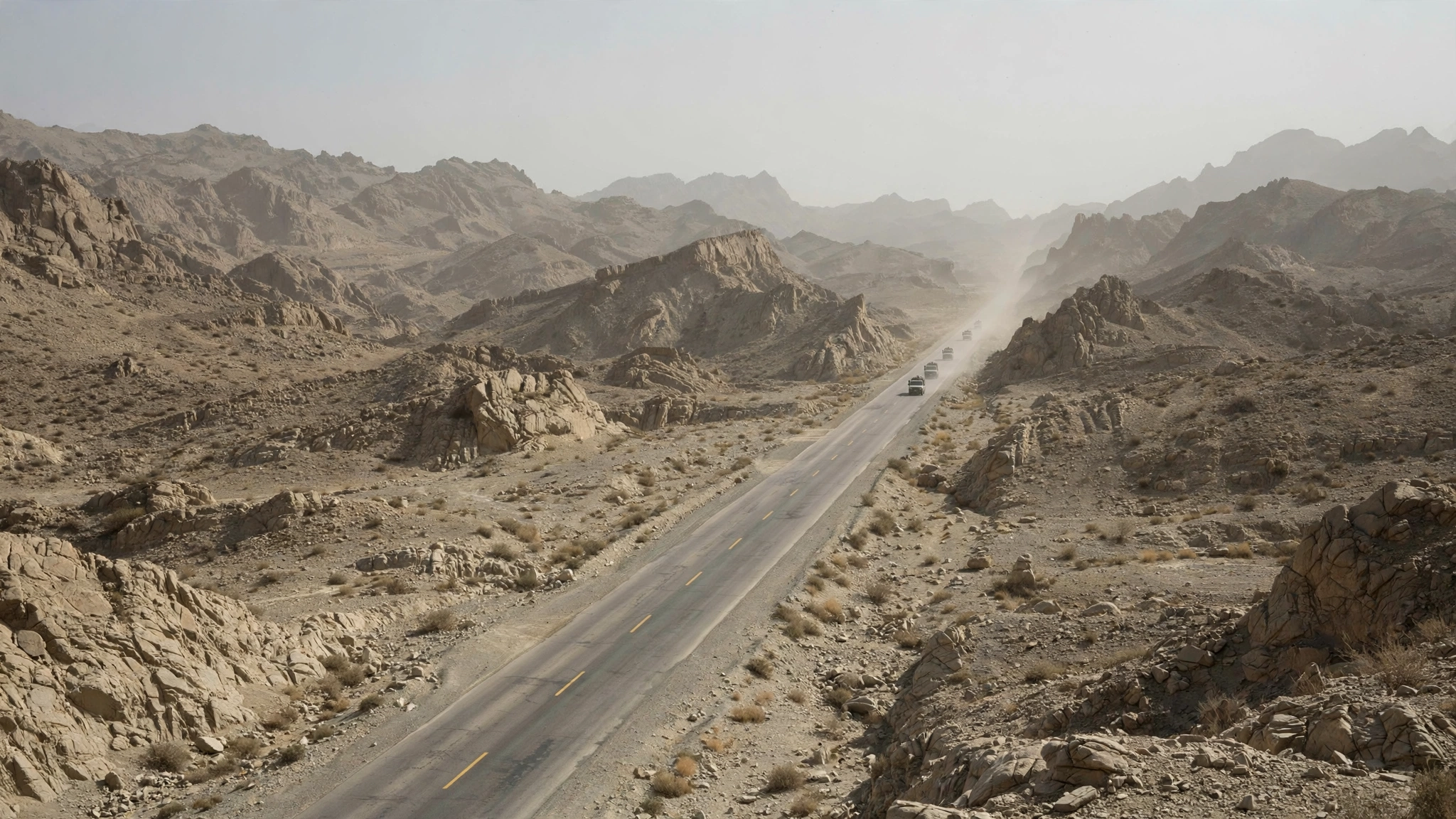
The N-40 runs 610 kilometres from Lakpass near Quetta to the border town of Taftan, and continues into Iran as Road 84 towards Zahedan. It is part of the Asian Highway 2 network and Pakistan’s main overland link to Iran. In April 2026, the Ministry of Commerce opened six overland transit corridors that use the road to move third-country cargo from Karachi, Port Qasim and Gwadar to the Iranian border at Taftan and Gabd, after disruptions in the Strait of Hormuz stranded thousands of containers at Pakistani ports. That is what makes the fighting around it more than a local security operation: the road the troops are patrolling is the same road the government is counting on for trade. Public transport has been banned on the N-40 at night since March 2025, travel guides note.
What happened in Kolpur
According to the Inter-Services Public Relations (ISPR), troops moved on Kolpur on the night of 13 and 14 November and killed eight militants described as members of Fitna al-Hindustan, the official label for Balochistan-based groups Pakistan says India backs. A suicide bomber was among those killed, and a large cache of weapons and ammunition was recovered, the statement said. The next day, on 14 November, militants targeted military vehicles on patrol with armed quadcopters. Major Omer Minhas Nasir, from Chakwal district, and Havildar Muhammad Adnan Khan, from Kotli Sattian, were martyred in the attack. The ISPR said hostile intelligence agencies were supplying militant groups with financing, improvised explosive devices and drone technology. The claim that the groups are sponsored by India is the military’s own; it has not been independently verified, and no group has publicly claimed the quadcopter attack. The use of armed drones against a patrol is a step up from the roadside bombs and ambushes that have defined the Balochistan insurgency.
The three-day ledger
The Kolpur operation is the third ISPR statement in three days. On Friday, the military said 74 militants had been killed in operations in Khyber Pakhtunkhwa and Balochistan, 43 of them in Mir Ali and Orakzai and 31 in Balochistan since 3 November. On Saturday, a separate statement reported 16 more killed in North Waziristan, in Ali Khel, Mir Ali and Datta Khel, and two soldiers martyred, Havildar Asmat Ali of Swabi and Naik Aftab Ali of Mardan. Adding the three statements together, 98 militants have been killed and four soldiers martyred in three days, though the figures come from separate announcements, so the total is PakMirror’s own arithmetic, not a single official count. The military says the campaign under Azm-e-Istehkam, the counterterrorism vision approved by the federal apex committee, will continue at full pace.
The ministers meet while the road is fought over
The timing is hard to ignore. On the same day the ISPR statement was issued, the ECO Council of Ministers meeting that opened in Islamabad today began its two-day session, chaired by Deputy Prime Minister and Foreign Minister Ishaq Dar. Pakistan holds the ECO chair for 2026-27 under the theme “Reviving Regionalism for a Resilient ECO”, and trade integration and regional connectivity sit at the top of the agenda. The ministers are discussing the movement of goods across a region whose roads are, at this moment, being patrolled by soldiers. No outcome document had been published by the time this story was written, and the meeting runs until Monday. But the pairing is the point: connectivity is the agenda in Islamabad and the N-40 is the test of it in Balochistan.
What happens next
President Asif Ali Zardari and Prime Minister Shehbaz Sharif paid tribute to the martyred soldiers in separate statements, and the prime minister said operations against externally sponsored terrorism would continue with full force until it was eliminated. The ISPR said sanitisation operations were under way in the area. Three things are worth watching: first, whether the quadcopter attacks continue, and whether the military answers with counter-drone measures along the highway. Second, whether the N-40 stays open for the trade the government has routed through it, or whether the night ban and patrols become permanent. Third, what the ECO ministers actually agree on Monday, and whether any of it touches the security of the corridors.