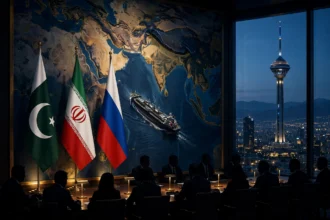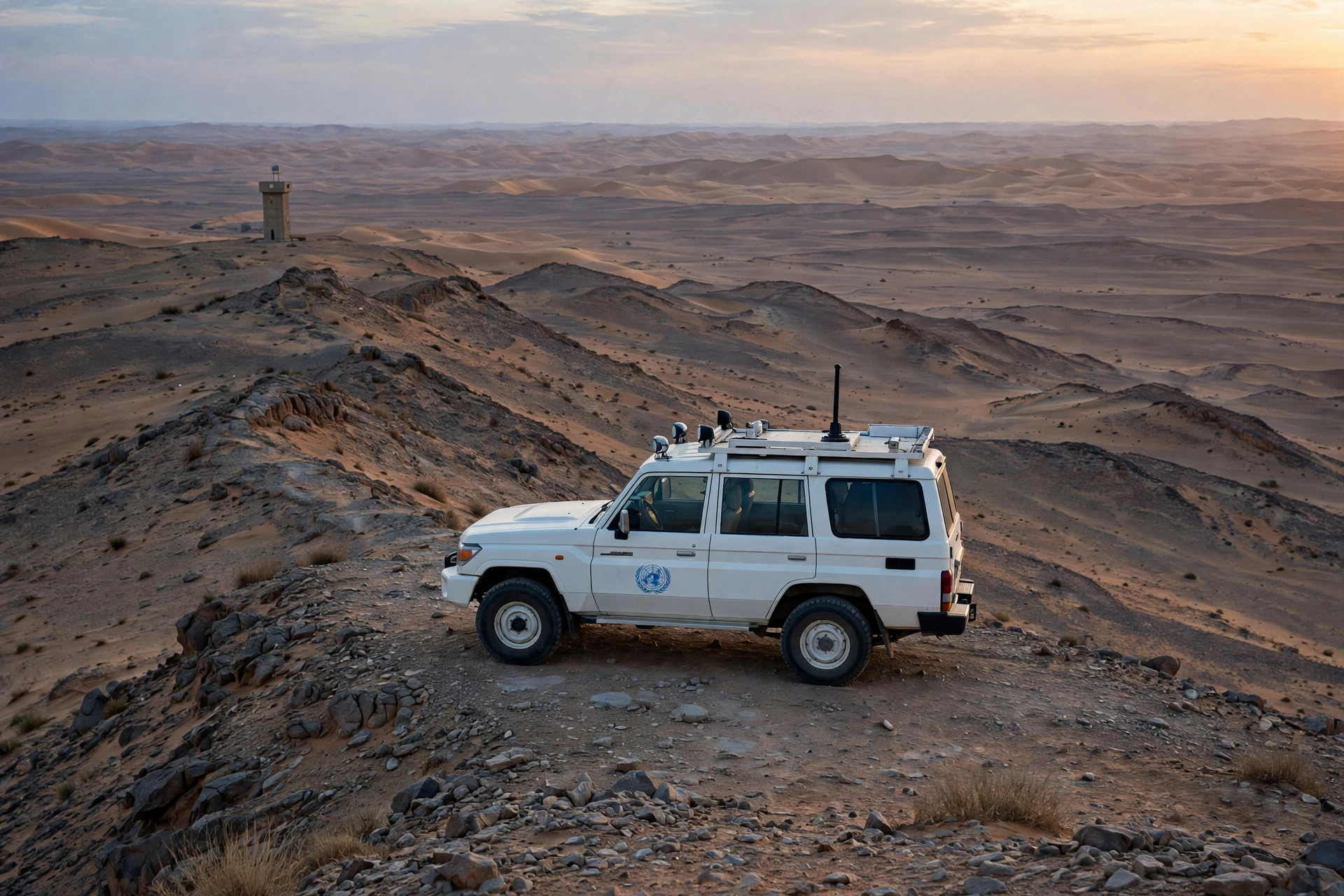

On October 30, the United Nations Security Council failed twice in one afternoon to renew the mission in Western Sahara, and the mandate expired the next day. Pakistan abstained on both drafts. That double abstention matters because it leaves a Pakistani general in command of a force that now has no mandate. The Council has announced no new vote and no withdrawal timetable.
Two votes, one afternoon
The first draft came from the United States, the penholder on the file, as document S/2026/868. It would have extended the United Nations Mission for the Referendum in Western Sahara, known as MINURSO, for one year to October 31, 2027, reduced its military component, and made Morocco’s autonomy proposal the sole basis for negotiations. It would also have renamed the mission MINUSO from November 1. Eleven members voted in favour, Russia vetoed it, and China, Pakistan and Somalia abstained.
Russia then tabled its own draft, document S/2026/870, a plain one year extension to October 31, 2027 with no change to name, functions or structure. Three members voted in favour, China, Somalia and Russia, the United States vetoed it, and 11 members abstained. With only one negative vote cast, Pakistan was among those 11 abstentions as well. Adoption needs nine votes in favour and no veto from a permanent member, so both texts fell.
Why Pakistan said no twice
Pakistan’s representative explained the abstention on the United States draft as consistent with a longstanding position against imposing non-consensual solutions, according to the Sahara Press Service report of Friday’s session. Lasting peace, the representative said, requires a mutually acceptable solution based on dialogue and consensus.
That explanation matters because the two drafts asked for opposite things. The United States text would have closed the referendum question and fixed autonomy as the only negotiating basis. The Russian text would have kept everything as it was for another year without settling the political question. Abstaining on both says Pakistan would not endorse either shortcut.
The commander in the middle
The abstentions have a consequence no other abstaining country shares. The force commander of MINURSO is Pakistan’s Major General Jawwad Ahmed Qazi, appointed by Secretary General Antonio Guterres on August 11, 2026, succeeding Bangladesh’s Major General Md Fakhrul Ahsan. Qazi brings more than 35 years of leadership and operational experience in the Pakistan Army and in United Nations peacekeeping.
On October 29, the day before the vote, Morocco’s Southern Zone commander received Qazi in Agadir. Two days later, the mandate he commands expired, and no drawdown has been reported. Pakistan therefore faces a practical question too: what happens to its own officer, and to the observers under him, while the Council decides whether to return to the file.
A mission built for a vote that never came
MINURSO was created by Security Council resolution 690 in 1991 to prepare a referendum in which the people of Western Sahara would choose between independence and integration with Morocco. That referendum has never taken place. The mission has instead monitored a ceasefire, renewed year after year for 35 years.
The scale is small: 155 military personnel, budgeted at 62 million dollars for the fiscal year that began in June 2026. France’s delegate warned that an abrupt closure would be exceedingly alarming, while the United States delegate said any drawdown should be orderly and stable. Neither statement is a plan. The last extension, resolution 2797 in October 2025, passed with 11 votes in favour and abstentions from China, Pakistan and Russia, while Algeria did not participate. Pakistan’s 2026 abstention is therefore not a break with its own record.
Three tests that will settle it
First, a new Council text. If the United States returns with a revised draft, the test will be whether it restores a genuine choice for the Sahrawi people or keeps autonomy as the sole basis under softer language. If Russia returns with another plain rollover, the test will be whether the Council accepts another year without a political direction.
Second, the force on the ground. An orderly drawdown, a technical extension, or a quiet continuation without a mandate are three very different outcomes, and the Council has chosen none of them. The vote came in a week when border reporting at home stayed intense, from Pakistan calling terrorism a red line on October 31 to five drones aimed at a Kharan check-post, and Pakistan took its Afghan case to the United Nations again this week.
Third, Pakistan’s own consistency. Abstention is easy to explain once. It is harder to hold if a compromise text arrives that most members support and Islamabad must choose between its principle and its seat at the table. The next vote will show whether October 30 was a holding position or a settled policy. Follow more national news from Pakistan for updates.