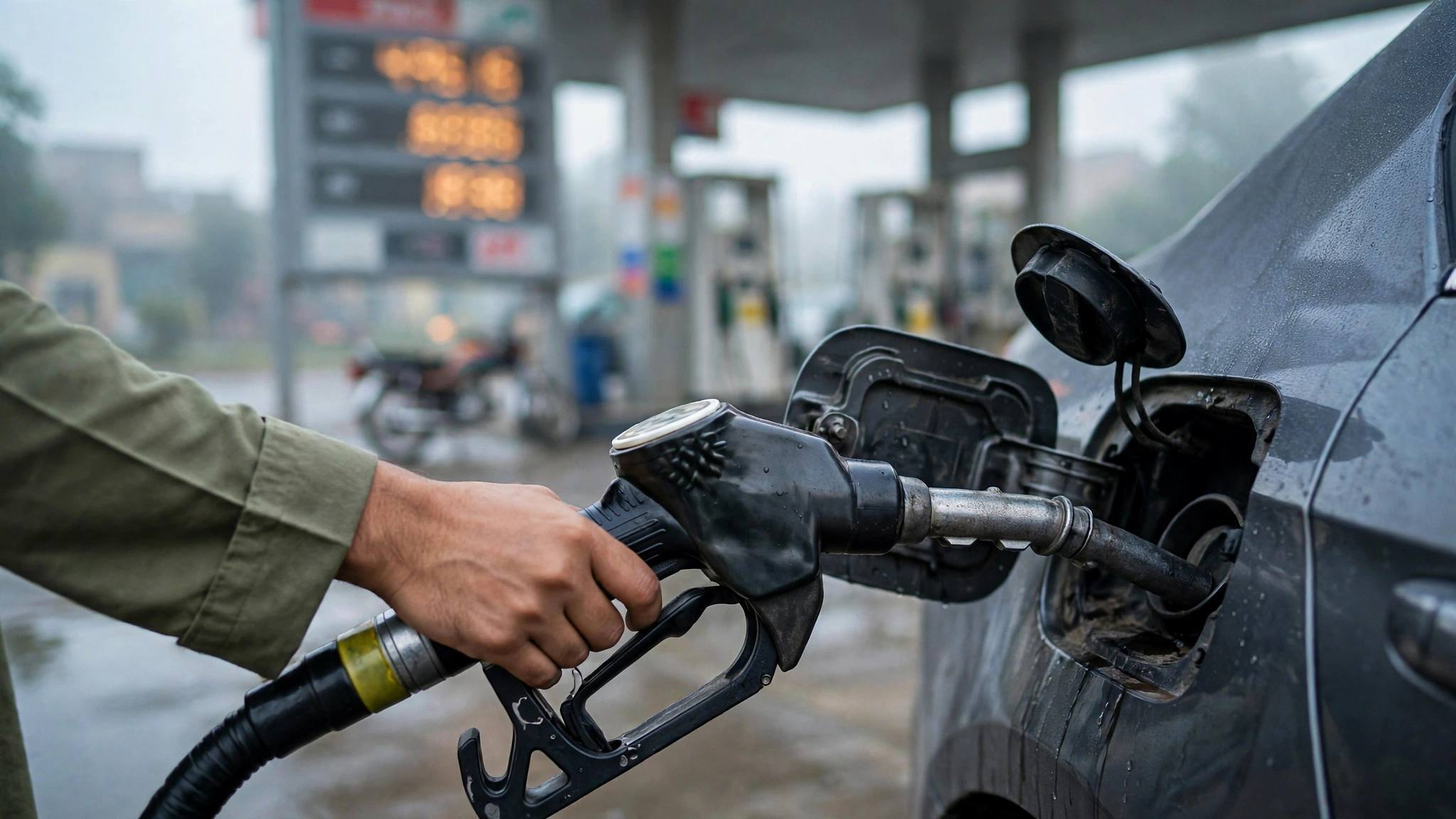

Petrol became cheaper for the tenth time in a row on Tuesday, falling by Rs2 a litre to Rs328, while high-speed diesel also fell by Rs2 to Rs358. The Oil and Gas Regulatory Authority issued the notification late on Monday night, and the new rates are in force for today under the daily pricing mechanism. Dawn reported the cut as the tenth consecutive decrease. The same day, the petrol pump owners who sell the fuel wrote to the prime minister asking him to scrap the daily system altogether.
The fifteen-day ledger
The run began on 2 November, when petrol stood at Rs377.91 a litre and diesel at Rs402.96. Fifteen days later, petrol is Rs49.91 cheaper, about 13.2 percent, and diesel is Rs44.96 cheaper, about 11.2 percent. The cuts came in small steps, Rs2 or Rs3 at a time, under OGRA daily notifications based on a seven-day rolling average of international benchmarks. There were no revisions on 8, 9 and 10 November, so the ten cuts span fifteen days, not ten. Before today, petrol stood at Rs330 after the ninth cut on Saturday, when freight fares fell 5 percent, and the eighth cut took petrol to Rs332, with refineries footing the bill.
The saving is easy to count. A 40-litre car tank now costs Rs13,120 to fill, against Rs15,116 before the first cut, a saving of about Rs1,996 on every fill. A 10-litre motorcycle tank costs Rs3,280, against Rs3,779, saving about Rs499. A 100-litre diesel tank costs Rs35,800, against Rs40,296, a saving of Rs4,496. Pakistan imports its fuel, so the USD to PKR exchange rate today sets part of the cost before OGRA even starts its calculation.
The letter to the prime minister
The All Pakistan Petrol Pump Owners Association wrote to Prime Minister Shehbaz Sharif on 16 November, asking for prices to be revised once a month instead of every day. The letter was signed by the association vice chairman, Nouman Ali Butt, who called the daily system a serious difficulty for dealers across the country. The association has offered to meet the prime minister personally.
The dealers argument is about stock: they buy fuel at one price and sell it over the following days, so when prices keep falling, stock bought dear has to be sold cheap, and the loss falls on the dealer. Daily changes, it says, also make it hard to plan purchases and manage working capital, and they confuse customers at the pump. Its members, it says, are mostly small and medium-sized businesses providing an essential service.
They warned about this in July
This is not the dealers first objection. When the government first proposed daily pricing in July, the same association opposed it, saying it had not been consulted and warning of uncertainty for retailers. It recommended monthly pricing then too. The government went ahead anyway, announcing on 17 July that prices would be reviewed daily instead of weekly. Four months later, after ten straight falls, the association is making the same demand again.
The hole in the dealers case
The dealers argument has a gap they do not address: the same stock logic works in reverse, so when prices rise, fuel bought cheap sells dear and the gain stays with the dealer. There is a second point for consumers. Daily revisions are the reason the Rs49.91 relief reached pumps in small steps over fifteen days. Under a monthly cycle, the price would have stayed near Rs378 until the next revision, and motorists would have waited weeks for relief delivered day by day.
The tax wall has not moved
None of the ten cuts came from lower taxes: the government still levies Rs114 a litre in taxes and duties on petrol and Rs100 on diesel, and the petroleum levy of Rs80 a litre has not moved. Because the tax is fixed in rupees while the pump price falls, the tax share keeps climbing: at Rs328, about 35 percent of every litre of petrol is tax. Every rupee of the Rs49.91 relief came from the import and refinery side of the price, the part that can move back up. Under the 30-day arrangement announced on 2 November, refineries bear a cumulative Rs15 billion impact on the petroleum levy, which the government says lets petrol sell Rs14.71 cheaper than the global market price would allow.
What happens next
The next revision comes tomorrow, and the price can move either way. The refinery arrangement that has helped hold prices down expires in early December, the first real test of whether the relief lasts. The dealers are waiting for an answer, and no government response to their letter had been reported by Tuesday morning. For now, the tenth cut is in force for today only, and motorists pay the lowest petrol price since August.