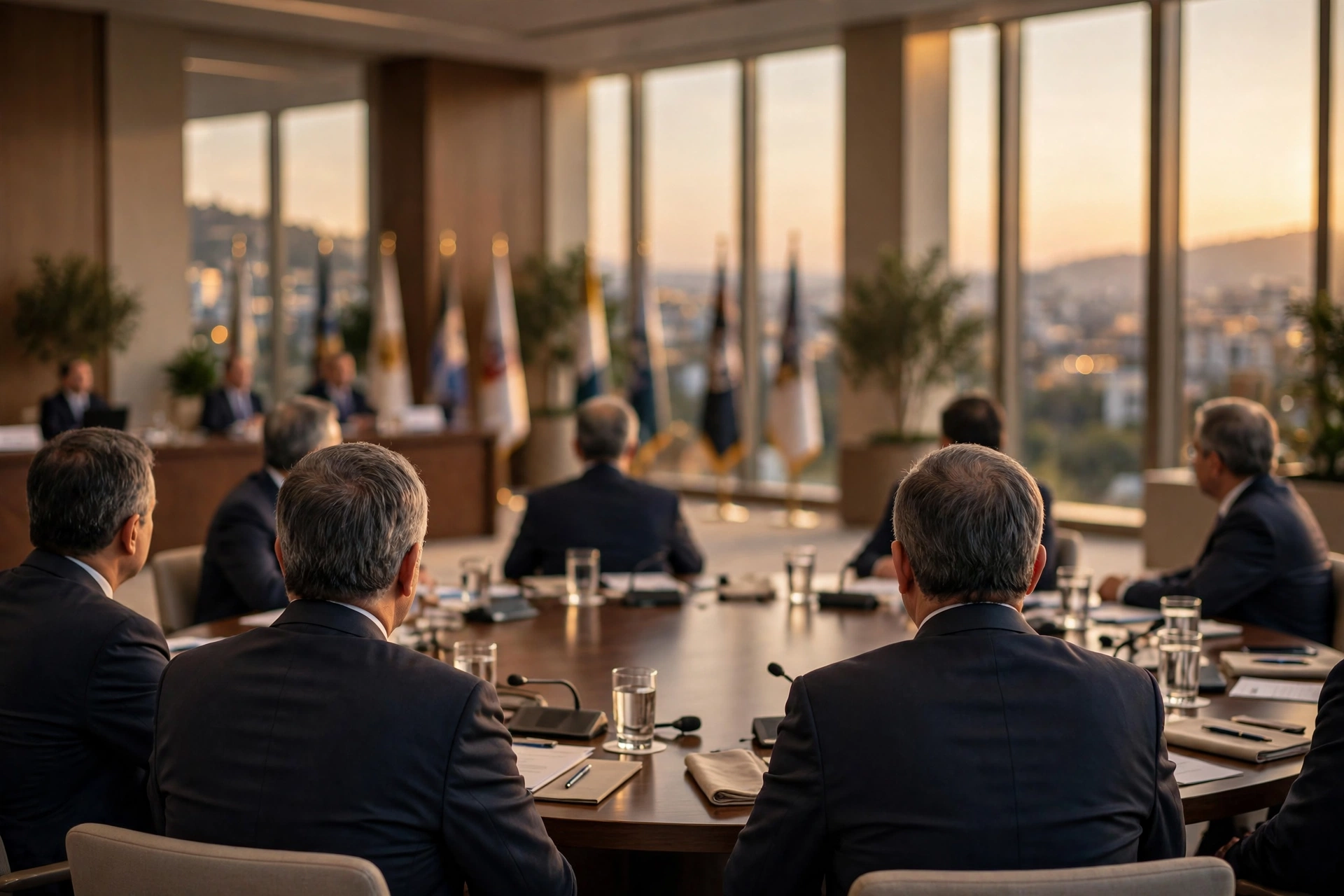

The 30th Council of Ministers of the Economic Cooperation Organization opened in Islamabad on Sunday, with Deputy Prime Minister and Foreign Minister Ishaq Dar in the chair and Pakistan holding the organisation’s chairmanship for 2026-27 under the theme “Reviving Regionalism for a Resilient ECO”. On Monday the ministers are set to adopt two documents, an Islamabad Declaration and Strategic Goals of Economic Cooperation 2035. But before a word of either text is agreed, the room itself has already said something: three delegations arrived led by deputy ministers, one member’s seat is empty, and the visit of Iran’s foreign minister has not been confirmed by either government.
Who is actually in the room
Pakistan TV, citing the Foreign Office, reports that Turkiye’s delegation is led by Deputy Foreign Minister Musa Kulaklikaya, Kazakhstan’s by Deputy Foreign Minister Arman Issagaliyev and Azerbaijan’s by Deputy Foreign Minister Elnur Mammadov. The Foreign Office has not released a complete list, so the picture is partial, but the pattern is clear: a meeting billed as a council of foreign ministers has at least three delegations at deputy level.
Others did come. Tahsin Ertugruloglu, foreign minister of the Turkish Republic of Northern Cyprus, arrived to take part, as did the secretary general of the Organisation of Islamic Cooperation, Ismail Ould Cheikh Ahmed. The deputy secretary general of the Shanghai Cooperation Organisation, Ahmad Saidmurodzoda, is taking part too. The ministers are also expected to call on Prime Minister Shehbaz Sharif, Particle News reports.
Iran’s Foreign Minister Abbas Araghchi is expected in Islamabad, Pakistan TV reports, and Particle News describes his attendance as confirmed. But neither government has announced the visit, KhabarWire noted, so until he lands his presence is a plan, not a fact.
Afghanistan’s case is stranger. The Taliban were not invited, the Foreign Ministry spokesperson had said earlier, in line with ECO procedures, and Afghanistan’s tricolor flag is displayed on the official banners at the meeting, Taneen TV reports. A member since 1992 sits in the room as a flag, not a delegation, and the corridor Pakistan wants to sell runs through Afghanistan, where the border is closed.
The numbers Monday must answer to
The chairmanship’s own benchmark is not flattering. ECO Secretary General Asad Majeed Khan told Tasnim News Agency on 24 October that the region’s total trade with the world reached 1.058 trillion dollars in 2025, about 2 percent of world trade, while trade between ECO members stood at 138.6 billion dollars, only 13 percent of the bloc’s external trade. Other estimates put the share lower, at 8 to 10 percent, and Pakistan’s own trade with ECO members is only about 3 percent of its external trade. Whichever figure is used, the bloc trades far more with outsiders than with itself.
The flagship fix is an old one. The ECO Trade Agreement, ECOTA, was signed in 2003 and came into force in 2008, but it has never been fully implemented. Its cooperation council met in Islamabad in July 2024 after a five-year gap and agreed to review the agreement, and a ministerial meeting in Istanbul in November 2025 approved technical negotiations on the revision. His message was blunt: the challenge is turning agreements into practical cooperation, concrete projects and tangible benefits.
ECO Vision 2025, adopted at the 2017 Islamabad summit, had set a target of doubling intra-regional trade. It was not achieved. The programme the ministers are set to adopt on Monday, Strategic Goals of Economic Cooperation 2035, is its successor, which the Council of Permanent Representatives reviewed in Tehran on 8 November for submission to this meeting. What neither document yet sets out in public is a timetable. Member states have designated Lahore as the organisation’s Tourism Capital for 2027.
The corridor test
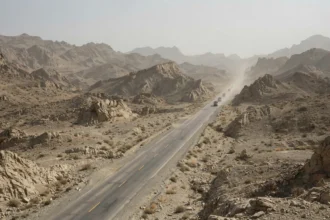
Pakistan’s pitch is that it is the route: connecting landlocked Central Asia with the Arabian Sea through its roads, railways and ports, including the Islamabad-Tehran-Istanbul rail corridor, the Eurasian Multimodal Corridor and proposed rail links through Afghanistan. That connectivity hub argument sits at the centre of the chairmanship, and it is also the one under the most pressure: troops are patrolling the N-40 highway, the Quetta-Taftan artery, to keep it secure for local traffic, and the land route to Central Asia runs through a border that is closed and through territory where Pakistan says attacks are staged from Afghan soil.
Pakistan is juggling two regional tables in the same week. It has also named its climate minister to attend the SCO dialogue in New Delhi, and it urged calm at the United Nations as Gulf tensions rose. The ECO chair gives Islamabad a year to show that a regional bloc can do more than meet. Monday’s declaration will show whether the ministers agreed on dates and named corridors, or only on words. More national news from Pakistan