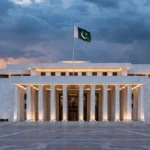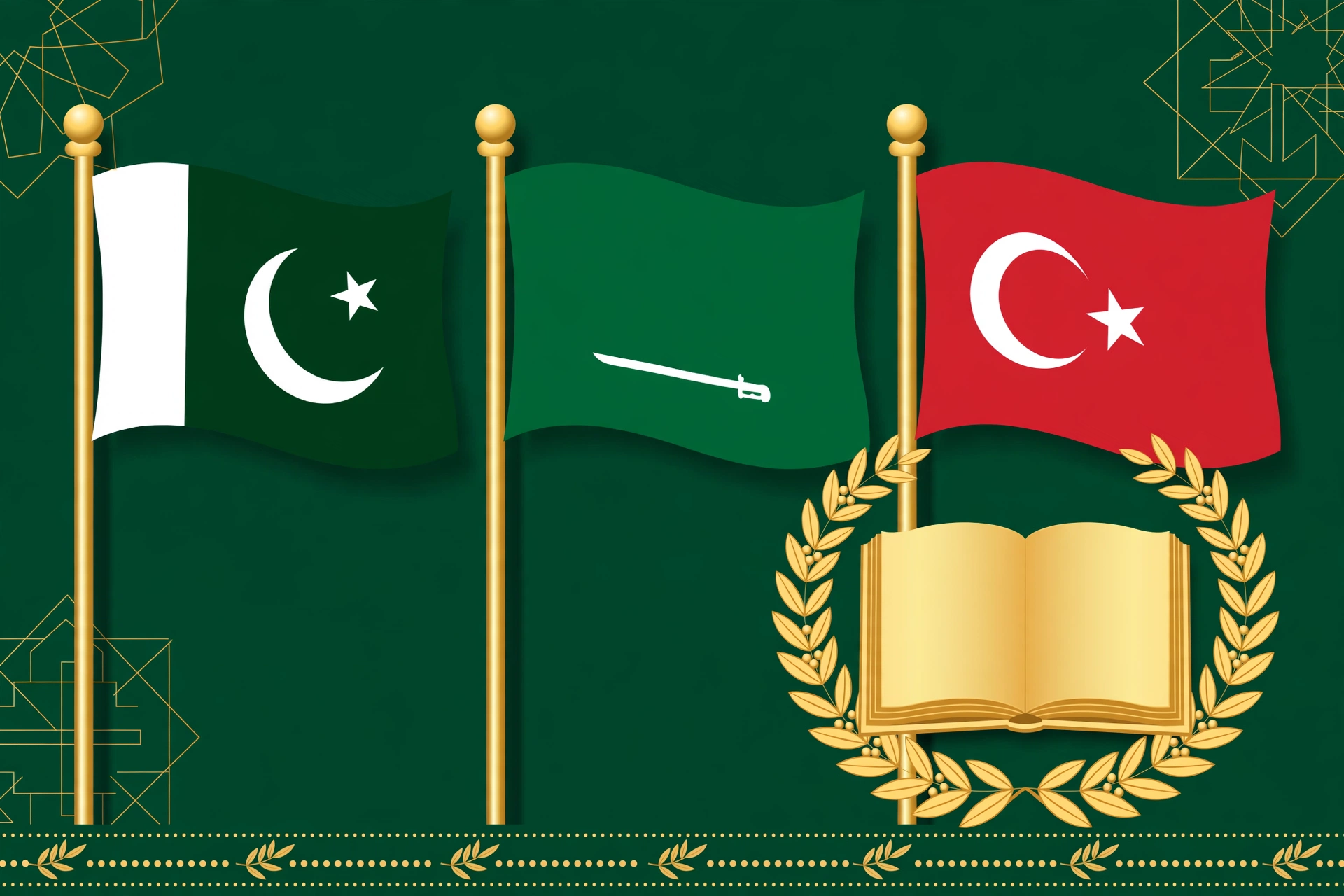

Prime Minister Shehbaz Sharif and Field Marshal Asim Munir have jointly topped The Muslim 500, the annual list of the world’s most influential Muslims. They share the No. 1 spot with Saudi Arabia’s King Salman bin Abdulaziz and Crown Prince Mohammed bin Salman and Turkiye’s President Recep Tayyip Erdogan. It is the first shared top place in the list’s 18 editions, and the editors give a single reason: the Makkah Joint Defence Agreement the three countries signed on 7 August 2026. Some Pakistani coverage called it second place; the book lists joint No. 1.
The correction: there is no second place
The publisher’s own Top 50 page leaves no room for doubt. All five names appear under the heading “Joint No. 1”, in three entries: the two Saudi leaders, the two Pakistani leaders, and Erdogan. Because five people share the first rank, ranks two and three do not exist in this edition. The next name is Iran’s new Supreme Leader, Ayatollah Mojtaba Khamenei, at No. 4. It is the top of the list, shared for the first time.
The year on year ledger: everyone at the top climbed
A year ago, none of the five stood where they stand now. Sharif and Munir were not ranked at all, sitting in the unranked group of 450 names. King Salman was eighth, the Crown Prince fourteenth, and Erdogan seventh. The 2026 edition was topped by Qatar’s Emir Tamim, with Pakistan’s Mufti Muhammad Taqi Usmani second. Usmani now sits seventh. Six Pakistanis appear in the Top 50: Sharif and Munir at joint No. 1, Usmani at No. 7, Maulana Tariq Jamil at No. 32, Maulana Nazar ur-Rehman at No. 41, and Ilyas Attar Qadiri at No. 44. Pakistan places three names in the top ten, more than any other country.
Why the editors did it: the pact, not the personalities
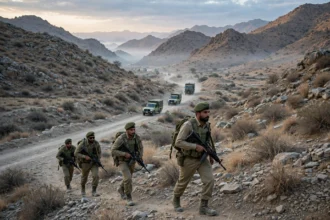
The book’s own explanation is blunt. “The main reason for this historic decision is the Makkah Joint Defence Agreement. Signed on 7 August, 2026, and activated during an emergency summit in Riyadh, this mutual-defence pact unites the immense wealth of Saudi Arabia, the advanced tech and manufacturing of Turkiye, and the powerful military strength of Pakistan into a collective alliance.” The record since August explains the call. The three countries signed the 16 article agreement in Makkah, with an attack on one treated as an attack on all. Their joint committee first met in Istanbul on 31 August, then held an emergency meeting in Riyadh on 5 October and agreed to put the collective defence commitments into practice. Turkiye’s parliament ratified the pact by 279 votes to 119. The committee meets again in Islamabad in the last week of November.
What the list is, and what it is not
The Muslim 500 is published by the Royal Islamic Strategic Studies Centre in Amman, Jordan. It has appeared every year since 2009. It names 500 influential Muslims: 50 ranked in order, and 450 more listed without ranks across 13 categories. Influence, as the centre measures it, is the capacity to bring about significant change in the Muslim world. The centre stresses that the ranking rests on public and expert appraisal, not on an official or strictly academic classification. The joint No. 1 is a judgement about a year, not a measurement of power. It confers no office, moves no soldier and changes no law.
The same weekend, three tables
The ranking lands in a week in which Pakistan is sitting at three tables at once. Pakistan took the chair of the Economic Cooperation Organisation in Islamabad this weekend, chaired by Deputy Prime Minister Ishaq Dar. It has also named its climate minister, Musadik Malik, to attend the SCO Civilisational Dialogue in New Delhi from 20 to 22 November, the first ministerial visit to India in more than three years. And it urged calm at the United Nations as Gulf tensions rose. The pact is the thread running through the week: the same three countries, the same security logic, now at the top of a list that had a single name at its head for 17 years.
What to watch next
Two things will show whether the ranking was a one year spike or the start of a pattern: the Islamabad committee meeting in the last week of November; and the 2028 edition, whether the joint top spot survives or the list reverts to a single name. Until then, the fact on the record is simple. Pakistan’s prime minister and its army chief are not second in The Muslim 500. They are joint first. More national news from Pakistan